
Top Related Projects

Terraform enables you to safely and predictably create, change, and improve infrastructure. It is a source-available tool that codifies APIs into declarative configuration files that can be shared amongst team members, treated as code, edited, reviewed, and versioned.

Pulumi - Infrastructure as Code in any programming language 🚀

The AWS Cloud Development Kit is a framework for defining cloud infrastructure in code

The Cloud Foundation toolkit provides GCP best practices as code.

Production-Grade Container Scheduling and Management

Ansible is a radically simple IT automation platform that makes your applications and systems easier to deploy and maintain. Automate everything from code deployment to network configuration to cloud management, in a language that approaches plain English, using SSH, with no agents to install on remote systems. https://docs.ansible.com.
Quick Overview
Bicep is a domain-specific language (DSL) for deploying Azure resources declaratively. It aims to simplify the authoring experience with a cleaner syntax, improved type safety, and better support for modularity and code reuse compared to ARM templates.
Pros
- Simpler and more concise syntax than ARM templates
- Strong type safety and validation at authoring time
- Improved modularity and code reuse capabilities
- Seamless integration with existing Azure tooling and CI/CD pipelines
Cons
- Limited to Azure resources only (not cross-cloud)
- Relatively new, so the ecosystem and community support are still growing
- Learning curve for those familiar with ARM templates or other IaC tools
- Some advanced scenarios may still require ARM template snippets
Code Examples
- Deploying a storage account:
resource storageAccount 'Microsoft.Storage/storageAccounts@2021-06-01' = {
  name: 'mystorageaccount'
  location: 'eastus'
  sku: {
    name: 'Standard_LRS'
  }
  kind: 'StorageV2'
}
- Creating a virtual network with a subnet:
resource vnet 'Microsoft.Network/virtualNetworks@2021-03-01' = {
  name: 'myVNet'
  location: 'eastus'
  properties: {
    addressSpace: {
      addressPrefixes: [
        '10.0.0.0/16'
      ]
    }
    subnets: [
      {
        name: 'mySubnet'
        properties: {
          addressPrefix: '10.0.0.0/24'
        }
      }
    ]
  }
}
- Using a module for reusability:
module appServicePlan 'modules/appServicePlan.bicep' = {
  name: 'appServicePlanDeploy'
  params: {
    name: 'myAppServicePlan'
    location: 'eastus'
    sku: 'S1'
  }
}
Getting Started
-
Install Bicep CLI:
az bicep install -
Create a new Bicep file (e.g.,
main.bicep):param location string = 'eastus' resource storageAccount 'Microsoft.Storage/storageAccounts@2021-06-01' = { name: 'mystorageaccount' location: location sku: { name: 'Standard_LRS' } kind: 'StorageV2' } -
Deploy the Bicep file:
az deployment group create --resource-group myResourceGroup --template-file main.bicep
Competitor Comparisons
Terraform enables you to safely and predictably create, change, and improve infrastructure. It is a source-available tool that codifies APIs into declarative configuration files that can be shared amongst team members, treated as code, edited, reviewed, and versioned.
Pros of Terraform
- Multi-cloud support, allowing infrastructure management across various providers
- Larger ecosystem with extensive provider and module libraries
- More mature and widely adopted in the industry
Cons of Terraform
- Steeper learning curve, especially for those new to IaC
- Requires manual state management and can be complex in large-scale deployments
- Less native integration with Azure-specific features
Code Comparison
Terraform:
resource "azurerm_resource_group" "example" {
  name     = "example-resources"
  location = "West Europe"
}
Bicep:
resource resourceGroup 'Microsoft.Resources/resourceGroups@2021-04-01' = {
  name: 'example-resources'
  location: 'West Europe'
}
Both Terraform and Bicep are Infrastructure as Code (IaC) tools, but they have different focuses and strengths. Terraform is a multi-cloud solution with a larger ecosystem, while Bicep is specifically designed for Azure deployments. Terraform's HCL syntax is more verbose compared to Bicep's concise and Azure-native syntax. Bicep integrates more seamlessly with Azure services and provides better support for Azure-specific features. However, Terraform's broader adoption and multi-cloud capabilities make it a more versatile choice for organizations working with multiple cloud providers.
Pulumi - Infrastructure as Code in any programming language 🚀
Pros of Pulumi
- Multi-cloud support: Works with various cloud providers, not limited to Azure
- Uses familiar programming languages (Python, JavaScript, etc.) for infrastructure definition
- Offers more flexibility and advanced programming constructs
Cons of Pulumi
- Steeper learning curve for those unfamiliar with programming languages
- Potentially more complex setup and management compared to Bicep's simplicity
- May require additional tooling and dependencies
Code Comparison
Bicep example:
resource storageAccount 'Microsoft.Storage/storageAccounts@2021-04-01' = {
  name: 'mystorageaccount'
  location: 'eastus'
  sku: {
    name: 'Standard_LRS'
  }
}
Pulumi example (Python):
from pulumi_azure import storage

account = storage.Account("mystorageaccount",
    location="eastus",
    account_tier="Standard",
    account_replication_type="LRS")
Both examples create a storage account in Azure, but Pulumi uses Python syntax while Bicep uses its own domain-specific language. Pulumi's approach allows for more complex logic and reusability, while Bicep offers a more Azure-specific and potentially simpler syntax for Azure resources.
The AWS Cloud Development Kit is a framework for defining cloud infrastructure in code
Pros of aws-cdk
- Supports multiple programming languages (TypeScript, Python, Java, C#)
- Offers a higher level of abstraction with constructs
- Provides built-in testing capabilities
Cons of aws-cdk
- Steeper learning curve due to its complexity
- Requires compilation step before deployment
- Less direct control over generated CloudFormation templates
Code Comparison
aws-cdk (TypeScript):
import * as cdk from 'aws-cdk-lib';
import * as s3 from 'aws-cdk-lib/aws-s3';

const bucket = new s3.Bucket(this, 'MyBucket', {
  versioned: true,
  encryption: s3.BucketEncryption.S3_MANAGED,
});
bicep:
resource myBucket 'Microsoft.Storage/storageAccounts@2021-04-01' = {
  name: 'mybucketname'
  location: resourceGroup().location
  sku: {
    name: 'Standard_LRS'
  }
  kind: 'StorageV2'
}
Both aws-cdk and bicep aim to simplify infrastructure-as-code, but they take different approaches. aws-cdk offers a more programmatic experience with support for multiple languages, while bicep provides a domain-specific language closer to Azure Resource Manager templates. The choice between them often depends on the cloud provider and personal preference for syntax and abstraction level.
The Cloud Foundation toolkit provides GCP best practices as code.
Pros of cloud-foundation-toolkit
- Supports multiple cloud providers (GCP, AWS, Azure)
- Offers a comprehensive set of best practices and templates
- Includes automated testing and validation tools
Cons of cloud-foundation-toolkit
- Steeper learning curve due to broader scope
- Less tightly integrated with a specific cloud platform
- May require more setup and configuration
Code Comparison
cloud-foundation-toolkit (Terraform):
resource "google_compute_network" "vpc_network" {
  name                    = "my-custom-mode-network"
  auto_create_subnetworks = false
}
bicep:
resource vnet 'Microsoft.Network/virtualNetworks@2021-02-01' = {
  name: 'myVNet'
  location: resourceGroup().location
  properties: {
    addressSpace: {
      addressPrefixes: [
        '10.0.0.0/16'
      ]
    }
  }
}
The cloud-foundation-toolkit example uses Terraform to create a GCP VPC network, while the bicep example creates an Azure virtual network. Both demonstrate the syntax and structure differences between the two approaches.
Production-Grade Container Scheduling and Management
Pros of Kubernetes
- Widely adopted, mature, and vendor-neutral container orchestration platform
- Extensive ecosystem with a large community and numerous third-party tools
- Supports multi-cloud and hybrid cloud deployments
Cons of Kubernetes
- Steeper learning curve and more complex setup compared to Bicep
- Requires more resources and overhead for small-scale deployments
- Less tightly integrated with Azure-specific services and features
Code Comparison
Bicep (Infrastructure as Code for Azure):
resource storageAccount 'Microsoft.Storage/storageAccounts@2021-04-01' = {
  name: 'mystorageaccount'
  location: 'eastus'
  sku: {
    name: 'Standard_LRS'
  }
}
Kubernetes (Container Orchestration):
apiVersion: apps/v1
kind: Deployment
metadata:
  name: nginx-deployment
spec:
  replicas: 3
  selector:
    matchLabels:
      app: nginx
Ansible is a radically simple IT automation platform that makes your applications and systems easier to deploy and maintain. Automate everything from code deployment to network configuration to cloud management, in a language that approaches plain English, using SSH, with no agents to install on remote systems. https://docs.ansible.com.
Pros of Ansible
- Multi-platform support for various cloud providers and on-premises infrastructure
- Agentless architecture, requiring only SSH access to managed nodes
- Extensive community-driven module ecosystem
Cons of Ansible
- Steeper learning curve, especially for complex playbooks
- Performance can be slower for large-scale deployments
- Less tightly integrated with Azure-specific features
Code Comparison
Ansible playbook example:
- name: Create Azure VM
  hosts: localhost
  tasks:
    - name: Create resource group
      azure_rm_resourcegroup:
        name: myResourceGroup
        location: eastus
    - name: Create virtual machine
      azure_rm_virtualmachine:
        resource_group: myResourceGroup
        name: myVM
        vm_size: Standard_DS1_v2
Bicep template example:
resource virtualMachine 'Microsoft.Compute/virtualMachines@2021-03-01' = {
  name: 'myVM'
  location: 'eastus'
  properties: {
    hardwareProfile: {
      vmSize: 'Standard_DS1_v2'
    }
  }
}
The Ansible playbook is more verbose but offers a task-based approach, while the Bicep template is more concise and declarative, focusing specifically on Azure resources.
Convert  designs to code with AI
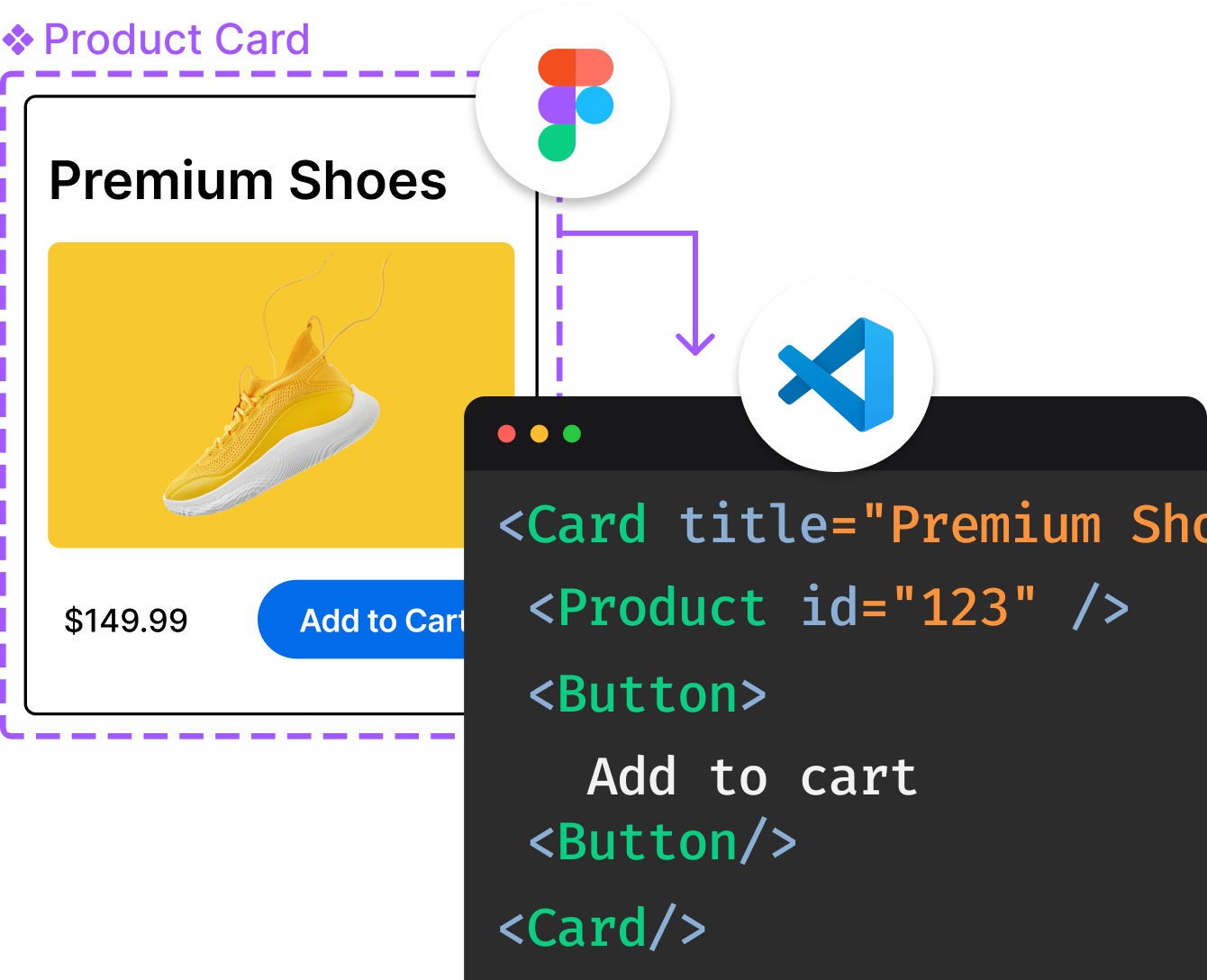
Introducing Visual Copilot: A new AI model to turn Figma designs to high quality code using your components.
Try Visual CopilotREADME




Azure Bicep
For all you need to know about the Bicep language, check out the Bicep documentation.
What is Bicep?
Bicep is an infrastructure-as-code (IaC) programming language that uses declarative syntax to deploy Azure resources. In a Bicep file, you define the infrastructure you want to deploy to Azure and then use that file throughout the development lifecycle to repeatedly deploy that infrastructure. Your resources are deployed in a consistent manner.
Learn more about the language and benefits of using Bicep in the What is Bicep documentation.
Get started with Bicep
To get started with Bicep:
- Install the tooling.
- Complete the Fundamentals of Bicep Learning Path.
- See the full list of Learn modules for Bicep.
[!TIP] If you're new to Bicep, start by installing the Bicep VS Code extension and deploying a simple resource (like a storage account) to get comfortable with the end-to-end workflow before moving to larger templates.
If you have an existing Azure Resource Manager (ARM) template or set of Azure resources that you want to convert to .bicep format, see the recommended workflow for migrating resources to Bicep and Decompiling an ARM Template.
Also, there's a rich library of Bicep modules in Azure Verified Modules and examples in the azure-quickstart-templates repo to help you get started. You can also use the Bicep Playground to try out Bicep in your browser.
If you're looking for production-ready and tested Bicep templates, you can find them in the bicep-registry-modules repo. Learn more about these templates on the Azure Verified Modules website: https://aka.ms/avm.
How does Bicep work?
First, author your Bicep code by using the Bicep language service as part of the Bicep VS Code extension.
Both Azure CLI (2.20.0+) and the PowerShell Az module (v5.6.0+) have Bicep support built in. This support means you can use the standard deployment commands with your *.bicep files. The tooling transpiles the code and sends it to ARM on your behalf. For example, to deploy main.bicep to a resource group my-rg, use the CLI command:
az deployment group create -f ./main.bicep -g my-rg
Goals
- Build the best possible language for describing, validating, and deploying infrastructure to Azure.
- The language should provide a transparent abstraction for the underlying platform. There must be no "onboarding step" to enable Bicep support for a new resource type or API version.
- Code should be easy to understand at a glance and straightforward to learn, regardless of your experience with other programming languages.
- Users should have a lot of freedom to modularize and re-use their code. Code re-use shouldn't require any 'copy/paste'-ing.
- Tooling should provide a high level of resource discoverability and validation. Develop it alongside the compiler rather than adding it at the end.
- Users should have a high level of confidence that their code is 'syntactically valid' before deploying.
Non-goals
- Build a general-purpose language to meet any need. This language doesn't replace general-purpose languages. You might still need to do pre or post-Bicep execution tasks in a script or high-level programming language.
- Provide a first-class provider model for non-Azure related tasks. While the extensibility model supports Microsoft Graph, official extension points are intended to be focused on Azure infra or application deployment related tasks.
FAQ
What unique benefits do you get with Bicep?
- Day 0 resource provider support. You can use Bicep to provision any ARM resource, whether it's in private, public preview, or GA.
- Much simpler syntax compared to equivalent ARM Template JSON.
- No state or state files to manage. All state is stored in Azure, so it's easy to collaborate and make changes to resources confidently.
- Tooling is the cornerstone to any great experience with a programming language. The VS Code extension for Bicep makes it extremely easy to author and get started with advanced type validation based on all Azure resource type API definitions.
- Easily break apart your code with native modules.
- Supported by Microsoft support and 100% free to use.
See more frequently asked questions on Microsoft Learn
Get Help, Report an issue
The Bicep team is here to help you be successful with Bicep. Don't hesitate to reach out.
- For help or generic questions such as "where can I find an example for..." or "I need help converting my ARM Template to Bicep," open a discussion.
- For bugs or new feature requests for Bicep, open an issue.
You can see the state of the issues in our GitHub Project.
Community call
The Bicep team hosts an open community call for users of Bicep. Go here to get invited, and follow the labeled issues for updates.
You can find recordings of the community calls on the Azure Deployments & Governance YouTube Channel.
Social media
You can also find us on social media on the following platforms:
You can also get in touch with other users through the community-created Azure Bicep users group on LinkedIn.
Reference
- Complete language spec
- Azure Resources Reference
- Bicep CLI commands
- Azure Bicep Deploy GitHub Action
Community Bicep projects
- Awesome Bicep list
- Bicep Language Service support in Neovim
- Bicep PowerShell Module
- Bicep Tasks extension for Azure Pipelines
- MegaLinter - Open-source linters aggregator for CI that runs the Bicep linter out of the box
Alternatives
Because the ARM Template is now treated as an IL, other implementations of IL (ARM Template) generation are expected and encouraged. This list provides alternatives for creating ARM templates that might better fit your use case.
- Farmer (@isaacabraham) - Generate and deploy ARM Templates on .NET
- Cloud Maker (@cloud-maker-ai) - Draw deployable infrastructure diagrams that are converted to ARM templates or Bicep
Telemetry
When you use the Bicep VS Code extension, VS Code collects usage data and sends it to Microsoft to help improve our products and services. Read the privacy statement to learn more. If you don't want to send usage data to Microsoft, set the telemetry.enableTelemetry setting to false. For more information, see the FAQ.
License
All files in the repository, except for the Azure Architecture SVG Icons (here and here), are subject to the MIT license.
The Azure Architecture SVG Icons (here and here) used in the Bicep VS Code extension are subject to the Terms of Use.
Contributing
For information on building and running the code, contributing code, contributing examples, and contributing feature requests or bug reports, see Contributing to Bicep.
Top Related Projects
Terraform enables you to safely and predictably create, change, and improve infrastructure. It is a source-available tool that codifies APIs into declarative configuration files that can be shared amongst team members, treated as code, edited, reviewed, and versioned.
Pulumi - Infrastructure as Code in any programming language 🚀
The AWS Cloud Development Kit is a framework for defining cloud infrastructure in code
The Cloud Foundation toolkit provides GCP best practices as code.
Production-Grade Container Scheduling and Management
Ansible is a radically simple IT automation platform that makes your applications and systems easier to deploy and maintain. Automate everything from code deployment to network configuration to cloud management, in a language that approaches plain English, using SSH, with no agents to install on remote systems. https://docs.ansible.com.
Convert designs to code with AI
Introducing Visual Copilot: A new AI model to turn Figma designs to high quality code using your components.
Try Visual Copilot