 microsoft-authentication-library-for-js
Microsoft Authentication Library (MSAL) for JS
Top Related Projects

Auth0 authentication for Single Page Applications (SPA) with PKCE

OAuth 2 / OpenID Connect Client API for JavaScript Runtimes

OpenID Connect (OIDC) and OAuth2 protocol support for browser-based JavaScript applications

Simple, unobtrusive authentication for Node.js.
Quick Overview
The Microsoft Authentication Library for JavaScript (MSAL.js) is an open-source library that enables developers to authenticate users with Microsoft Azure Active Directory (Azure AD), Microsoft personal accounts, and social identity providers like Facebook, Google, and LinkedIn. It provides a robust set of tools for implementing authentication and authorization in web applications, mobile apps, and desktop applications using JavaScript.
Pros
- Seamless integration with Microsoft identity platforms and services
- Support for various authentication flows (e.g., OAuth 2.0, OpenID Connect)
- Cross-platform compatibility (works in browsers, Node.js, and React Native)
- Active development and maintenance by Microsoft
Cons
- Learning curve for developers new to OAuth 2.0 and OpenID Connect
- Configuration complexity for some advanced scenarios
- Limited support for non-Microsoft identity providers
- Potential performance impact in large-scale applications
Code Examples
- Initializing MSAL in a browser application:
import { PublicClientApplication } from "@azure/msal-browser";

const msalConfig = {
    auth: {
        clientId: "your_client_id",
        authority: "https://login.microsoftonline.com/your_tenant_id"
    }
};

const msalInstance = new PublicClientApplication(msalConfig);
- Acquiring an access token:
const loginRequest = {
    scopes: ["user.read"]
};

msalInstance.loginPopup(loginRequest)
    .then(response => {
        const accessToken = response.accessToken;
        // Use the access token to make API calls
    })
    .catch(error => {
        console.error(error);
    });
- Making an authenticated API call:
const apiConfig = {
    uri: "https://graph.microsoft.com/v1.0/me",
    scopes: ["user.read"]
};

msalInstance.acquireTokenSilent(apiConfig)
    .then(response => {
        const headers = new Headers();
        headers.append("Authorization", `Bearer ${response.accessToken}`);

        fetch(apiConfig.uri, { headers })
            .then(response => response.json())
            .then(data => console.log(data));
    })
    .catch(error => {
        console.error(error);
    });
Getting Started
-
Install MSAL.js using npm:
npm install @azure/msal-browser -
Configure MSAL with your Azure AD app registration details:
const msalConfig = { auth: { clientId: "your_client_id", authority: "https://login.microsoftonline.com/your_tenant_id" } }; const msalInstance = new PublicClientApplication(msalConfig); -
Implement login and token acquisition:
msalInstance.loginPopup()
    .then(response => {
        console.log("User logged in successfully");
        return msalInstance.acquireTokenSilent({ scopes: ["user.read"] });
    })
    .then(response => {
        console.log("Access token acquired:", response.accessToken);
    })
    .catch(error => {
        console.error(error);
    });
Competitor Comparisons
Auth0 authentication for Single Page Applications (SPA) with PKCE
Error generating comparison
OAuth 2 / OpenID Connect Client API for JavaScript Runtimes
Pros of openid-client
- More comprehensive OpenID Connect support, including advanced features like dynamic client registration
- Lightweight and flexible, with fewer dependencies
- Supports a wider range of OpenID providers beyond just Azure AD
Cons of openid-client
- Less Azure AD-specific optimizations and features
- May require more configuration and setup for Azure AD scenarios
- Smaller community and ecosystem compared to MSAL.js
Code Comparison
microsoft-authentication-library-for-js:
const msalConfig = {
    auth: {
        clientId: "your_client_id",
        authority: "https://login.microsoftonline.com/your_tenant_id"
    }
};
const msalInstance = new msal.PublicClientApplication(msalConfig);
openid-client:
const client = await Issuer.discover('https://login.microsoftonline.com/your_tenant_id/v2.0')
    .then(issuer => new issuer.Client({
        client_id: 'your_client_id',
        redirect_uris: ['http://localhost:3000/cb'],
        response_types: ['code']
    }));
Both libraries provide authentication functionality, but microsoft-authentication-library-for-js is more tailored for Azure AD, while openid-client offers a more generic OpenID Connect implementation. The choice between them depends on specific project requirements and the desired level of Azure AD integration.
OpenID Connect (OIDC) and OAuth2 protocol support for browser-based JavaScript applications
Pros of identity-model-oidc-client-js
- More flexible and protocol-agnostic, supporting a wider range of OIDC and OAuth 2.0 providers
- Lighter weight and less opinionated, allowing for more customization
- Better suited for non-Microsoft identity providers and custom OIDC implementations
Cons of identity-model-oidc-client-js
- Less integrated with Azure AD and Microsoft-specific features
- Smaller community and potentially less frequent updates
- May require more configuration and setup for Microsoft-centric scenarios
Code Comparison
microsoft-authentication-library-for-js:
const msalConfig = {
    auth: {
        clientId: "your_client_id",
        authority: "https://login.microsoftonline.com/your_tenant_id"
    }
};
const msalInstance = new msal.PublicClientApplication(msalConfig);
identity-model-oidc-client-js:
const oidcConfig = {
    authority: "https://your-oidc-provider.com",
    client_id: "your_client_id",
    redirect_uri: "your_redirect_uri"
};
const oidcClient = new Oidc.UserManager(oidcConfig);
Both libraries provide similar functionality for authentication, but microsoft-authentication-library-for-js is more tailored for Microsoft Azure AD scenarios, while identity-model-oidc-client-js offers a more generic approach suitable for various OIDC providers. The choice between them depends on the specific requirements of your project and the identity provider you're working with.
Simple, unobtrusive authentication for Node.js.
Pros of Passport
- Flexible and modular authentication middleware for Node.js
- Supports a wide range of authentication strategies (500+ strategies)
- Integrates easily with various web frameworks and databases
Cons of Passport
- Requires more setup and configuration compared to MSAL.js
- Less specialized for Microsoft-specific authentication scenarios
- May require additional plugins for certain advanced features
Code Comparison
Passport (Express.js example):
app.use(passport.initialize());
app.use(passport.session());

passport.use(new LocalStrategy(
  function(username, password, done) {
    // Authentication logic here
  }
));
MSAL.js (Browser example):
const msalConfig = {
  auth: {
    clientId: "your_client_id",
    authority: "https://login.microsoftonline.com/your_tenant_id"
  }
};
const msalInstance = new msal.PublicClientApplication(msalConfig);
Passport offers a more generic approach to authentication, supporting various strategies and integrating well with different frameworks. MSAL.js, on the other hand, is specifically designed for Microsoft authentication scenarios, providing a more streamlined experience for Azure AD and Microsoft identity platform integration.
Convert  designs to code with AI
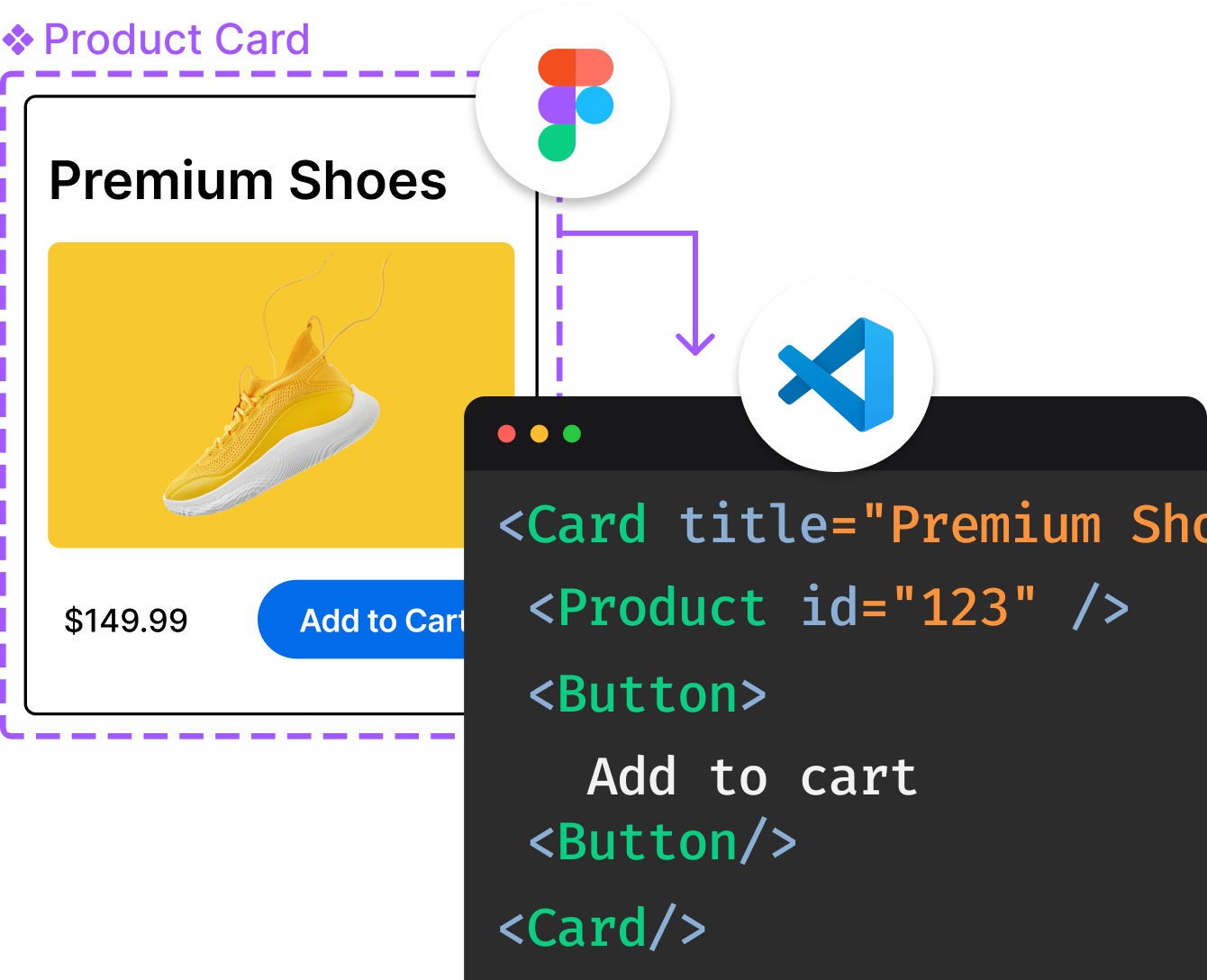
Introducing Visual Copilot: A new AI model to turn Figma designs to high quality code using your components.
Try Visual CopilotREADME
Microsoft Authentication Library for JavaScript (MSAL.js)
The Microsoft Authentication Library for JavaScript enables both client-side and server-side JavaScript applications to authenticate users using Microsoft Entra ID for work and school accounts, Microsoft personal accounts (MSA), and social identity providers like Facebook, Google, LinkedIn, Microsoft accounts, etc. through Azure AD B2C service. It also enables your app to get tokens to access Microsoft Cloud services such as Microsoft Graph.
Repository
Core, wrapper and extensions libraries
The lib folder contains the source code for our libraries in active development. You will also find all the details about installing the libraries in their respective README.md.
-
Microsoft Authentication Library for JavaScript: A browser-based, framework-agnostic browser library that enables authentication and token acquisition with the Microsoft Identity platform in JavaScript applications. Implements the OAuth 2.0 Authorization Code Flow with PKCE, and is OpenID-compliant.
-
Microsoft Authentication Library for Node.js: A Node.js library that enables authentication and token acquisition with the Microsoft Identity platform in JavaScript applications. Implements the following OAuth 2.0 protocols and is OpenID-compliant:
-
Native Authentication Support for JavaScript: MSAL also provides native authentication APIs that allow applications to implement a native experience with end-to-end customizable flows in their applications. With native authentication, users are guided through a rich, native, sign-up and sign-in journey without leaving the app. The native authentication feature is available for SPAs on External ID for customers. It is recommended to always use the most up-to-date version of the SDK.
Terminology: In the codebase, the term "Custom Auth" is used instead of "Native Auth". You will find classes, interfaces, and configuration options prefixed with
CustomAuth(e.g.,CustomAuthPublicClientApplication,CustomAuthConfiguration). Please refer to these when implementing or exploring the native authentication feature in the code. -
Microsoft Authentication Library for React: A wrapper of the msal-browser library for apps using React.
-
Microsoft Authentication Library for Angular: A wrapper of the msal-browser library for apps using Angular framework.
-
Microsoft Authentication Extensions for Node: The Microsoft Authentication Extensions for Node offers secure mechanisms for client applications to perform cross-platform token cache serialization and persistence. It gives additional support to the Microsoft Authentication Library for Node (MSAL).
Library Version Support Status
| Package Name | Current Version | LTS Version |
|---|---|---|
| @azure/msal-browser | v5 | v4 |
| @azure/msal-node | v5 | v3 |
| @azure/msal-react | v5 | v3 |
| @azure/msal-angular | v5 | v4 |
| @azure/msal-node-extensions | v5 | v1 |
| Fully Deprecated | ||
| Fully Deprecated |
Disambiguation:
- The MSAL team provides full support to the current version for each package in the table below.
- LTS (long-term support) versions will still receive some support and critical bug-fixes but will not ship new features. Our recommendation if you encounter any issues will always be to upgrade to the latest version of the library.
- All supported packages were brought up to version parity as of
v5. Packages with versions lower thanv4in the LTS column skipped as many versions as required to jump directly tov5.
MSAL Browser CDN Deprecation
:warning: The
@azure/msal-browserCDN has been fully deprecated as of@azure/msal-browser@3.0.0and is no longer supported. App developers using the MSAL CDN must upgrade to the latest possible version and consume MSAL through a package manager or bundling tool of their choice. For more information on version support, consult the table above.
Package Structure
We ship a number of different packages which are meant for different platforms. You can see the relationship between packages and their dependencies below.

Samples
The samples folder contains sample applications for our libraries. A complete list of samples can be found in the respective package folders.
Package versioning
All of our libraries follow semantic versioning. We recommend using the latest version of each library to ensure you have the latest security patches and bug fixes.
Community Help and Support
-
GitHub Issues is the best place to ask questions, report bugs, and new request features.
-
FAQs for access to our frequently asked questions.
-
Stack Overflow using "msal" and "msal.js" tag.
Contribute
We enthusiastically welcome contributions and feedback. Please read the contributing guide before you begin.
Security Reporting
If you find a security issue with our libraries or services please report it to the Microsoft Security Response Center (MSRC) with as much detail as possible. Your submission may be eligible for a bounty through the Microsoft Bounty program. Please do not post security issues to GitHub Issues or any other public site. We will contact you shortly upon receiving the information. We encourage you to get notifications of when security incidents occur by visiting this page and subscribing to Security Advisory Alerts.
License
Copyright (c) Microsoft Corporation. All rights reserved. Licensed under the MIT License (the "License").
We Value and Adhere to the Microsoft Open Source Code of Conduct
This project has adopted the Microsoft Open Source Code of Conduct. For more information see the Code of Conduct FAQ or contact opencode@microsoft.com with any additional questions or comments.
Top Related Projects
Auth0 authentication for Single Page Applications (SPA) with PKCE
OAuth 2 / OpenID Connect Client API for JavaScript Runtimes
OpenID Connect (OIDC) and OAuth2 protocol support for browser-based JavaScript applications
Simple, unobtrusive authentication for Node.js.
Convert designs to code with AI
Introducing Visual Copilot: A new AI model to turn Figma designs to high quality code using your components.
Try Visual Copilot