
Top Related Projects

A bitcoin blockchain explorer and API

Database-free, self-hosted Bitcoin explorer, via RPC to Bitcoin Core.

Accept Bitcoin payments. Free, open-source & self-hosted, Bitcoin payment processor.

Explore the full Bitcoin ecosystem with mempool.space, or be your own explorer and self-host your own instance with one-click installation on popular Raspberry Pi fullnode distros including Umbrel, Raspiblitz, Start9, and more!
Quick Overview
Blockstream/esplora is an open-source blockchain explorer and API server for Bitcoin and other cryptocurrencies. It provides a user-friendly web interface and a powerful API for interacting with the blockchain, making it a valuable tool for developers, researchers, and cryptocurrency enthusiasts.
Pros
- Comprehensive Blockchain Exploration: Esplora offers a comprehensive set of features for exploring the blockchain, including transaction details, block information, and address balances.
- Customizable and Extensible: The project is designed to be highly customizable and extensible, allowing users to tailor the explorer to their specific needs.
- Efficient and Scalable: Esplora is built on top of the Electrum server, which provides a fast and efficient way to interact with the blockchain.
- Open-Source and Community-Driven: Esplora is an open-source project, which means that it benefits from the contributions and support of a large and active community of developers.
Cons
- Limited Cryptocurrency Support: While Esplora primarily focuses on Bitcoin, support for other cryptocurrencies may be limited or require additional configuration.
- Steep Learning Curve: Esplora's extensive feature set and customization options can make it challenging for new users to get started, especially those who are not familiar with blockchain technology.
- Potential Performance Issues: Depending on the size of the blockchain and the number of users, Esplora may experience performance issues, especially when handling large amounts of data.
- Maintenance and Updates: As an open-source project, the ongoing maintenance and updates of Esplora may depend on the availability and commitment of the community.
Code Examples
// Fetch transaction details
const txid = '0123456789abcdef0123456789abcdef0123456789abcdef0123456789abcdef';
const response = await fetch(`/api/tx/${txid}`);
const tx = await response.json();
console.log(tx);
// Fetch block information
const blockHeight = 123456;
const response = await fetch(`/api/block-height/${blockHeight}`);
const block = await response.json();
console.log(block);
// Fetch address balance
const address = '1BvBMSEYstWetqTFn5Au4m4GFg7xJaNVN2';
const response = await fetch(`/api/address/${address}/balance`);
const balance = await response.json();
console.log(balance);
// Broadcast a transaction
const txHex = '0200000001a15d57094aa7a21a28cb20b59aab8fc7d1149a3bdbcddba9c622e4f5f6a99ebb0000000006b483045022100896c2a0c3dd7f1e96f4af5c800e6108f3c9c6d6e8c93be25c8b301c5fc1c1c5f02206d6c98c5d7c9f7afa9d0c3f5c67e7c0d4b1a3aa2c4f486c6b2d67d0c49a2c2e012103c96d495bfdd5ba4145e3e046fee45e84a8a48ad05bd8dbb395c011a32cf9f88ffffffff0200e1f505000000001976a914c42e7ef92fdb603af844d064faad95db97989f8e88ac0000000000000000166a14549fd4d0c369c5aa7a79fd7d37a6a4a4c2a9670200000000';
const response = await fetch('/api/tx', {
  method: 'POST',
  headers: {
    'Content-Type': 'application/json'
  },
  body: JSON.stringify({ tx: txHex })
});
const result = await response.json();
console.log(result);
Getting Started
To get started with Esplora, you can follow these steps:
- Clone the Esplora repository from GitHub:
git clone
Competitor Comparisons
A bitcoin blockchain explorer and API
Pros of Insight
- More extensive API documentation and examples
- Supports multiple cryptocurrencies beyond Bitcoin
- Longer development history and larger community
Cons of Insight
- Less frequent updates and maintenance
- Higher resource requirements for running a full node
- More complex setup process
Code Comparison
Esplora (TypeScript):
export function estimateFee(blocks: number): Promise<number> {
  return request(`/fee-estimates`)
    .then(estimates => estimates[blocks.toString()]);
}
Insight (JavaScript):
InsightAPI.prototype.estimateFee = function(nbBlocks, callback) {
  this._tryAllClients(function(client, cb) {
    client.estimateFee(nbBlocks, cb);
  }, callback);
};
Both projects provide blockchain explorers and APIs for Bitcoin and other cryptocurrencies. Esplora, developed by Blockstream, focuses on a modern, lightweight explorer with a clean UI. Insight, by BitPay, offers a more comprehensive set of features and supports multiple cryptocurrencies.
Esplora uses TypeScript and modern web technologies, resulting in a more maintainable codebase. Insight, written in JavaScript, has a longer history and more extensive documentation but may require more setup effort.
Choose Esplora for a sleek, efficient explorer focused on Bitcoin, or Insight for a feature-rich solution supporting multiple cryptocurrencies with extensive API capabilities.
Database-free, self-hosted Bitcoin explorer, via RPC to Bitcoin Core.
Pros of btc-rpc-explorer
- More lightweight and easier to set up, requiring only a Bitcoin Core node
- Offers a clean, user-friendly interface with customizable themes
- Provides detailed mempool statistics and visualizations
Cons of btc-rpc-explorer
- Less scalable for high-traffic scenarios compared to Esplora
- Lacks some advanced features like address tracking and API endpoints
Code Comparison
btc-rpc-explorer:
router.get("/block-height/:blockHeight", function(req, res, next) {
  var blockHeight = parseInt(req.params.blockHeight);
  res.locals.blockHeight = blockHeight;

  coreApi.getBlockHashByHeight(blockHeight).then(function(blockHash) {
    res.redirect("/block/" + blockHash);
  });
});
Esplora:
pub fn block_by_height(
    app: &App,
    req: &mut Request,
) -> Result<Response, Error> {
    let height: u32 = req.param("height")?.parse()?;
    let blockhash = app.query.get_block_hash(height)?;
    Ok(Response::redirect(format!("/block/{}", blockhash)))
}
Both examples show routing for block height queries, but Esplora uses Rust for better performance, while btc-rpc-explorer uses JavaScript for easier customization.
Accept Bitcoin payments. Free, open-source & self-hosted, Bitcoin payment processor.
Pros of BTCPayServer
- More comprehensive payment processing solution, including invoicing and e-commerce integration
- Supports multiple cryptocurrencies, not just Bitcoin
- Offers a user-friendly interface for merchants and customers
Cons of BTCPayServer
- More complex setup and maintenance due to its broader feature set
- Requires more server resources to run compared to Esplora
- May have a steeper learning curve for users new to cryptocurrency payments
Code Comparison
BTCPayServer (C#):
public async Task<IActionResult> CreateInvoice(InvoiceModel model)
{
    var store = HttpContext.GetStoreData();
    var entity = await CreateInvoiceCore(store, model, Request.GetAbsoluteRoot());
    return RedirectToAction(nameof(Invoice), new { id = entity.Id });
}
Esplora (JavaScript):
app.get('/tx/:txid', (req, res) => {
  const { txid } = req.params
  rpc.getTx(txid)
    .then(tx => res.json(tx))
    .catch(err => res.status(400).send(err.message))
})
The code snippets show that BTCPayServer focuses on invoice creation and management, while Esplora provides simpler blockchain data retrieval functionality.
Explore the full Bitcoin ecosystem with mempool.space, or be your own explorer and self-host your own instance with one-click installation on popular Raspberry Pi fullnode distros including Umbrel, Raspiblitz, Start9, and more!
Pros of mempool
- More comprehensive feature set, including mempool visualization and fee estimation
- Active development with frequent updates and community contributions
- Supports multiple cryptocurrencies beyond Bitcoin
Cons of mempool
- Higher system requirements due to more complex functionality
- Steeper learning curve for setup and configuration
- May be overkill for simple block explorer needs
Code comparison
mempool (TypeScript):
export interface MempoolInfo {
  loaded: boolean;
  size: number;
  bytes: number;
  usage: number;
  maxmempool: number;
  mempoolminfee: number;
  minrelaytxfee: number;
}
Esplora (JavaScript):
app.get('/mempool', (req, res) => {
  rpcClient.getMempoolInfo((err, info) => {
    if (err) return res.status(500).send(err)
    res.send(info)
  })
})
Both projects provide mempool information, but mempool offers a more structured approach with TypeScript interfaces, while Esplora uses a simpler JavaScript implementation for API endpoints.
mempool's codebase is generally more extensive and modular, reflecting its broader feature set. Esplora's code is more focused on providing a lightweight block explorer with a simpler architecture.
Convert  designs to code with AI
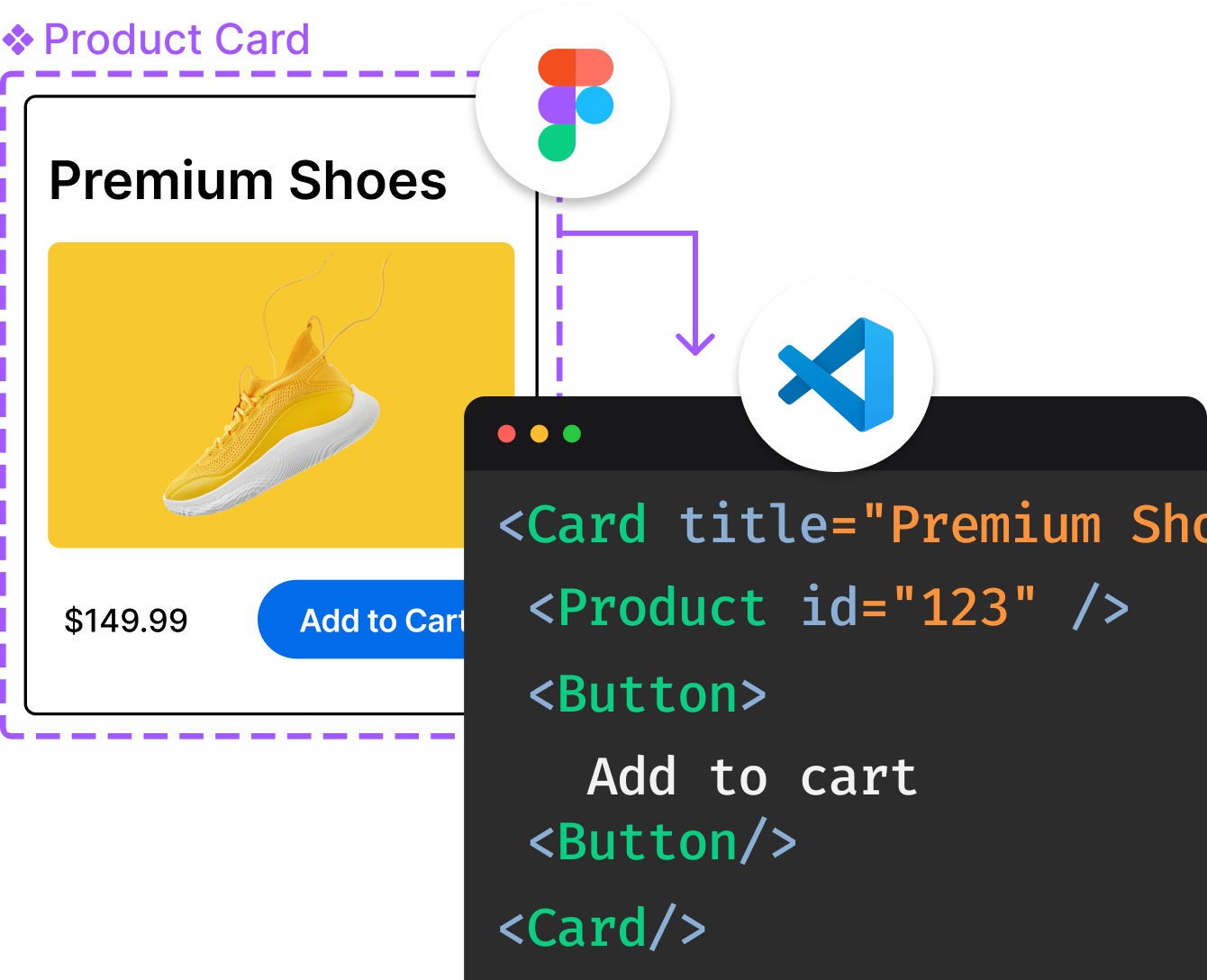
Introducing Visual Copilot: A new AI model to turn Figma designs to high quality code using your components.
Try Visual CopilotREADME
Esplora Block Explorer





Block explorer web interface based on the esplora-electrs HTTP API.
Written as a single-page app in a reactive and functional style using rxjs and cycle.js.
See live at Blockstream.info.
API documentation is available here.
Join the translation efforts on Transifex.
Features
-
Explore blocks, transactions and addresses
-
Support for Segwit and Bech32 addresses
-
Shows previous output and spending transaction details
-
Quick-search for txid, address, block hash or height by navigating to
/<query> -
Advanced view with script hex/assembly, witness data, outpoints and more
-
Mobile-ready responsive design
-
Translated to 17 languages
-
Noscript support
-
For Liquid and other Elements-based chains: support for CT, peg-in/out transactions and multi-asset
-
Mainnet, Testnet and Elements high performance electrum server
Developing
To start a development server with live babel/browserify transpilation, run:
$ git clone https://github.com/Blockstream/esplora && cd esplora
$ npm install
$ export API_URL=http://localhost:3000/ # or https://blockstream.info/api/ if you don't have a local API server
# (see more config options below)
$ npm run dev-server
The server will be available at http://localhost:5000/
To display debugging information for the Rx streams in the web developer console, set localStorage.debug = '*' and refresh.
Building
To build the static assets directory for production deployment, set config options (see below)
and run $ npm run dist. The files will be created under dist/.
Because Esplora is a single-page app, the HTTP server needs to be configured to serve the index.html file in reply to missing pages.
See contrib/nginx.conf.in for example nginx configuration (TL;DR: try_files $uri /index.html).
Pre-rendering server (noscript)
To start a pre-rendering server that generates static HTML replies suitable for noscript users, run:
# (clone, cd, "npm install" and configure as above)

$ export STATIC_ROOT=http://localhost:5000/ # for loading CSS, images and fonts
$ npm run prerender-server
The server will be available at http://localhost:5001/
Configuration options
All options are optional.
GUI options
NODE_ENV- set toproductionto enable js minification, or todevelopmentto disable (defaults toproduction)BASE_HREF- base href for user interface (defaults to/, change if not served from the root directory)BASE_PREFIX- optional path prefix prepended to each flavor'sBASE_HREF, to serve the whole multi-network site under a sub-directory (e.g.BASE_PREFIX=previewserves/preview/,/preview/signet/, ...).API_URLis left un-prefixed so a prefixed build still uses the same backendSTATIC_ROOT- root for static assets (defaults toBASE_HREF, change to load static assets from a different server)API_URL- URL for HTTP REST API (defaults to/api, change if the API is available elsewhere)CANONICAL_URL- absolute base url for user interface (optional, only required for opensearch and canonical link tags)NATIVE_ASSET_LABEL- the name of the network native asset (defaults toBTC)SITE_TITLE- website title for<title>(defaults toBlock Explorer)SITE_DESC- meta description (defaults toEsplora Block Explorer)HOME_TITLE- text for homepage title (defaults toSITE_TITLE)SITE_FOOTER- text for page footer (defaults toPowered by esplora)HEAD_HTML- custom html to inject at the end of<head>FOOT_HTML- custom html to inject at the end of<body>CUSTOM_ASSETS- space separated list of static assets to add to the buildCUSTOM_CSS- space separated list of css files to append intostyle.cssNOSCRIPT_REDIR- redirect noscript users to{request_path}?nojs(should be captured server-side and redirected to the prerender server, also seeNOSCRIPT_REDIR_BASEin dev server options)NAVBAR_HTML- display navigation bar
Note that API_URL should be set to the publicly-reachable URL where the user's browser can issue requests at.
(that is, not via localhost, unless you're setting up a dev environment where the browser is running on the same machine as the API server.)
Elements-only configuration:
IS_ELEMENTS- set to1to indicate this is an Elements-based chain (enables asset issuance and peg features)NATIVE_ASSET_ID- the ID of the native asset used to pay fees (defaults to6f0279e9ed041c3d710a9f57d0c02928416460c4b722ae3457a11eec381c526d, the asset id for BTC)BLIND_PREFIX- the base58 address prefix byte used for confidential addresses (defaults to12)PARENT_CHAIN_EXPLORER_TXOUT- URL format for linking to transaction outputs on the parent chain, with{txid}and{vout}as placeholders. Example:https://blockstream.info/tx/{txid}#output:{vout}PARENT_CHAIN_EXPLORER_ADDRESS- URL format for linking to addresses on parent chain, with{addr}replaced by the address. Example:https://blockstream.info/address/{addr}ASSET_MAP_URL- url to load json asset map (in the "minimal" format)
Menu configuration (useful for inter-linking multiple instances on different networks):
MENU_ITEMS- json map of menu items, where the key is the label and the value is the urlMENU_ACTIVE- the active menu item identified by its label
Development server options
All GUI options, plus:
PORT- port to bind http development server (defaults to5000)CORS_ALLOW- value to set forAccess-Control-Allow-Originheader (optional)NOSCRIPT_REDIR_BASE- base url for prerender server, for redirecting?nojsrequests (should be set alongsideNOSCRIPT_REDIR)
Pre-rendering server options
All GUI options, plus:
PORT- port to bind pre-rendering server (defaults to5001)
Note that unlike the regular JavaScript-based app that sends API requests from the client-side,
the pre-rendering server sends API requests from the server-side. This means that API_URL should
be configured to the URL reachable by the server, typically http://localhost:3000/.
How to build the Docker image
Build the base image first:
docker build -t blockstream/esplora-base -f contrib/Dockerfile.base .
then the main image:
docker build -t esplora -f contrib/Dockerfile .
Alternatively, you may use the pre-built blockstream/esplora image from Docker Hub.
How to run the explorer for Bitcoin mainnet
docker run -p 50001:50001 -p 8080:80 \
           --volume $PWD/data_bitcoin_mainnet:/data \
           --rm -i -t esplora \
           bash -c "/srv/explorer/run.sh bitcoin-mainnet explorer"
How to run the explorer for Liquid mainnet
docker run -p 50001:50001 -p 8082:80 \
           --volume $PWD/data_liquid_mainnet:/data \
           --rm -i -t esplora \
           bash -c "/srv/explorer/run.sh liquid-mainnet explorer"
How to run the explorer for Bitcoin testnet3
docker run -p 50001:50001 -p 8084:80 \
           --volume $PWD/data_bitcoin_testnet:/data \
           --rm -i -t esplora \
           bash -c "/srv/explorer/run.sh bitcoin-testnet explorer"
How to run the explorer for Bitcoin testnet4
docker run -p 50001:50001 -p 8084:80 \
           --volume $PWD/data_bitcoin_testnet4:/data \
           --rm -i -t esplora \
           bash -c "/srv/explorer/run.sh bitcoin-testnet4 explorer"
How to run the explorer for Bitcoin signet
docker run -p 50001:50001 -p 8084:80 \
           --volume $PWD/data_bitcoin_signet:/data \
           --rm -i -t esplora \
           bash -c "/srv/explorer/run.sh bitcoin-signet explorer"
How to run the explorer for Liquid testnet
docker run -p 50001:50001 -p 8096:80 \
           --volume $PWD/data_liquid_testnet:/data \
           --rm -i -t esplora \
           bash -c "/srv/explorer/run.sh liquid-testnet explorer"
How to run the explorer for Liquid regtest
docker run -p 50001:50001 -p 8092:80 \
           --volume $PWD/data_liquid_regtest:/data \
           --rm -i -t esplora \
           bash -c "/srv/explorer/run.sh liquid-regtest explorer"
How to run the explorer for Bitcoin regtest
docker run -p 50001:50001 -p 8094:80 \
           --volume $PWD/data_bitcoin_regtest:/data \
           --rm -i -t esplora \
           bash -c "/srv/explorer/run.sh bitcoin-regtest explorer"
Regtest options
When run for Bitcoin regtest or Liquid regtest, the esplora container will
create a default wallet and mine 100 blocks internally. You can disable this behavior
by setting NO_REGTEST_MINING=1.
Docker config options
Set -e DEBUG=verbose to enable more verbose logging.
Set -e NO_PRECACHE=1 to disable pre-caching of statistics for "popular addresses",
which may take a long time and is not necessary for personal use.
Set -e NO_ADDRESS_SEARCH=1 to disable the by-prefix address search index.
Set -e ENABLE_LIGHTMODE=1 to enable esplora-electrs's light mode.
Set -e ONION_URL=http://xyz.onion to enable the Onion-Location header.
Pull tor directly from Docker Hub - blockstream/tor:latest
Run: docker -d --name hidden_service blockstream/tor:latest tor -f /home/tor/torrc (could add a -v /extra/torrc:/home/tor/torrc, if you have a custom torrc)
Example torrc:
DataDirectory /home/tor/tor
PidFile /var/run/tor/tor.pid

ControlSocket /var/run/tor/control GroupWritable RelaxDirModeCheck
ControlSocketsGroupWritable 1
SocksPort unix:/var/run/tor/socks WorldWritable
SocksPort 9050

CookieAuthentication 1
CookieAuthFileGroupReadable 1
CookieAuthFile /var/run/tor/control.authcookie

Log [handshake]debug [*]notice stderr

HiddenServiceDir /home/tor/tor/hidden_service_v3/
HiddenServiceVersion 3
HiddenServicePort 80 127.0.0.1:80
License
MIT
Top Related Projects
A bitcoin blockchain explorer and API
Database-free, self-hosted Bitcoin explorer, via RPC to Bitcoin Core.
Accept Bitcoin payments. Free, open-source & self-hosted, Bitcoin payment processor.
Explore the full Bitcoin ecosystem with mempool.space, or be your own explorer and self-host your own instance with one-click installation on popular Raspberry Pi fullnode distros including Umbrel, Raspiblitz, Start9, and more!
Convert designs to code with AI
Introducing Visual Copilot: A new AI model to turn Figma designs to high quality code using your components.
Try Visual Copilot