 jackson-databind
General data-binding package for Jackson: works on streaming API (core) implementation(s)
Top Related Projects

A Java serialization/deserialization library to convert Java Objects into JSON and back

FASTJSON 2.0.x has been released, faster and more secure, recommend you upgrade.

A modern JSON library for Kotlin and Java.
Core part of Jackson that defines Streaming API as well as basic shared abstractions
Quick Overview
Jackson-databind is a core part of the Jackson JSON processing library for Java. It provides data-binding functionality, allowing seamless conversion between Java objects and JSON, as well as other data formats. This library is widely used for its performance, flexibility, and extensive feature set.
Pros
- High performance and efficient processing of JSON data
- Extensive customization options through annotations and configuration
- Supports a wide range of data types and complex object structures
- Active development and community support
Cons
- Learning curve can be steep for advanced features
- Some configurations may require additional dependencies
- Occasional breaking changes between major versions
- Can be overly complex for simple use cases
Code Examples
- Serializing a Java object to JSON:
ObjectMapper mapper = new ObjectMapper();
MyObject obj = new MyObject();
String json = mapper.writeValueAsString(obj);
- Deserializing JSON to a Java object:
ObjectMapper mapper = new ObjectMapper();
String json = "{\"name\":\"John\",\"age\":30}";
MyObject obj = mapper.readValue(json, MyObject.class);
- Handling a JSON array:
ObjectMapper mapper = new ObjectMapper();
String json = "[{\"name\":\"John\"},{\"name\":\"Jane\"}]";
List<MyObject> objList = mapper.readValue(json, new TypeReference<List<MyObject>>(){});
- Using custom serialization/deserialization:
@JsonSerialize(using = CustomSerializer.class)
@JsonDeserialize(using = CustomDeserializer.class)
public class MyCustomObject {
    // Class implementation
}
Getting Started
To use Jackson-databind in your project, add the following dependency to your Maven pom.xml:
<dependency>
    <groupId>com.fasterxml.jackson.core</groupId>
    <artifactId>jackson-databind</artifactId>
    <version>2.14.2</version>
</dependency>
For Gradle, add this to your build.gradle:
implementation 'com.fasterxml.jackson.core:jackson-databind:2.14.2'
Then, you can start using the library by creating an ObjectMapper instance:
ObjectMapper mapper = new ObjectMapper();
// Use mapper for JSON operations
Competitor Comparisons
A Java serialization/deserialization library to convert Java Objects into JSON and back
Pros of gson
- Simpler API and easier to use for basic JSON operations
- Smaller library size, leading to reduced application footprint
- Better performance for simple use cases and small JSON payloads
Cons of gson
- Less flexible for complex JSON structures and custom serialization
- Fewer features and customization options compared to jackson-databind
- Limited support for advanced data types and polymorphism
Code Comparison
jackson-databind:
ObjectMapper mapper = new ObjectMapper();
MyObject obj = mapper.readValue(jsonString, MyObject.class);
String json = mapper.writeValueAsString(obj);
gson:
Gson gson = new Gson();
MyObject obj = gson.fromJson(jsonString, MyObject.class);
String json = gson.toJson(obj);
Both libraries offer straightforward JSON serialization and deserialization. jackson-databind provides more configuration options through its ObjectMapper, while gson focuses on simplicity with its Gson object.
jackson-databind excels in handling complex JSON structures, supporting a wide range of data types and offering extensive customization options. It's ideal for large-scale applications with diverse JSON processing needs.
gson, on the other hand, is more lightweight and easier to use for simple JSON operations. It's a good choice for smaller projects or when minimizing dependencies is a priority.
FASTJSON 2.0.x has been released, faster and more secure, recommend you upgrade.
Pros of fastjson
- Generally faster serialization and deserialization performance
- Smaller library size, leading to reduced application footprint
- Simpler API, making it easier to use for basic JSON operations
Cons of fastjson
- Less comprehensive feature set compared to jackson-databind
- Fewer configuration options and customization possibilities
- Some security vulnerabilities have been reported in the past
Code Comparison
jackson-databind:
ObjectMapper mapper = new ObjectMapper();
MyObject obj = mapper.readValue(jsonString, MyObject.class);
String json = mapper.writeValueAsString(obj);
fastjson:
MyObject obj = JSON.parseObject(jsonString, MyObject.class);
String json = JSON.toJSONString(obj);
Both libraries offer straightforward JSON serialization and deserialization. jackson-databind uses an ObjectMapper instance, while fastjson provides static methods for these operations. fastjson's API is slightly more concise, but jackson-databind offers more flexibility through its ObjectMapper configuration options.
While fastjson excels in performance and simplicity, jackson-databind provides a more feature-rich and customizable solution. The choice between the two depends on specific project requirements, with fastjson being suitable for projects prioritizing speed and simplicity, and jackson-databind for those needing advanced features and extensive customization options.
A modern JSON library for Kotlin and Java.
Pros of Moshi
- Smaller library size and faster performance
- Designed specifically for Kotlin, with better support for Kotlin features
- Simpler API and easier to use for basic JSON parsing tasks
Cons of Moshi
- Less feature-rich compared to Jackson-databind
- Limited support for advanced data binding and customization options
- Smaller community and ecosystem compared to Jackson
Code Comparison
Jackson-databind:
ObjectMapper mapper = new ObjectMapper();
MyObject obj = mapper.readValue(jsonString, MyObject.class);
String json = mapper.writeValueAsString(obj);
Moshi:
val moshi = Moshi.Builder().build()
val adapter = moshi.adapter(MyObject::class.java)
val obj = adapter.fromJson(jsonString)
val json = adapter.toJson(obj)
Both libraries offer similar basic functionality for JSON serialization and deserialization. Jackson-databind provides more advanced features and customization options, while Moshi focuses on simplicity and Kotlin integration. The choice between the two depends on the specific requirements of your project, such as the need for advanced features, performance considerations, and the primary programming language used (Java vs. Kotlin).
Core part of Jackson that defines Streaming API as well as basic shared abstractions
Pros of jackson-core
- Lightweight and focused on core JSON processing
- Lower memory footprint
- Faster for simple JSON parsing and generation
Cons of jackson-core
- Limited functionality compared to jackson-databind
- Requires more manual coding for object mapping
- Less flexibility in handling complex data structures
Code Comparison
jackson-core:
JsonFactory factory = new JsonFactory();
JsonParser parser = factory.createParser(jsonString);
while (parser.nextToken() != JsonToken.END_OBJECT) {
    String fieldName = parser.getCurrentName();
    // Manual parsing of fields
}
jackson-databind:
ObjectMapper mapper = new ObjectMapper();
MyObject obj = mapper.readValue(jsonString, MyObject.class);
// Automatic object mapping
jackson-core focuses on low-level JSON processing, providing a streamlined approach for parsing and generating JSON. It's ideal for scenarios where performance and memory efficiency are crucial. However, it requires more manual coding and lacks the advanced features of jackson-databind.
jackson-databind builds upon jackson-core, offering higher-level functionality like automatic object mapping and handling of complex data structures. It provides more convenience and flexibility but comes with a slightly higher memory footprint and potential performance overhead for simple operations.
Choose jackson-core for lightweight, performance-critical applications with simple JSON structures. Opt for jackson-databind when working with complex object models or requiring advanced features like polymorphic type handling and custom serialization/deserialization.
Convert  designs to code with AI
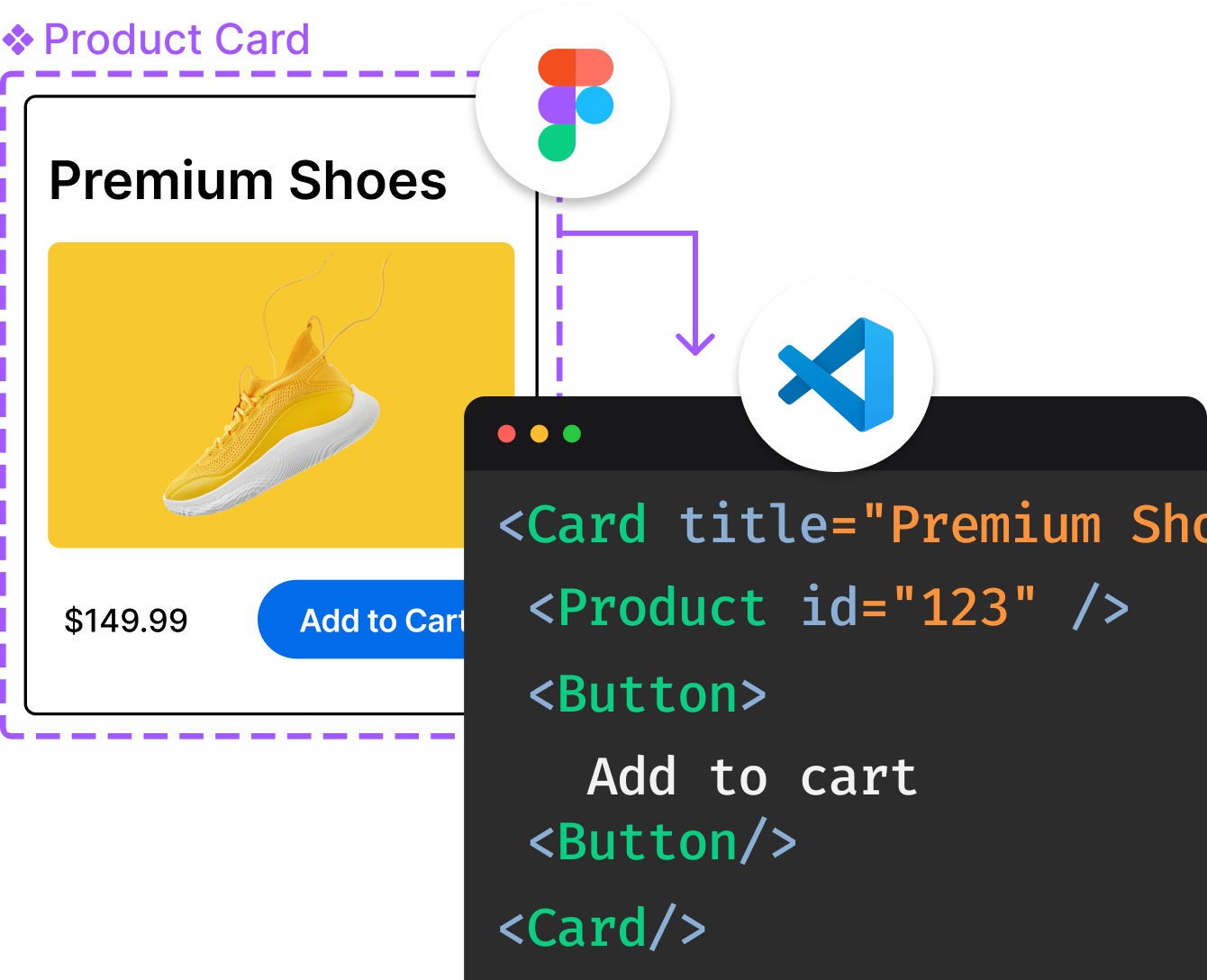
Introducing Visual Copilot: A new AI model to turn Figma designs to high quality code using your components.
Try Visual CopilotREADME
Overview
This project contains the general-purpose data-binding functionality and tree-model for Jackson Data Processor. It builds on Streaming API (stream parser/generator) package, and uses Jackson Annotations for configuration. Project is licensed under Apache License 2.0.
While the original use case for Jackson was JSON data-binding, it can now be used to read content encoded in other data formats as well, as long as parser and generator implementations exist. Naming of classes uses word 'JSON' in many places even though there is no actual hard dependency to JSON format.
Status
| Type | Status |
|---|---|
| Build (CI) |  |
| Artifact |  |
| OSS Sponsorship | |
| Javadocs |  |
| Code coverage (3.x) |  |
| OpenSSF Score |
Get it!
Maven
Functionality of this package is contained in Java package tools.jackson.databind (for Jackson 3.x), and can be used using following Maven dependency:
<properties>
  ...
  <!-- Use the latest version whenever possible. -->
  <jackson.version>3.0.0</jackson.version>
  ...
</properties>

<dependencies>
  ...
  <dependency>
    <groupId>tools.jackson.core</groupId>
    <artifactId>jackson-databind</artifactId>
    <version>${jackson.version}</version>
  </dependency>
  ...
</dependencies>
Package also depends on jackson-core and jackson-annotations packages, but when using build tools
like Maven or Gradle, dependencies are automatically included.
You may, however, want to use jackson-bom to ensure compatible versions
of dependencies.
If not using build tool that can handle dependencies using project's pom.xml, you will need to download
and include these 2 jars explicitly.
Non-Maven dependency resolution
For use cases that do not automatically resolve dependencies from Maven repositories, you can still download jars from Central Maven repository.
Databind jar is also a functional OSGi bundle, with proper import/export declarations, so it can be use on OSGi container as is.
Jackson 2.10 and above include module-info.class definitions so the jar is also a proper Java Module (JPMS).
Jackson 2.12 and above include additional Gradle 6 Module Metadata for version alignment with Gradle.
Compatibility
JDK
Jackson-databind package baseline JDK requirements are as follows:
- Versions 2.x require JDK 8
- Versions 3.x require JDK 17
Android
List is incomplete due to compatibility checker addition being done for Jackson 2.13.
- 2.14 - 2.19: Android SDK 26+
- 3.0: Android SDK 34+
for information on Android SDK versions to Android Release names see [https://en.wikipedia.org/wiki/Android_version_history]
Use It!
More comprehensive documentation can be found from Jackson-docs repository; as well as from Wiki of this project. But here are brief introductionary tutorials, in recommended order of reading.
1 minute tutorial: POJOs to JSON and back
The most common usage is to take piece of JSON, and construct a Plain Old Java Object ("POJO") out of it. So let's start there. With simple 2-property POJO like this:
// Note: can use getters/setters as well; here we just use public fields directly:
public class MyValue {
  public String name;
  public int age;
  // NOTE: if using getters/setters, can keep fields `protected` or `private`
}
we will need a tools.jackson.databind.ObjectMapper instance, used for all data-binding, so let's construct one:
// With default settings can use
ObjectMapper mapper = new ObjectMapper(); // create once, reuse

// But if configuration needed, use builder pattern:
ObjectMapper mapper = JsonMapper.builder()
    // configuration
    .build();
The default instance is fine for our use -- we will learn later on how to configure mapper instance if necessary. Usage is simple:
MyValue value = mapper.readValue(new File("data.json"), MyValue.class);
// or:
value = mapper.readValue(new URL("http://some.com/api/entry.json"), MyValue.class);
// or:
value = mapper.readValue("{\"name\":\"Bob\", \"age\":13}", MyValue.class);
And if we want to write JSON, we do the reverse:
mapper.writeValue(new File("result.json"), myResultObject);
// or:
byte[] jsonBytes = mapper.writeValueAsBytes(myResultObject);
// or:
String jsonString = mapper.writeValueAsString(myResultObject);
So far so good?
3 minute tutorial: Generic collections, Tree Model
Beyond dealing with simple Bean-style POJOs, you can also handle JDK Lists, Maps:
Map<String, Integer> scoreByName = mapper.readValue(jsonSource, Map.class);
List<String> names = mapper.readValue(jsonSource, List.class);

// and can obviously write out as well
mapper.writeValue(new File("names.json"), names);
as long as JSON structure matches, and types are simple.
If you have POJO values, you need to indicate actual type (note: this is NOT needed for POJO properties with List etc types):
Map<String, ResultValue> results = mapper.readValue(jsonSource,
   new TypeReference<Map<String, ResultValue>>() { } );
// why extra work? Java Type Erasure will prevent type detection otherwise
(note: no extra effort needed for serialization, regardless of generic types)
But wait! There is more!
(enters Tree Model...)
Tree Model
While dealing with Maps, Lists and other "simple" Object types (Strings, Numbers, Booleans) can be simple, Object traversal can be cumbersome.
This is where Jackson's Tree model can come in handy:
// can be read as generic JsonNode, if it can be Object or Array; or,
// if known to be Object, as ObjectNode, if array, ArrayNode etc:
JsonNode root = mapper.readTree("{ \"name\": \"Joe\", \"age\": 13 }");
String name = root.get("name").asText();
int age = root.get("age").asInt();

// can modify as well: this adds child Object as property 'other', set property 'type'
root.withObject("/other").put("type", "student");
String json = mapper.writeValueAsString(root); // prints below

/*
with above, we end up with something like as 'json' String:
{
  "name" : "Bob",
  "age" : 13,
  "other" : {
    "type" : "student"
  }
}
*/
Tree Model can be more convenient than data-binding, especially in cases where structure is highly dynamic, or does not map nicely to Java classes.
Finally, feel free to mix and match, and even in the same json document (useful when only part of the document is known and modeled in your code)
// Some parts of this json are modeled in our code, some are not
JsonNode root = mapper.readTree(complexJson);
Person p = mapper.treeToValue(root.get("person"), Person.class); // known single pojo
Map<String, Object> dynamicmetadata = mapper.treeToValue(root.get("dynamicmetadata"), Map.class); // unknown smallish subfield, convert all to collections
int singledeep = root.get("deep").get("large").get("hiearchy").get("important").intValue(); // single value in very deep optional subfield, ignoring the rest
int singledeeppath = root.at("/deep/large/hiearchy/important").intValue(); // json path
int singledeeppathunique = root.findValue("important").intValue(); // by unique field name

// Send an aggregate json from heterogenous sources
ObjectNode root = mapper.createObjectNode();
root.putPOJO("person", new Person("Joe")); // simple pojo
root.putPOJO("friends", List.of(new Person("Jane"), new Person("Jack"))); // generics
Map<String, Object> dynamicmetadata = Map.of("Some", "Metadata");
root.putPOJO("dynamicmetadata", dynamicmetadata);  // collections
root.putPOJO("dynamicmetadata", mapper.valueToTree(dynamicmetadata)); // same thing
root.set("dynamicmetadata", mapper.valueToTree(dynamicmetadata)); // same thing
root.withObject("deep").withObject("large").withObject("hiearchy").put("important", 42); // create as you go
root.withObject("/deep/large/hiearchy").put("important", 42); // json path
mapper.writeValueAsString(root);
Supported for Jackson 2.16+ versions
// generics
List<Person> friends = mapper.treeToValue(root.get("friends"), new TypeReference<List<Person>>() { });
// create as you go but without trying json path
root.withObjectProperty("deep").withObjectProperty("large").withObjectProperty("hiearchy").put("important", 42);
5 minute tutorial: Streaming parser, generator
As convenient as data-binding (to/from POJOs) can be; and as flexible as Tree model can be, there is one more canonical processing model available: incremental (aka "streaming") model. It is the underlying processing model that data-binding and Tree Model both build upon, but it is also exposed to users who want ultimate performance and/or control over parsing or generation details.
For in-depth explanation, look at Jackson Core component. But let's look at a simple teaser to whet your appetite.
ObjectMapper mapper = ...;
// First: write simple JSON output
File jsonFile = new File("test.json");
// note: method added in Jackson 2.11 (earlier would need to use
// mapper.getFactory().createGenerator(...)
JsonGenerator g = mapper.createGenerator(jsonFile, JsonEncoding.UTF8);
// write JSON: { "message" : "Hello world!" }
g.writeStartObject();
g.writeStringField("message", "Hello world!");
g.writeEndObject();
g.close();

// Second: read file back
try (JsonParser p = mapper.createParser(jsonFile)) {
  JsonToken t = p.nextToken(); // Should be JsonToken.START_OBJECT
  t = p.nextToken(); // JsonToken.FIELD_NAME
  if ((t != JsonToken.FIELD_NAME) || !"message".equals(p.getCurrentName())) {
   // handle error
  }
  t = p.nextToken();
  if (t != JsonToken.VALUE_STRING) {
   // similarly
  }
  String msg = p.getText();
  System.out.printf("My message to you is: %s!\n", msg);
}
10 minute tutorial: configuration
There are two entry-level configuration mechanisms you are likely to use: Features and Annotations.
Commonly used Features
Here are examples of configuration features that you are most likely to need to know about.
Let's start with higher-level data-binding configuration.
With Jackson 3.x, you need to use "Builder"-style construction (2.x also supported direct configuration but this was removed to make ObjectMapper instances immutable and fully thread-safe)
// SerializationFeature for changing how JSON is written

// to enable standard indentation ("pretty-printing"):

ObjcetMapper mapper = JsonMapper.builder()
    .enable(SerializationFeature.INDENT_OUTPUT)
    // to allow serialization of "empty" POJOs (no properties to serialize)
    // (without this setting, an exception is thrown in those cases)
    .disable(SerializationFeature.FAIL_ON_EMPTY_BEANS)
    // to write java.util.Date, Calendar as number (timestamp):
    .disable(DateTimeFeature.WRITE_DATES_AS_TIMESTAMPS)

    // DeserializationFeature for changing how JSON is read as POJOs:

    // to prevent exception when encountering unknown property:
    .disable(DeserializationFeature.FAIL_ON_UNKNOWN_PROPERTIES)
    // to allow coercion of JSON empty String ("") to null Object value:
    .enable(DeserializationFeature.ACCEPT_EMPTY_STRING_AS_NULL_OBJECT)

    .build();
In addition, you may need to change some of low-level JSON parsing, generation details. This happens by enabling disabling:
StreamReadFeature/StreamWriteFeaturefor generic (format-agnostic) settingsJsonReadFeature/JsonWriteFeaturefor JSON-specific settings
ObjcetMapper mapper = JsonMapper.builder()

    // StreamReadFeatures for configuring parsing settings:

    // to allow C/C++ style comments in JSON (non-standard, disabled by default)
    .configure(JsonReadFeature.ALLOW_JAVA_COMMENTS, true)
    // to allow (non-standard) unquoted field names in JSON:
    .configure(JsonReadFeature.ALLOW_UNQUOTED_PROPERTY_NAMES, true)
    // to allow use of apostrophes (single quotes), non standard
    .configure(JsonReadFeature.ALLOW_SINGLE_QUOTES, true)

    // JsonWriteFeature for configuring low-level JSON generation:

    // to force escaping of non-ASCII characters:
    .configure(JsonWriteFeature.ESCAPE_NON_ASCII, true)

    .build();
Full set of features are explained on Jackson Features page.
Annotations: changing property names
The simplest annotation-based approach is to use @JsonProperty annotation like so:
public class MyBean {
   private String _name;

   // without annotation, we'd get "theName", but we want "name":
   @JsonProperty("name")
   public String getTheName() { return _name; }

   // note: it is enough to add annotation on just getter OR setter;
   // so we can omit it here
   public void setTheName(String n) { _name = n; }
}
There are other mechanisms to use for systematic naming changes, including use of "Naming Strategy" (via @JsonNaming annotation).
You can use Mix-in Annotations to associate any and all Jackson-provided annotations.
Annotations: Ignoring properties
There are two main annotations that can be used to ignore properties: @JsonIgnore for individual properties; and @JsonIgnoreProperties for per-class definition
// means that if we see "foo" or "bar" in JSON, they will be quietly skipped
// regardless of whether POJO has such properties
@JsonIgnoreProperties({ "foo", "bar" })
public class MyBean
{
   // will not be written as JSON; nor assigned from JSON:
   @JsonIgnore
   public String internal;

   // no annotation, public field is read/written normally
   public String external;

   @JsonIgnore
   public void setCode(int c) { _code = c; }

   // note: will also be ignored because setter has annotation!
   public int getCode() { return _code; }
}
As with renaming, note that annotations are "shared" between matching fields, getters and setters: if only one has @JsonIgnore, it affects others.
But it is also possible to use "split" annotations, to for example:
public class ReadButDontWriteProps {
   private String _name;
   @JsonProperty public void setName(String n) { _name = n; }
   @JsonIgnore public String getName() { return _name; }
}
in this case, no "name" property would be written out (since 'getter' is ignored); but if "name" property was found from JSON, it would be assigned to POJO property!
For a more complete explanation of all possible ways of ignoring properties when writing out JSON, check "Filtering properties" article.
Annotations: using custom constructor
Unlike many other data-binding packages, Jackson does not require you to define "default constructor" (constructor that does not take arguments). While it will use one if nothing else is available, you can easily define that an argument-taking constructor is used:
public class CtorBean
{
  public final String name;
  public final int age;

  @JsonCreator // constructor can be public, private, whatever
  private CtorBean(@JsonProperty("name") String name,
    @JsonProperty("age") int age)
  {
      this.name = name;
      this.age = age;
  }
}
Constructors are especially useful in supporting use of Immutable objects.
Alternatively, you can also define "factory methods":
public class FactoryBean
{
    // fields etc omitted for brevity

    @JsonCreator
    public static FactoryBean create(@JsonProperty("name") String name) {
      // construct and return an instance
    }
}
Note that use of a "creator method" (@JsonCreator with @JsonProperty annotated arguments) does not preclude use of setters: you
can mix and match properties from constructor/factory method with ones that
are set via setters or directly using fields.
Tutorial: fancier stuff, conversions
One useful (but not very widely known) feature of Jackson is its ability to do arbitrary POJO-to-POJO conversions. Conceptually you can think of conversions as sequence of 2 steps: first, writing a POJO as JSON, and second, binding that JSON into another kind of POJO. Implementation just skips actual generation of JSON, and uses more efficient intermediate representation.
Conversions work between any compatible types, and invocation is as simple as:
ResultType result = mapper.convertValue(sourceObject, ResultType.class);
and as long as source and result types are compatible -- that is, if to-JSON, from-JSON sequence would succeed -- things will "just work". But here are a couple of potentially useful use cases:
// Convert from List<Integer> to int[]
List<Integer> sourceList = ...;
int[] ints = mapper.convertValue(sourceList, int[].class);
// Convert a POJO into Map!
Map<String,Object> propertyMap = mapper.convertValue(pojoValue, Map.class);
// ... and back
PojoType pojo = mapper.convertValue(propertyMap, PojoType.class);
// decode Base64! (default byte[] representation is base64-encoded String)
String base64 = "TWFuIGlzIGRpc3Rpbmd1aXNoZWQsIG5vdCBvbmx5IGJ5IGhpcyByZWFzb24sIGJ1dCBieSB0aGlz";
byte[] binary = mapper.convertValue(base64, byte[].class);
Basically, Jackson can work as a replacement for many Apache Commons components, for tasks like base64 encoding/decoding, and handling of "dyna beans" (Maps to/from POJOs).
Tutorial: Builder design pattern + Jackson
The Builder design pattern is a creational design pattern and can be used to create complex objects step by step. If we have an object that needs multiple checks on other dependencies, In such cases, it is preferred to use builder design pattern.
Let's consider the person structure, which has some optional fields
public class Person {
    private final String name;
    private final Integer age;

    // getters
}
Letâs see how we can employ its power in deserialization. First of all, letâs declare a private all-arguments constructor, and a Builder class.
private Person(String name, Integer age) {
    this.name = name;
    this.age = age;
}

static class Builder {
    String name;
    Integer age;

    Builder withName(String name) {
        this.name = name;
        return this;
    }

    Builder withAge(Integer age) {
        this.age = age;
        return this;
    }

    public Person build() {
        return new Person(name, age);
    }
}
First of all, we need to mark our class with @JsonDeserialize annotation, passing a builder parameter with a fully qualified domain name of a builder class.
After that, we need to annotate the builder class itself as @JsonPOJOBuilder.
@JsonDeserialize(builder = Person.Builder.class)
public class Person {
    //...

    @JsonPOJOBuilder
    static class Builder {
        //...
    }
}
A simple unit test will be:
String json = "{\"name\":\"Hassan\",\"age\":23}";
Person person = new ObjectMapper().readValue(json, Person.class);

assertEquals("Hassan", person.getName());
assertEquals(23, person.getAge().intValue());
If your builder pattern implementation uses other prefixes for methods or uses other names than build() for the builder method Jackson also provide a handy way for you.
For example, if you have a builder class that uses the "set" prefix for its methods and use the create() method instead of build() for building the whole class, you have to annotate your class like:
@JsonPOJOBuilder(buildMethodName = "create", withPrefix = "set")
static class Builder {
    String name;
    Integer age;

    Builder setName(String name) {
        this.name = name;
        return this;
    }

    Builder setAge(Integer age) {
        this.age = age;
        return this;
    }

    public Person create() {
        return new Person(name, age);
    }
}
To deserialize JSON fields under a different name than their object counterparts, the @JsonProperty annotation can be used within the builder on the appropriate fields.
@JsonPOJOBuilder(buildMethodName = "create", withPrefix = "set")
static class Builder {
    @JsonProperty("known_as")
    String name;
    Integer age;
    //...
}
This will deserialize the JSON property known_as into the builder field name. If a mapping like this is not provided (and further annotations aren't supplied to handle this), an Unrecognized field "known_as" exception will be thrown during deserialization if the field is provided anyways.
If you wish to refer to properties with more than one alias for deserialization, the @JsonAlias annotation can be used.
@JsonPOJOBuilder(buildMethodName = "create", withPrefix = "set")
static class Builder {
    @JsonProperty("known_as")
    @JsonAlias({"identifier", "first_name"})
    String name;
    Integer age;
    //...
}
This will deserialize JSON fields with known_as, as well as identifer and first_name into name. Rather than an array of entries, a single alias can be used by specifying a string as such JsonAlias("identifier").
Note: to use the @JsonAlias annotation, a @JsonProperty annotation must also be used.
Overall, Jackson library is very powerful in deserializing objects using builder pattern.
Tutorial: Collecting multiple errors (3.1+)
One recently introduced feature is the ability to collect multiple deserialization errors instead of failing fast on the first one. This can be really handy for validation use cases.
By default, if Jackson encounters a problem during deserialization -- say, string "xyz" for an int property -- it will immediately throw an exception and stop. But sometimes you want to see ALL the problems in one go.
Consider a case where you have a couple of fields with bad data:
class Order {
  public int orderId;
  public Date orderDate;
  public double amount;
}

String json = "{\"orderId\":\"not-a-number\",\"orderDate\":\"bad-date\",\"amount\":\"xyz\"}";
Normally you'd get an error about orderId, fix it, resubmit, then get error about orderDate, and so on. Not fun. So let's collect them all:
ObjectMapper mapper = new JsonMapper();
ObjectReader reader = mapper.readerFor(Order.class).problemCollectingReader();

try {
    Order result = reader.readValueCollectingProblems(json);
    // worked fine
} catch (DeferredBindingException ex) {
    System.out.println("Found " + ex.getProblems().size() + " problems:");
    for (CollectedProblem problem : ex.getProblems()) {
        System.out.println(problem.getPath() + ": " + problem.getMessage());
        // Can also access problem.getRawValue() to see what the bad input was
    }
}
This will report all 3 problems at once. Much better.
By default, Jackson will collect up to 100 problems before giving up (to prevent DoS-style attacks with huge bad payloads). You can configure this:
ObjectReader reader = mapper.readerFor(Order.class).problemCollectingReader(10); // limit to 10
Few things to keep in mind:
- This is best-effort: not all problems can be collected. Malformed JSON (like missing closing brace) or other structural problems will still fail immediately. But type conversion errors, unknown properties (if you enable that check), and such will be collected.
- Error paths use JSON Pointer notation (RFC 6901): so
"/items/0/price"means first item initemsarray,pricefield. Special characters get escaped (~becomes~0,/becomes~1). - Each call to
readValueCollectingProblems()gets its own problem bucket, so it's thread-safe to reuse the sameObjectReader. - Fields that fail to deserialize get default values (0 for primitives, null for objects) during the attempt, but if any problems are collected, only the problems are reported in the
DeferredBindingException- the partial result is not returned.
This is particularly useful for things like REST API validation (return all validation errors to client), or batch processing (log errors but keep going), or development tooling.
Contribute!
We would love to get your contribution, whether it's in form of bug reports, Requests for Enhancement (RFE), documentation, or code patches.
See CONTRIBUTING for details on things like:
- Community, ways to interact (mailing lists, gitter)
- Issue tracking (GitHub Issues)
- Paperwork: CLA (just once before the first merged contribution)
Limitation on Dependencies by Core Components
One additional limitation exists for so-called core components (streaming api, jackson-annotations and jackson-databind): no additional dependencies are allowed beyond:
- Core components may rely on any methods included in the supported JDK
- Minimum Java version is Java 7 for Jackson 2.7 - 2.12 of
jackson-databindand most non-core components - Minimum Java version is Java 8 for Jackson 2.13 and later
- Minimum Java version is Java 7 for Jackson 2.7 - 2.12 of
- Jackson-databind (this package) depends on the other two (annotations, streaming).
This means that anything that has to rely on additional APIs or libraries needs to be built as an extension, usually a Jackson module.
Branches
3.x branch is for developing the next major Jackson version -- 3.0 -- but there
are active maintenance branches in which much of development happens:
2.xis the branch for "next" minor version to release (2.20 as of May 2025)2.19is the current stable minor 2.x version2.18is for selected backported fixes
Older branches are usually not maintained after being declared as closed
on Jackson Releases page,
but exist just in case a rare emergency patch is needed.
All released versions have matching git tags (e.g. jackson-dataformats-binary-2.12.3).
Differences from Jackson 1.x
Repository contains versions 2.0 and above: source code for last (1.x) release, 1.9, is available at Jackson-1 repo.
Main differences compared to 1.x "mapper" jar are:
- Maven build instead of Ant
- Java package:
- 1.x:
org.codehaus.jackson.mapper - 2.x:
com.fasterxml.jackson.databind - 3.x:
tools.jackson.databind
- 1.x:
Support
Community support
Jackson components are supported by the Jackson community through mailing lists, Gitter forum, Github issues. See Participation, Contributing for full details.
Enterprise support
Available as part of the Tidelift Subscription.
The maintainers of jackson-databind and thousands of other packages are working with Tidelift to deliver commercial support and maintenance for the open source dependencies you use to build your applications. Save time, reduce risk, and improve code health, while paying the maintainers of the exact dependencies you use. Learn more.
Further reading
Related:
- Core annotations package defines annotations commonly used for configuring databinding details
- Core parser/generator package defines low-level incremental/streaming parsers, generators
- Jackson Project Home has links to all modules
- Jackson Docs is project's documentation hub
Top Related Projects
A Java serialization/deserialization library to convert Java Objects into JSON and back
FASTJSON 2.0.x has been released, faster and more secure, recommend you upgrade.
A modern JSON library for Kotlin and Java.
Core part of Jackson that defines Streaming API as well as basic shared abstractions
Convert designs to code with AI
Introducing Visual Copilot: A new AI model to turn Figma designs to high quality code using your components.
Try Visual Copilot