 Stable-Diffusion
FLUX, Stable Diffusion, SDXL, SD3, LoRA, Fine Tuning, DreamBooth, Training, Automatic1111, Forge WebUI, SwarmUI, DeepFake, TTS, Animation, Text To Video, Tutorials, Guides, Lectures, Courses, ComfyUI, Google Colab, RunPod, Kaggle, NoteBooks, ControlNet, TTS, Voice Cloning, AI, AI News, ML, ML News, News, Tech, Tech News, Kohya, Midjourney, RunPod
Top Related Projects

High-Resolution Image Synthesis with Latent Diffusion Models

Stable Diffusion web UI

🤗 Diffusers: State-of-the-art diffusion models for image, video, and audio generation in PyTorch.

Invoke is a leading creative engine for Stable Diffusion models, empowering professionals, artists, and enthusiasts to generate and create visual media using the latest AI-driven technologies. The solution offers an industry leading WebUI, and serves as the foundation for multiple commercial products.
Quick Overview
FurkanGozukara/Stable-Diffusion is a GitHub repository that provides a comprehensive collection of tools, scripts, and resources for working with Stable Diffusion, a popular text-to-image generation model. The repository includes various implementations, optimizations, and utilities to enhance the Stable Diffusion experience for both beginners and advanced users.
Pros
- Extensive collection of tools and scripts for Stable Diffusion
- Regular updates and active maintenance
- Includes optimizations for improved performance
- Provides resources and guides for users of all skill levels
Cons
- Large repository size may be overwhelming for beginners
- Some advanced features may require additional setup or dependencies
- Documentation could be more structured and organized
- May require significant computational resources for optimal performance
Code Examples
- Loading and using a Stable Diffusion model:
from diffusers import StableDiffusionPipeline
import torch

model_id = "runwayml/stable-diffusion-v1-5"
pipe = StableDiffusionPipeline.from_pretrained(model_id, torch_dtype=torch.float16)
pipe = pipe.to("cuda")

prompt = "A beautiful sunset over a calm ocean"
image = pipe(prompt).images[0]
image.save("generated_image.png")
- Applying textual inversion for custom concepts:
from diffusers import StableDiffusionPipeline
import torch

model_id = "path/to/fine_tuned_model"
pipe = StableDiffusionPipeline.from_pretrained(model_id, torch_dtype=torch.float16)
pipe = pipe.to("cuda")

prompt = "A <custom-concept> in the style of Van Gogh"
image = pipe(prompt).images[0]
image.save("custom_concept_image.png")
- Using LoRA (Low-Rank Adaptation) for fine-tuning:
from diffusers import StableDiffusionPipeline
import torch

base_model_id = "runwayml/stable-diffusion-v1-5"
lora_model_id = "path/to/lora_model"

pipe = StableDiffusionPipeline.from_pretrained(base_model_id, torch_dtype=torch.float16)
pipe.unet.load_attn_procs(lora_model_id)
pipe = pipe.to("cuda")

prompt = "A portrait in the style of the LoRA model"
image = pipe(prompt).images[0]
image.save("lora_generated_image.png")
Getting Started
To get started with the FurkanGozukara/Stable-Diffusion repository:
-
Clone the repository:
git clone https://github.com/FurkanGozukara/Stable-Diffusion.git -
Install the required dependencies:
pip install -r requirements.txt -
Follow the instructions in the repository's README for setting up specific tools and scripts.
-
Run the desired script or use the provided notebooks to generate images with Stable Diffusion.
Competitor Comparisons
High-Resolution Image Synthesis with Latent Diffusion Models
Pros of stablediffusion
- Official repository maintained by Stability AI, ensuring up-to-date and reliable codebase
- Comprehensive documentation and examples for various use cases
- Active community support and regular updates
Cons of stablediffusion
- Steeper learning curve for beginners due to its extensive features
- Requires more computational resources for optimal performance
Code Comparison
stablediffusion:
from diffusers import StableDiffusionPipeline

pipe = StableDiffusionPipeline.from_pretrained("stabilityai/stable-diffusion-2-1")
prompt = "a photo of an astronaut riding a horse on mars"
image = pipe(prompt).images[0]
image.save("astronaut_rides_horse.png")
Stable-Diffusion:
import modules.scripts
from modules import sd_samplers
from modules.processing import process_images

p = processing.StableDiffusionProcessing(...)
processed = process_images(p)
The stablediffusion repository provides a more streamlined API for generating images, while Stable-Diffusion offers more granular control over the generation process. stablediffusion is better suited for quick implementations, whereas Stable-Diffusion allows for more customization and fine-tuning of the image generation pipeline.
Stable Diffusion web UI
Pros of stable-diffusion-webui
- More extensive feature set, including advanced image generation options and a wider range of extensions
- Larger and more active community, resulting in frequent updates and improvements
- User-friendly web interface with intuitive controls and real-time previews
Cons of stable-diffusion-webui
- Steeper learning curve due to the abundance of features and options
- Higher system requirements, potentially slower on lower-end hardware
- More complex setup process, especially for users new to machine learning environments
Code Comparison
Stable-Diffusion:
def generate_image(prompt, steps=50, cfg_scale=7.5):
    with torch.no_grad():
        image = pipeline(prompt, num_inference_steps=steps, guidance_scale=cfg_scale).images[0]
    return image
stable-diffusion-webui:
def generate_image(p, *args):
    processed = process_images(p)
    return processed.images[0] if len(processed.images) > 0 else None
The code snippets show that stable-diffusion-webui uses a more abstracted approach, potentially offering greater flexibility and customization options. However, this abstraction may make it less straightforward for beginners to understand and modify the core functionality.
🤗 Diffusers: State-of-the-art diffusion models for image, video, and audio generation in PyTorch.
Pros of diffusers
- More comprehensive library with support for multiple diffusion models
- Better documentation and integration with the broader Hugging Face ecosystem
- Active development and frequent updates
Cons of diffusers
- Steeper learning curve for beginners
- May require more setup and configuration for specific use cases
Code Comparison
Stable-Diffusion:
from stable_diffusion import StableDiffusion

sd = StableDiffusion()
image = sd.generate("A beautiful landscape")
image.save("landscape.png")
diffusers:
from diffusers import StableDiffusionPipeline
import torch

pipeline = StableDiffusionPipeline.from_pretrained("runwayml/stable-diffusion-v1-5")
pipeline = pipeline.to("cuda")
image = pipeline("A beautiful landscape").images[0]
image.save("landscape.png")
The Stable-Diffusion repository provides a more straightforward API for quick image generation, while diffusers offers more flexibility and control over the pipeline components. diffusers also supports hardware acceleration out of the box, as seen in the code example.
Invoke is a leading creative engine for Stable Diffusion models, empowering professionals, artists, and enthusiasts to generate and create visual media using the latest AI-driven technologies. The solution offers an industry leading WebUI, and serves as the foundation for multiple commercial products.
Pros of InvokeAI
- More comprehensive and feature-rich UI, including a web interface
- Better documentation and community support
- Regular updates and active development
Cons of InvokeAI
- Steeper learning curve due to more complex features
- Requires more system resources to run effectively
- May be overwhelming for beginners or those seeking a simpler interface
Code Comparison
InvokeAI:
from invokeai.app.services.image_generation import ImageGenerationService

generator = ImageGenerationService()
result = generator.generate(prompt="A beautiful sunset over the ocean")
Stable-Diffusion:
from stable_diffusion import StableDiffusion

sd = StableDiffusion()
image = sd.generate("A beautiful sunset over the ocean")
Both repositories provide implementations of Stable Diffusion, but InvokeAI offers a more comprehensive package with additional features and a robust UI. Stable-Diffusion, on the other hand, provides a simpler, more straightforward implementation that may be easier for beginners to understand and use. The code comparison shows that InvokeAI uses a service-based approach, while Stable-Diffusion offers a more direct method for image generation.
Convert  designs to code with AI

Introducing Visual Copilot: A new AI model to turn Figma designs to high quality code using your components.
Try Visual CopilotREADME











Expert-Level Tutorials on Generative AI
Hello everyone. I am Dr. Furkan Gözükara. I am a PhD Computer Engineer working as an asistant professor + full time Generative AI researcher + developer + tutorials maker
SECourses is a dedicated YouTube channel for the following topics : Tech, AI, News, Science, Robotics, Singularity, ComfyUI, SwarmUI, ML, Artificial Intelligence, Humanoid Robots, Wan 2.2, FLUX, Krea, Qwen Image, VLMs, Stable Diffusion, SDXL, SeedVR2, TOPAZ, SUPIR, ChatGPT, Gemini, LLMs, Claude, Coding, Agents, Agentic, Animation, Deep Fakes, Fooocus, ControlNet, RunPod, Massed Compute, Windows, Hardware, Inpainting, Cloud, Kaggle, Colab, Automatic1111, SD Web UI, TensorRT, DreamBooth, LoRA, Training, Fine Tuning, Kohya, OneTrainer, Upscale, 3D, Musubi Tuner, Tutorials, Qwen Image Edit, Image Upscaling, Video Upscaling, TTS, Voice Training, Text-to-Speech, Text-to-Music, Image2Image, Text2Video, Video2Video, Style Transfer, Style Training, FLUX Kontext, Face Swap, Lip Sync, Text-to-3D, Avatar Generation, 3D Generation, AGI, Prompt Engineering, Engineering, Gradio, CUDA, GGUF, Quantization, GPT-5, Whisper and more
Our Platform Links
1ï¸â£ SECourses YouTube (48,000+ subscribers) a must follow one ⤵ï¸
1ï¸â£ https://www.youtube.com/@SECourses
2ï¸â£ SECourses Patreon (25,000+ subscribers) a must follow one ⤵ï¸
2ï¸â£ https://www.patreon.com/c/SECourses
3ï¸â£ SECourses Discord (10,000+ members) a must join one ⤵ï¸
3ï¸â£ https://discord.com/servers/software-engineering-courses-secourses-772774097734074388
LinkedIn : https://www.linkedin.com/in/furkangozukara
Twitter : https://twitter.com/GozukaraFurkan
Linktr : https://linktr.ee/FurkanGozukara
Google Scholar : https://scholar.google.com/citations?user=_2_KAUsAAAAJ&hl=en
Mastodon : https://mastodon.social/@furkangozukara
Our 2,500+ Stars GitHub Stable Diffusion and other tutorials repo ⤵ï¸
https://github.com/FurkanGozukara/Stable-Diffusion
Regarding This Repository
I am keeping this list up-to-date. I got upcoming new awesome video ideas. Trying to find time to do that.
I am open to any criticism you have. I am constantly trying to improve the quality of my tutorial guide videos. Please leave comments with both your suggestions and what you would like to see in future videos.
All videos have manually fixed subtitles and properly prepared video chapters. You can watch with these perfect subtitles or look for the chapters you are interested in.
Since my profession is teaching, I usually do not skip any of the important parts. Therefore, you may find my videos a little bit longer.
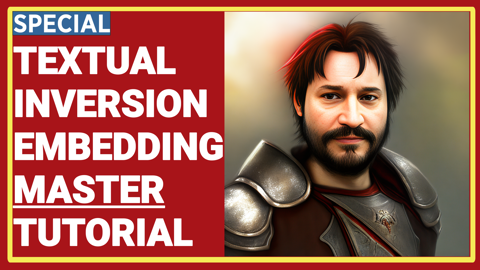
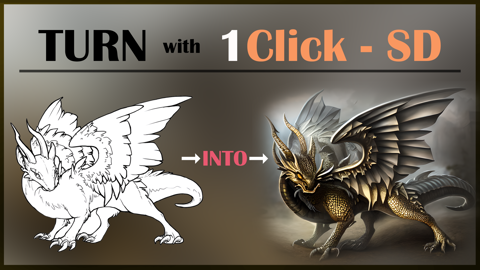
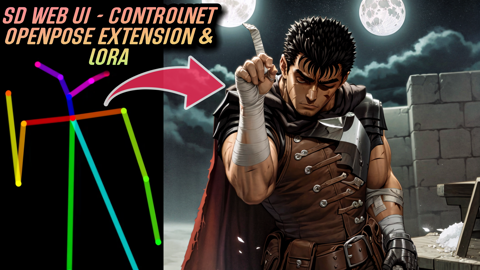
Playlist link on YouTube: Stable Diffusion Tutorials, Automatic1111 Web UI & Google Colab Guides, DreamBooth, Textual Inversion / Embedding, LoRA, AI Upscaling, Video to Anime
Tutorial Videos















 ](
](











Top Related Projects
High-Resolution Image Synthesis with Latent Diffusion Models
Stable Diffusion web UI
🤗 Diffusers: State-of-the-art diffusion models for image, video, and audio generation in PyTorch.
Invoke is a leading creative engine for Stable Diffusion models, empowering professionals, artists, and enthusiasts to generate and create visual media using the latest AI-driven technologies. The solution offers an industry leading WebUI, and serves as the foundation for multiple commercial products.
Convert designs to code with AI
Introducing Visual Copilot: A new AI model to turn Figma designs to high quality code using your components.
Try Visual Copilot