 MaterialDesignInXamlToolkit
Google's Material Design in XAML & WPF, for C# & VB.Net.
Top Related Projects

Develop Desktop, Embedded, Mobile and WebAssembly apps with C# and XAML. The most popular .NET UI client technology

A framework that allows developers to cobble together a better UI for their own WPF applications with minimal effort.

Dragable and tearable tab control for WPF

Modern UI for WPF

Theming .NET WinForms, C# or VB.Net, to Google's Material Design Principles.

Modern styles and controls for your WPF applications
Quick Overview
MaterialDesignInXamlToolkit is a comprehensive library for implementing Google's Material Design in WPF applications. It provides a rich set of controls, styles, and themes that adhere to Material Design principles, allowing developers to create modern and visually appealing user interfaces with ease.
Pros
- Extensive collection of Material Design-compliant controls and styles
- Regular updates and active community support
- Seamless integration with existing WPF projects
- Customizable themes and color schemes
Cons
- Learning curve for developers new to Material Design concepts
- Some advanced customizations may require in-depth knowledge of the library
- Potential performance impact on large-scale applications with heavy use of animations
Code Examples
- Setting up the Material Design theme in App.xaml:
<Application.Resources>
    <ResourceDictionary>
        <ResourceDictionary.MergedDictionaries>
            <materialDesign:BundledTheme BaseTheme="Light" PrimaryColor="DeepPurple" SecondaryColor="Lime" />
            <ResourceDictionary Source="pack://application:,,,/MaterialDesignThemes.Wpf;component/Themes/MaterialDesignTheme.Defaults.xaml" />
        </ResourceDictionary.MergedDictionaries>
    </ResourceDictionary>
</Application.Resources>
- Creating a Material Design button with an icon:
<Button Style="{StaticResource MaterialDesignRaisedButton}"
        Content="SUBMIT"
        ToolTip="Submit the form">
    <Button.Icon>
        <materialDesign:PackIcon Kind="Send" />
    </Button.Icon>
</Button>
- Implementing a Material Design card:
<materialDesign:Card Padding="32" Margin="16">
    <StackPanel>
        <TextBlock Style="{DynamicResource MaterialDesignHeadline6TextBlock}">
            Card Title
        </TextBlock>
        <TextBlock Style="{DynamicResource MaterialDesignBody2TextBlock}" Margin="0 8 0 0">
            Card content goes here.
        </TextBlock>
    </StackPanel>
</materialDesign:Card>
Getting Started
-
Install the NuGet package:
Install-Package MaterialDesignThemes -
Add the following to your App.xaml:
<Application.Resources> <ResourceDictionary> <ResourceDictionary.MergedDictionaries> <materialDesign:BundledTheme BaseTheme="Light" PrimaryColor="DeepPurple" SecondaryColor="Lime" /> <ResourceDictionary Source="pack://application:,,,/MaterialDesignThemes.Wpf;component/Themes/MaterialDesignTheme.Defaults.xaml" /> </ResourceDictionary.MergedDictionaries> </ResourceDictionary> </Application.Resources> -
Add the namespace to your XAML files:
xmlns:materialDesign="http://materialdesigninxaml.net/winfx/xaml/themes" -
Start using Material Design controls and styles in your WPF application!
Competitor Comparisons
Develop Desktop, Embedded, Mobile and WebAssembly apps with C# and XAML. The most popular .NET UI client technology
Pros of Avalonia
- Cross-platform support for Windows, macOS, Linux, iOS, Android, and WebAssembly
- Modern, flexible UI framework with XAML-based design
- Active development and growing community
Cons of Avalonia
- Steeper learning curve for developers new to XAML-based frameworks
- Smaller ecosystem and fewer third-party controls compared to WPF
Code Comparison
MaterialDesignInXamlToolkit (XAML):
<Button Style="{StaticResource MaterialDesignRaisedButton}"
        Content="ACCEPT" />
Avalonia (XAML):
<Button Classes="accent"
        Content="ACCEPT" />
Both frameworks use XAML for UI design, but Avalonia's syntax is more streamlined and platform-agnostic. MaterialDesignInXamlToolkit focuses on providing Material Design-styled controls for WPF applications, while Avalonia offers a complete cross-platform UI framework with its own styling system.
Avalonia's main advantage is its cross-platform capabilities, allowing developers to create applications that run on multiple operating systems and devices. However, MaterialDesignInXamlToolkit excels in providing a comprehensive set of Material Design controls and themes specifically for WPF applications, which may be preferable for Windows-focused projects.
Developers choosing between these frameworks should consider their target platforms, design requirements, and existing expertise in XAML-based technologies.
A framework that allows developers to cobble together a better UI for their own WPF applications with minimal effort.
Pros of MahApps.Metro
- More established and mature project with a longer history
- Wider range of controls and features out-of-the-box
- Better integration with Windows-specific UI elements
Cons of MahApps.Metro
- Less adherence to Material Design principles
- Slower adoption of modern design trends
- More complex theming system compared to MaterialDesignInXamlToolkit
Code Comparison
MahApps.Metro:
<Controls:MetroWindow x:Class="MainWindow"
    xmlns:Controls="http://metro.mahapps.com/winfx/xaml/controls"
    Title="MahApps.Metro Window" Height="600" Width="800">
    <Controls:MetroWindow.RightWindowCommands>
        <Controls:WindowCommands>
            <Button Content="Settings" />
        </Controls:WindowCommands>
    </Controls:MetroWindow.RightWindowCommands>
</Controls:MetroWindow>
MaterialDesignInXamlToolkit:
<Window x:Class="MainWindow"
    xmlns:materialDesign="http://materialdesigninxaml.net/winfx/xaml/themes"
    Title="Material Design Window" Height="600" Width="800">
    <materialDesign:Card Padding="32" Margin="16">
        <TextBlock Style="{DynamicResource MaterialDesignHeadline6TextBlock}">
            Hello, Material Design!
        </TextBlock>
    </materialDesign:Card>
</Window>
Dragable and tearable tab control for WPF
Pros of Dragablz
- Focused on providing advanced tab control functionality, including docking and layout features
- Lightweight and specialized, making it easier to integrate for specific tab-related needs
- Offers unique features like tab tearing and docking that are not present in MaterialDesignInXamlToolkit
Cons of Dragablz
- Limited scope compared to MaterialDesignInXamlToolkit, which offers a comprehensive Material Design implementation
- Less active development and community support
- Requires more custom styling to achieve a cohesive Material Design look
Code Comparison
Dragablz tab control implementation:
<dragablz:TabablzControl>
    <dragablz:TabablzControl.InterTabController>
        <dragablz:InterTabController />
    </dragablz:TabablzControl.InterTabController>
    <TabItem Header="Tab No. 1" IsSelected="True">
        <TextBlock>Hello World</TextBlock>
    </TabItem>
</dragablz:TabablzControl>
MaterialDesignInXamlToolkit tab control implementation:
<materialDesign:Card>
    <TabControl Style="{StaticResource MaterialDesignTabControl}">
        <TabItem Header="Tab No. 1">
            <TextBlock>Hello World</TextBlock>
        </TabItem>
    </TabControl>
</materialDesign:Card>
Both libraries offer unique features and cater to different needs. Dragablz excels in advanced tab control functionality, while MaterialDesignInXamlToolkit provides a comprehensive Material Design implementation for WPF applications.
Modern UI for WPF
Pros of MUI
- Lightweight and minimalistic design, focusing on core Material Design principles
- Easier to customize and extend due to its simpler architecture
- Better performance for smaller applications with fewer components
Cons of MUI
- Less comprehensive component library compared to MaterialDesignInXamlToolkit
- Fewer built-in themes and color options
- Less active community and fewer updates
Code Comparison
MUI:
<mui:ModernWindow x:Class="MainWindow"
    xmlns:mui="http://firstfloorsoftware.com/ModernUI"
    Title="MUI Example" Style="{StaticResource BlankWindow}">
    <mui:ModernFrame Source="/Pages/Home.xaml" />
</mui:ModernWindow>
MaterialDesignInXamlToolkit:
<Window x:Class="MainWindow"
    xmlns:materialDesign="http://materialdesigninxaml.net/winfx/xaml/themes"
    TextElement.Foreground="{DynamicResource MaterialDesignBody}"
    Background="{DynamicResource MaterialDesignPaper}">
    <materialDesign:Card Padding="32" Margin="16">
        <TextBlock Style="{DynamicResource MaterialDesignHeadline6TextBlock}">
            Hello, Material Design!
        </TextBlock>
    </materialDesign:Card>
</Window>
Both libraries offer Material Design-inspired components for WPF applications, but MaterialDesignInXamlToolkit provides a more extensive set of controls and styling options. MUI is better suited for simpler projects or those requiring a lighter footprint, while MaterialDesignInXamlToolkit is ideal for larger applications needing a wide range of pre-built components and theming capabilities.
Theming .NET WinForms, C# or VB.Net, to Google's Material Design Principles.
Pros of MaterialSkin
- Simpler implementation for basic Material Design elements
- Lightweight and easy to integrate into existing WinForms projects
- Faster rendering performance for simpler UI components
Cons of MaterialSkin
- Limited to Windows Forms applications
- Fewer customization options compared to MaterialDesignInXamlToolkit
- Less frequent updates and smaller community support
Code Comparison
MaterialSkin:
MaterialSkinManager.Instance.AddFormToManage(this);
MaterialSkinManager.Instance.Theme = MaterialSkinManager.Themes.LIGHT;
MaterialSkinManager.Instance.ColorScheme = new ColorScheme(Primary.Blue400, Primary.Blue500, Primary.Blue500, Accent.LightBlue200, TextShade.WHITE);
MaterialDesignInXamlToolkit:
<ResourceDictionary Source="pack://application:,,,/MaterialDesignThemes.Wpf;component/Themes/MaterialDesignTheme.Light.xaml" />
<ResourceDictionary Source="pack://application:,,,/MaterialDesignThemes.Wpf;component/Themes/MaterialDesignTheme.Defaults.xaml" />
<ResourceDictionary Source="pack://application:,,,/MaterialDesignColors;component/Themes/Recommended/Primary/MaterialDesignColor.DeepPurple.xaml" />
<ResourceDictionary Source="pack://application:,,,/MaterialDesignColors;component/Themes/Recommended/Accent/MaterialDesignColor.Lime.xaml" />
MaterialDesignInXamlToolkit offers more extensive theming options and is designed for WPF applications, while MaterialSkin provides a simpler approach for Windows Forms projects. The code comparison shows the different setup processes, with MaterialSkin using C# for configuration and MaterialDesignInXamlToolkit utilizing XAML resources.
Modern styles and controls for your WPF applications
Pros of ModernWpf
- Focuses on providing a modern Windows 10/11 look and feel, closely mimicking native UI
- Lighter weight and potentially easier to integrate into existing projects
- Includes built-in support for dark mode and high contrast themes
Cons of ModernWpf
- Less extensive component library compared to MaterialDesignInXamlToolkit
- May not be as suitable for projects requiring a more customized or branded appearance
- Less active community and fewer contributors
Code Comparison
MaterialDesignInXamlToolkit:
<Button Style="{StaticResource MaterialDesignRaisedButton}"
        Content="ACCEPT" />
ModernWpf:
<Button Style="{StaticResource AccentButtonStyle}"
        Content="Accept" />
Both libraries offer custom styles for common WPF controls, but MaterialDesignInXamlToolkit tends to use more descriptive style names, while ModernWpf often aligns closer to default WPF naming conventions with a focus on Windows 10/11 styling.
MaterialDesignInXamlToolkit provides a wider range of pre-built components and more extensive customization options, making it suitable for projects requiring a distinct Material Design look. ModernWpf, on the other hand, excels at providing a native Windows 10/11 appearance with minimal setup, making it ideal for applications that aim to blend seamlessly with the operating system's UI.
Convert  designs to code with AI
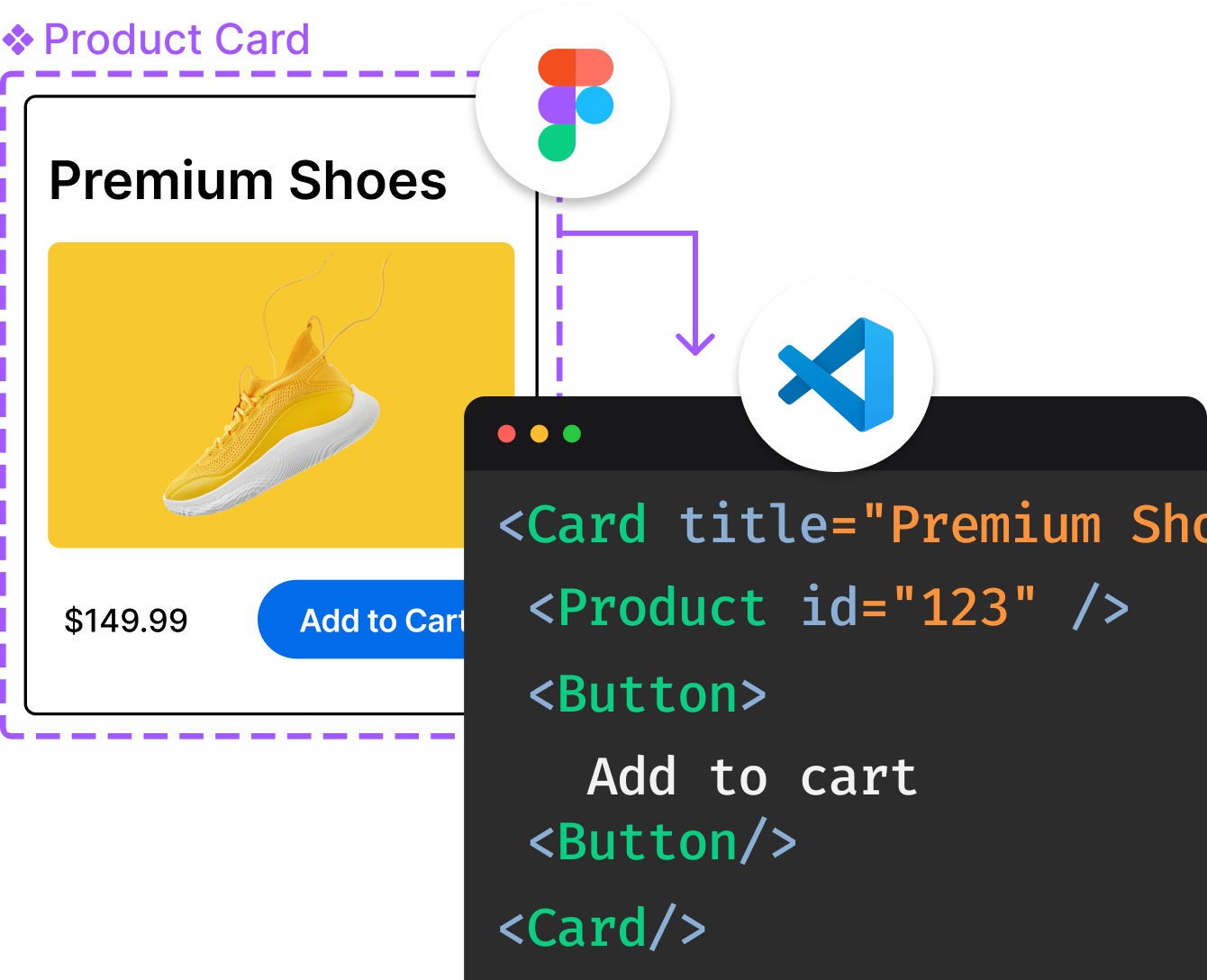
Introducing Visual Copilot: A new AI model to turn Figma designs to high quality code using your components.
Try Visual CopilotREADME
Material Design In XAML Toolkit 


)
)



Comprehensive and easy to use Material Design theme and control library for the Windows desktop (WPF).
- Material Design styles for all major WPF Framework controls
- Additional controls to support the theme, including Multi Action Button, Cards, Dialogs, Clock
- Easy configuration of palette (at design and runtime), according to Google's guidelines
- Full Material Design Icons icon pack
- Easy transition effects
- Compatible with Dragablz, MahApps
- Demo applications included in the source project
Table of contents
Getting started
[!NOTE] See the full starting guide for more in-depth information.
This quick guide assumes you have already created a WPF project and are using Microsoft Visual Studio 2022.
- Install the toolkit through the visual NuGet package manager in Visual Studio or use the following command:
Install-Package MaterialDesignThemes
- Alter your
App.xaml
<Application
  x:Class="Example.App"
  xmlns="http://schemas.microsoft.com/winfx/2006/xaml/presentation"
  xmlns:x="http://schemas.microsoft.com/winfx/2006/xaml"
  xmlns:materialDesign="http://materialdesigninxaml.net/winfx/xaml/themes"
  StartupUri="MainWindow.xaml">
    <Application.Resources>
        <ResourceDictionary>
            <ResourceDictionary.MergedDictionaries>
                <materialDesign:BundledTheme BaseTheme="Light" PrimaryColor="DeepPurple" SecondaryColor="Lime" />

                <ResourceDictionary Source="pack://application:,,,/MaterialDesignThemes.Wpf;component/Themes/MaterialDesign2.Defaults.xaml" />
            </ResourceDictionary.MergedDictionaries>
        </ResourceDictionary>
    </Application.Resources>
</Application>
-
If you want to target Material Design 3, alter the
ResourceDictionaryline in the snippet above to useMaterialDesign3.Defaults.xaml. -
Alter your
MainWindow.xaml
<Window [...]
  Style="{StaticResource MaterialDesignWindow}"
  [...] >
Building the source
To build the project, following is required:
- Microsoft Visual Studio 2022
- .NET desktop development workload
This repository also contains 3 different demo applications:
MaterialDesignDemo- Reference WPF app with Material Design 2 styling, this contains all controls and is a recommended tool when developing apps with this libraryMaterialDesign3Demo- Reference WPF app with Material Design 3 styling, under developmentMahAppsDragablzDemo- Demo app for combining with Dragablz and MahApps
Screenshots
Material Design 3 demo app screenshots


Material Design 2 demo app screenshots
[!WARNING] The screenshots below are taken from the Material Design 2 demo app. Material Design 3 is the latest version, so the UI shown here may differ from the latest design.


More examples
FAQ
Contributing
Before contributing code read the Contribution Guidelines
- GitHub issues are for bugs and feature requests.
- For questions, help and chat in general, please use the GitHub discussion tab or the Discord server.
- Stack Overflow tag:
material-design-in-xaml
Want to say thanks? ðð»
- Hit the :star: star :star: button
- If you'd like to make a very much appreciated financial donation please visit open collective
This project exists thanks to all the people who contribute.
Mentions
- James Willock
 - Founder of the project
 - Kevin Bost
 - Maintainer of the repository
 - Snalty
 - Designer of the logo
 - Icon pack sourced from Material Design Icons
- ControlzEx - Library used in MaterialDesignInXAML
- Ignace Maes - Whose Material Skin project inspired the original material design theme for Dragablz, which in turn led James Willock start this project
- Material Design Extensions - A community repository based on this library that provides additional controls and features.
- Contributors - A big thank you to all the contributors of the project!
Backers
Thank you to all our backers! ð Become a backer.

Sponsors
Support this project by becoming a sponsor. Your logo will show up here with a link to your website. Become a sponsor.





Top Related Projects
Develop Desktop, Embedded, Mobile and WebAssembly apps with C# and XAML. The most popular .NET UI client technology
A framework that allows developers to cobble together a better UI for their own WPF applications with minimal effort.
Dragable and tearable tab control for WPF
Modern UI for WPF
Theming .NET WinForms, C# or VB.Net, to Google's Material Design Principles.
Modern styles and controls for your WPF applications
Convert designs to code with AI
Introducing Visual Copilot: A new AI model to turn Figma designs to high quality code using your components.
Try Visual Copilot