
Top Related Projects

Open source implementation of OPC UA (OPC Unified Architecture) aka IEC 62541 licensed under Mozilla Public License v2.0

Unlocking the Full Potential of OPC UA with Typescript and NodeJS - http://node-opcua.github.io/
Quick Overview
The UA-.NETStandard repository is an official implementation of the OPC Unified Architecture (OPC UA) standard for .NET Standard. It provides a comprehensive set of libraries and tools for developing OPC UA clients and servers in .NET environments, supporting various platforms and frameworks.
Pros
- Cross-platform compatibility due to .NET Standard implementation
- Comprehensive support for OPC UA features and specifications
- Active development and maintenance by the OPC Foundation
- Extensive documentation and sample applications
Cons
- Steep learning curve for newcomers to OPC UA
- Complex architecture may be overwhelming for simple use cases
- Limited support for older .NET Framework versions
- Performance overhead compared to native implementations
Code Examples
- Creating an OPC UA client and connecting to a server:
using Opc.Ua;
using Opc.Ua.Client;

var config = new ApplicationConfiguration()
{
    ApplicationName = "MyClient",
    ApplicationUri = "urn:MyClient",
    ApplicationType = ApplicationType.Client,
    SecurityConfiguration = new SecurityConfiguration { AutoAcceptUntrustedCertificates = true },
    TransportConfigurations = new TransportConfigurationCollection(),
    TransportQuotas = new TransportQuotas { OperationTimeout = 15000 },
    ClientConfiguration = new ClientConfiguration { DefaultSessionTimeout = 60000 }
};

await config.Validate(ApplicationType.Client);
var application = new ApplicationInstance(config);
await application.CheckApplicationInstanceCertificate(false, 0);

using (var session = await Session.Create(config, new ConfiguredEndpoint(null, new EndpointDescription("opc.tcp://localhost:4840")), false, "", 60000, null, null))
{
    // Use the session to interact with the server
}
- Reading a value from an OPC UA server:
NodeId nodeId = new NodeId("ns=2;s=MyVariable");
DataValue value = await session.ReadValueAsync(nodeId);
Console.WriteLine($"Value: {value.Value}, StatusCode: {value.StatusCode}");
- Writing a value to an OPC UA server:
NodeId nodeId = new NodeId("ns=2;s=MyVariable");
DataValue newValue = new DataValue(new Variant(42));
StatusCode result = await session.WriteValueAsync(nodeId, newValue);
Console.WriteLine($"Write result: {result}");
Getting Started
-
Install the NuGet package:
dotnet add package OPCFoundation.NetStandard.Opc.Ua -
Create a new console application and add the following using statements:
using Opc.Ua; using Opc.Ua.Client; -
Implement a basic OPC UA client as shown in the first code example above.
-
Run your application and connect to an OPC UA server.
Competitor Comparisons
Open source implementation of OPC UA (OPC Unified Architecture) aka IEC 62541 licensed under Mozilla Public License v2.0
Pros of open62541
- Written in C, offering better performance and lower resource usage
- Highly portable, suitable for embedded systems and various platforms
- More flexible and customizable due to its low-level implementation
Cons of open62541
- Steeper learning curve, especially for developers not familiar with C
- Less extensive documentation compared to UA-.NETStandard
- Smaller community and ecosystem compared to the .NET-based alternative
Code Comparison
UA-.NETStandard (C#):
var application = new ApplicationInstance {
    ApplicationName = "MyOPCUAClient",
    ApplicationType = ApplicationType.Client
};
await application.CheckApplicationInstanceCertificate(false, 2048);
open62541 (C):
UA_Client *client = UA_Client_new();
UA_ClientConfig_setDefault(UA_Client_getConfig(client));
UA_StatusCode retval = UA_Client_connect(client, "opc.tcp://localhost:4840");
if(retval != UA_STATUSCODE_GOOD) {
    UA_Client_delete(client);
    return (int)retval;
}
The code snippets demonstrate the initialization of a client application in both libraries. UA-.NETStandard offers a more high-level, object-oriented approach, while open62541 provides a lower-level C implementation, requiring more manual setup but offering finer control over the process.
Unlocking the Full Potential of OPC UA with Typescript and NodeJS - http://node-opcua.github.io/
Pros of node-opcua
- Written in JavaScript, making it easier for web developers to integrate
- Supports both client and server implementations
- Active community and frequent updates
Cons of node-opcua
- May have performance limitations compared to native implementations
- Less comprehensive documentation and examples
- Smaller ecosystem of tools and extensions
Code Comparison
UA-.NETStandard (C#):
var endpointUrl = "opc.tcp://localhost:4840";
var client = new OpcUaClient();
await client.ConnectAsync(endpointUrl);
var node = client.Session.NodeCache.Find(ObjectIds.Server_ServerStatus_CurrentTime);
var value = await node.ReadValueAsync();
node-opcua (JavaScript):
const client = OPCUAClient.create();
await client.connect("opc.tcp://localhost:4840");
const session = await client.createSession();
const node = "ns=0;i=2258";
const dataValue = await session.read({nodeId: node});
Both repositories provide implementations of the OPC UA protocol, but they target different languages and ecosystems. UA-.NETStandard is the official .NET implementation, offering robust performance and comprehensive features. node-opcua, on the other hand, brings OPC UA to the JavaScript world, making it accessible to a wider range of developers, especially those working on web-based applications. While UA-.NETStandard may have an edge in terms of performance and completeness, node-opcua offers flexibility and ease of integration for JavaScript developers.
Convert  designs to code with AI
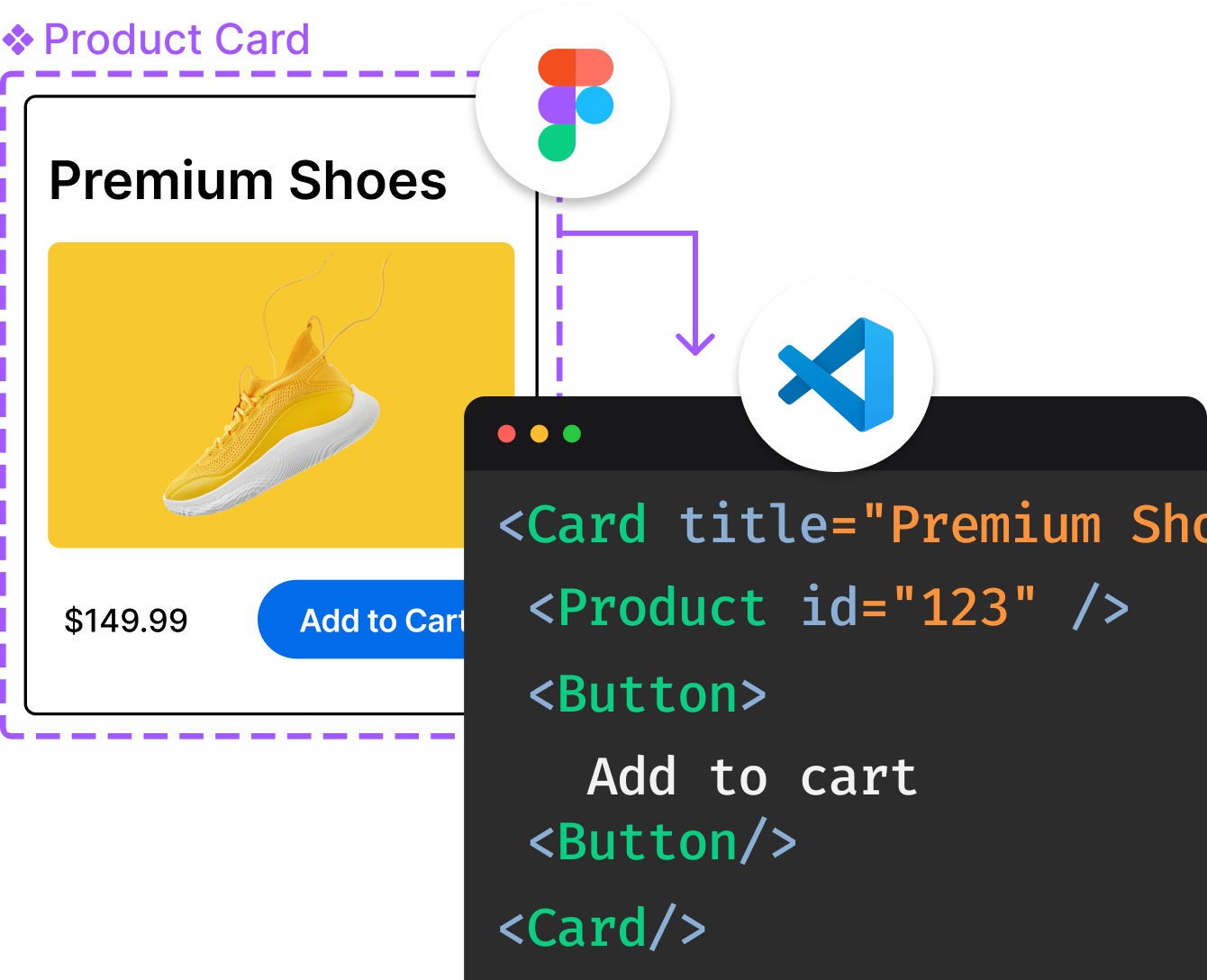
Introducing Visual Copilot: A new AI model to turn Figma designs to high quality code using your components.
Try Visual CopilotREADME
OPC UA .NET Standard Stack




ð This is version 2.0 of the OPC UA .NET Standard Stack (current
master).Looking for the supported 1.x release? It lives on the
master378branch (last release:1.5.378). All new feature work happens here onmaster;master378continues to receive security and critical-bug fixes for the 1.x line.
The official OPC Foundation reference implementation of OPC UA for .NET â a certified, cross-platform stack with client, server, PubSub, GDS, complex types, and source-generated tooling. Used in production across industrial control, manufacturing, energy, and IoT systems.
ð¦ What it is
- A full-stack OPC UA implementation â Core / Client / Server / PubSub / GDS / LDS / Complex Types / Device Integration / Positioning libraries built on .NET, with UA-TCP and HTTPS transports.
- Cross-platform â runs on .NET 10, .NET 9, .NET 8 (LTS), .NET Framework 4.8, and .NET Standard 2.1; ships Native-AOT-friendly assemblies.
- Certified for compliance â the reference server has been certified through an OPC Foundation Certification Test Lab and is continuously verified against the latest Compliance Test Tool (CTT).
- Companion-spec coverage â Part 9 (Alarms & Conditions), Part 11 (Historical Access), Part 13 (Aggregates), Part 16 (State Machines), Part 17 (Alias Names), Part 18 (Role Management), Part 20 (File Transfer), Part 100 (Device Integration), Parts 210/211 (Relative Spatial Location and Global Positioning), OPC-10030 (ISA-95 Common Model) with OPC-10031-4 Job Control V1/V2, OPC 30270 / OPC UA for Asset Administration Shell V2 and V3, OPC 10100-1 (WoT Connectivity), OPC 40001-1 (Industrial Automation), OPC 40010-1 (Robotics).
- Modern developer surface â first-class
Microsoft.Extensions.DependencyInjectionhosting (services.AddOpcUa()), fluent server + client builders, source-generated NodeManagers and DataTypes, and an MCP server so LLMs / Copilot can drive an OPC UA client.
For the full feature breakdown see OPC UA Profiles and Facets and the What's New in 2.0 tour.
ð Getting started
You need the .NET 10 SDK to build the repo. From the repository root:
dotnet restore UA.slnx
dotnet build UA.slnx
For the supported target frameworks and platform notes see
the Developer Guide. The official NuGet packages
are published to nuget.org under the OPCFoundation.NetStandard
prefix â the meta package
OPCFoundation.NetStandard.Opc.Ua
pulls in everything, or reference individual packages directly, e.g.
OPCFoundation.NetStandard.Opc.Ua.Client for clients or
OPCFoundation.NetStandard.Opc.Ua.Server for servers. Preview builds from
every successful master build are available from the
GitHub Packages NuGet feed.
Official public 2.0 preview releases are also on nuget.org. Enable prerelease
packages and use 2.0.0-preview.* to float to the latest published
2.0.0-preview.N release.
Samples
The stack also includes a large collection of platform-independent sample applications that turn its core services and companion models into runnable client/server workflows. More applications, including platform-specific examples, are available in the companion OPC UA .NET Samples repository.
Developer tools
- OPC UA MCP Server â installable .NET tool and container that exposes OPC UA client operations as MCP tools for LLMs and Copilot. The tools also ship as libraries (
â¦Opc.Ua.Mcp.Core,.PubSub,.Diagnostics,.PubSub.Diagnostics) so an application can embed them next to its own MCP tools.
ð§ Migrating from 1.5.378 to 2.0
The 2.0 release introduces breaking API changes, and comes with a full prescriptive migration guide that links to per-area documentation for the migration sub-topics.
Most of the mechanical migration work is automated:
OPCFoundation.NetStandard.Opc.Ua.MigrationAnalyzerNuGet â install it in your project to get 26 analyzer rules throughUA0030(excludingUA0013,UA0016,UA0017, and the shim-onlyUA0029) plus one-click code fixes for the patterns in the guide. Setup steps are in the package's NugetREADME.md.- Migration agent skill â the
opcua-v20-migrationskill walks Copilot / Claude / any coding agent through installing the NuGet, runningdotnet format analyzersto apply auto-fixes, and handling the small residual manual patterns. The skill knows which sub-doc to load for each symptom so it stays context-efficient.
Copilot CLI discovers the skill automatically inside a clone. To install it for use in any repository:
copilot plugin marketplace add OPCFoundation/UA-.NETStandard
copilot plugin install opcua-v20-migration@opcua-dotnet
If you are still on 1.x and not ready to upgrade, stay on the
master378
branch â it continues to receive security and critical-bug fixes.
ð¤ Contributing and license
Community contributions are welcome. Fork the repository, make your changes on a branch, and open a pull request; see CONTRIBUTING.md for the contribution workflow.
Contributors must sign the OPC Foundation Contributor License Agreement (CLA). The CLA "I AGREE" gate is presented automatically on your first PR.
The project is licensed under the OPC Foundation MIT License. Report security vulnerabilities via the process documented in SECURITY.md.
ð Further reading
- Documentation index â every per-feature doc with a one-line description.
- What's New in 2.0 â narrative tour of the 1.5.378 â 2.0 changes grouped by theme and layer.
- OPC UA Profiles and Facets â facets / transports / security policies the stack implements.
- Migration Guide â prescriptive
per-version migration reference (links to
docs/migrate/2.0.x/). - OPC UA Online Reference â the official OPC 10000 series specification index.
- Preview Nuget package feed â
prerelease builds from every successful
masterbuild.
Top Related Projects
Open source implementation of OPC UA (OPC Unified Architecture) aka IEC 62541 licensed under Mozilla Public License v2.0
Unlocking the Full Potential of OPC UA with Typescript and NodeJS - http://node-opcua.github.io/
Convert designs to code with AI
Introducing Visual Copilot: A new AI model to turn Figma designs to high quality code using your components.
Try Visual Copilot