
Top Related Projects

Microsoft SEAL is an easy-to-use and powerful homomorphic encryption library.

HElib is an open-source software library that implements homomorphic encryption. It supports the BGV scheme with bootstrapping and the Approximate Number CKKS scheme. HElib also includes optimizations for efficient homomorphic evaluation, focusing on effective use of ciphertext packing techniques and on the Gentry-Halevi-Smart optimizations.

Concrete: TFHE Compiler that converts python programs into FHE equivalent

Homomorphic Encryption demos

A library for lattice-based multiparty homomorphic encryption in Go
Quick Overview
Error generating quick overview
Competitor Comparisons
Microsoft SEAL is an easy-to-use and powerful homomorphic encryption library.
Error generating comparison
HElib is an open-source software library that implements homomorphic encryption. It supports the BGV scheme with bootstrapping and the Approximate Number CKKS scheme. HElib also includes optimizations for efficient homomorphic evaluation, focusing on effective use of ciphertext packing techniques and on the Gentry-Halevi-Smart optimizations.
Error generating comparison
Concrete: TFHE Compiler that converts python programs into FHE equivalent
Error generating comparison
Homomorphic Encryption demos
Error generating comparison
A library for lattice-based multiparty homomorphic encryption in Go
Error generating comparison
Convert  designs to code with AI
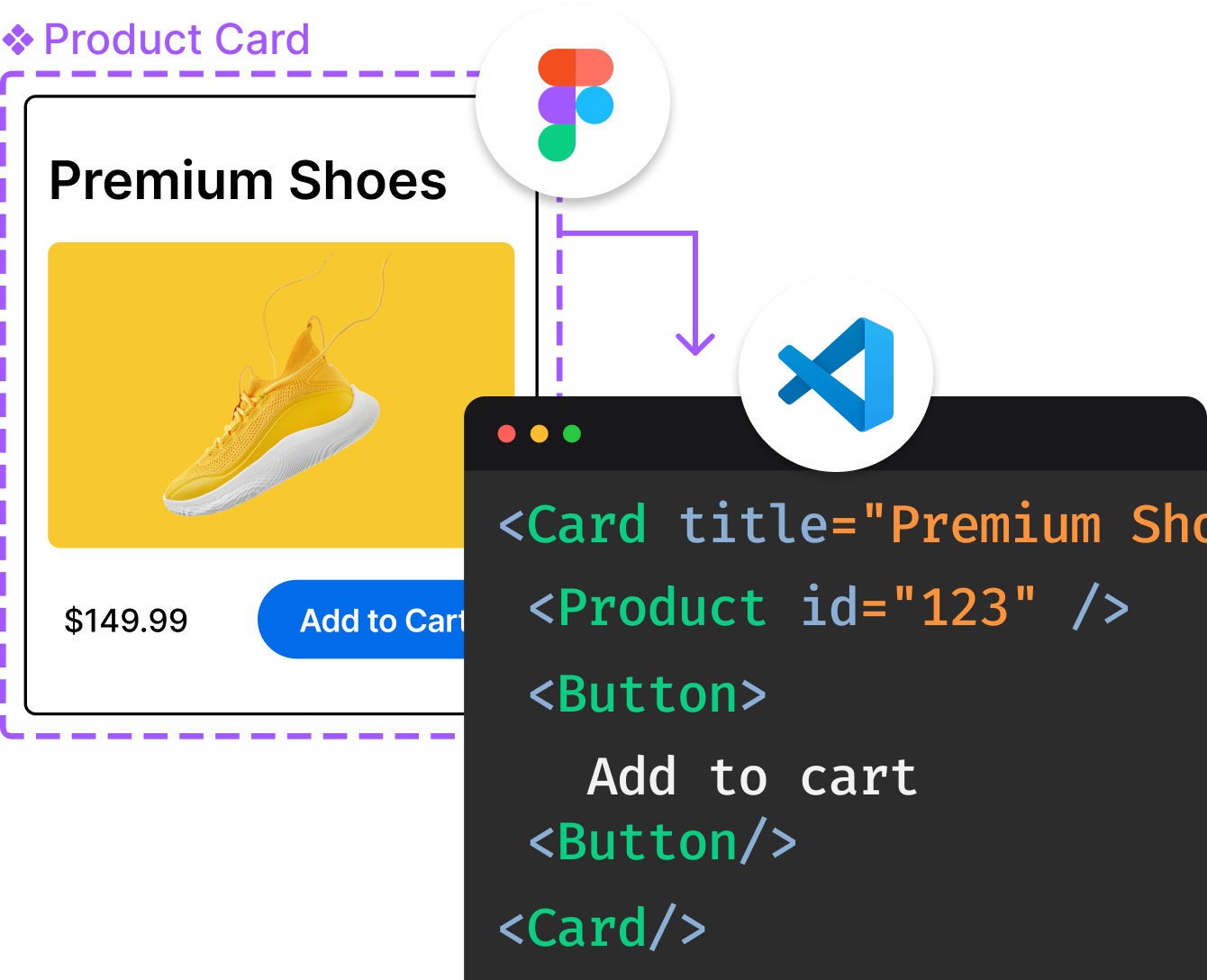
Introducing Visual Copilot: A new AI model to turn Figma designs to high quality code using your components.
Try Visual CopilotREADME

TenSEAL
A library for doing homomorphic encryption operations on tensors








TenSEAL is a library for doing homomorphic encryption operations on tensors, built on top of Microsoft SEAL. It provides ease of use through a Python API, while preserving efficiency by implementing most of its operations using C++.
Features
- :key: Encryption/Decryption of vectors of integers using BFV
- :old_key: Encryption/Decryption of vectors of real numbers using CKKS
- :fire: Element-wise addition, subtraction and multiplication of encrypted-encrypted vectors and encrypted-plain vectors
- :cyclone: Dot product and vector-matrix multiplication
- :zap: Complete SEAL API under
tenseal.sealapi
Usage
We show the basic operations over encrypted data, more advanced usage for machine learning applications can be found on our tutorial section
import tenseal as ts

# Setup TenSEAL context
context = ts.context(
            ts.SCHEME_TYPE.CKKS,
            poly_modulus_degree=8192,
            coeff_mod_bit_sizes=[60, 40, 40, 60]
          )
context.generate_galois_keys()
context.global_scale = 2**40

v1 = [0, 1, 2, 3, 4]
v2 = [4, 3, 2, 1, 0]

# encrypted vectors
enc_v1 = ts.ckks_vector(context, v1)
enc_v2 = ts.ckks_vector(context, v2)

result = enc_v1 + enc_v2
result.decrypt() # ~ [4, 4, 4, 4, 4]

result = enc_v1.dot(enc_v2)
result.decrypt() # ~ [10]

matrix = [
  [73, 0.5, 8],
  [81, -5, 66],
  [-100, -78, -2],
  [0, 9, 17],
  [69, 11 , 10],
]
result = enc_v1.matmul(matrix)
result.decrypt() # ~ [157, -90, 153]
Installation
Using pip
$ pip install tenseal
This installs the last packaged version on pypi. If your platform doesn't have a ready package, please open an issue to let us know.
Build from Source
Supported platforms and their requirements are listed below: (this are only required for building TenSEAL from source)
- Linux: A modern version of GNU G++ (>= 6.0) or Clang++ (>= 5.0).
- MacOS: Xcode toolchain (>= 9.3)
- Windows: Microsoft Visual Studio (>= 10.0.40219.1, Visual Studio 2010 SP1 or later).
If you want to install tenseal from the repository, you should first make sure to have the requirements for your platform (listed above) and CMake (3.14 or higher) installed, then get the third party libraries (if you didn't already) by running the following command from the root directory of the project
$ git submodule init
$ git submodule update
TenSEAL uses Protocol Buffers for serialization, and you will need the protocol buffer compiler too.
If you are on Windows, you will first need to build SEAL library using Visual Studio, you should use the solution file SEAL.sln in third_party/SEAL to build the project native\src\SEAL.vcxproj with Configuration=Release and Platform=x64. For more details check the instructions in Building Microsoft SEAL
You can then trigger the build and the installation
$ pip install .
Use Docker
You can use our Docker image for a ready to use environment with TenSEAL installed
$ docker container run --interactive --tty openmined/tenseal
Note: openmined/tenseal points to the image from the last release, use openmined/tenseal:dev for the image built from the master branch.
You can also build your custom image, this might be handy for developers working on the project
$ docker build -t tenseal -f docker-images/Dockerfile-py38 .
To interactively run this docker image as a container after it has been built you can run
$ docker container run -it tenseal
Using Bazel
To use this library in another Bazel project, add the following in your WORKSPACE file:
git_repository(
   name = "org_openmined_tenseal",
   remote = "https://github.com/OpenMined/TenSEAL",
   branch = "master",
   init_submodules = True,
)

load("@org_openmined_tenseal//tenseal:preload.bzl", "tenseal_preload")

tenseal_preload()

load("@org_openmined_tenseal//tenseal:deps.bzl", "tenseal_deps")

tenseal_deps()
Benchmarks
You can benchmark the implementation at any point by running
$ bazel run -c opt --spawn_strategy=standalone //tests/cpp/benchmarks:benchmark
The benchmarks from every PR merge are uploaded here.
Tutorials
- Getting Started
- Tutorial 1 - Training and Evaluation of Logistic Regression on Encrypted Data
- Tutorial 2 - Working with Approximate Numbers
- Tutorial 3 - Benchmarks
- Tutorial 4 - Encrypted Convolution on MNIST
Publications
A. Benaissa, B. Retiat, B. Cebere, A.E. Belfedhal, "TenSEAL: A Library for Encrypted Tensor Operations Using Homomorphic Encryption", ICLR 2021 Workshop on Distributed and Private Machine Learning (DPML 2021).
@misc{tenseal2021,
    title={TenSEAL: A Library for Encrypted Tensor Operations Using Homomorphic Encryption},
    author={Ayoub Benaissa and Bilal Retiat and Bogdan Cebere and Alaa Eddine Belfedhal},
    year={2021},
    eprint={2104.03152},
    archivePrefix={arXiv},
    primaryClass={cs.CR}
}
Support
For support in using this library, please join the #support Slack channel. Click here to join our Slack community!
Contributing
Pull requests are welcome. For major changes, please open an issue first to discuss what you would like to change.
Please make sure to update tests as appropriate.
License
Top Related Projects
Microsoft SEAL is an easy-to-use and powerful homomorphic encryption library.
HElib is an open-source software library that implements homomorphic encryption. It supports the BGV scheme with bootstrapping and the Approximate Number CKKS scheme. HElib also includes optimizations for efficient homomorphic evaluation, focusing on effective use of ciphertext packing techniques and on the Gentry-Halevi-Smart optimizations.
Concrete: TFHE Compiler that converts python programs into FHE equivalent
Homomorphic Encryption demos
A library for lattice-based multiparty homomorphic encryption in Go
Convert designs to code with AI
Introducing Visual Copilot: A new AI model to turn Figma designs to high quality code using your components.
Try Visual Copilot