 awesome-llm-apps
100+ AI Agent & RAG apps you can actually run — clone, customize, ship.
Top Related Projects

General technology for enabling AI capabilities w/ LLMs and MLLMs

📋 A list of open LLMs available for commercial use.

An awesome & curated list of best LLMOps tools for developers

Resource list for generating JSON using LLMs via function calling, tools, CFG. Libraries, Models, Notebooks, etc.

Awesome-LLM: a curated list of Large Language Model

A curated list of practical guide resources of LLMs (LLMs Tree, Examples, Papers)
Quick Overview
Awesome-llm-apps is a curated list of Large Language Model (LLM) applications and use cases. It serves as a comprehensive resource for developers, researchers, and enthusiasts interested in exploring the practical applications of LLMs across various domains. The repository categorizes applications into different sectors such as healthcare, finance, education, and more.
Pros
- Extensive collection of LLM applications across diverse industries
- Well-organized and categorized for easy navigation
- Regularly updated with new and emerging LLM use cases
- Includes both open-source and commercial applications
Cons
- Lacks detailed explanations or tutorials for implementing the listed applications
- Some links may become outdated over time
- Does not provide performance comparisons or benchmarks for the listed applications
- May not cover all possible LLM applications in every domain
Note: As this is not a code library, the code example and quick start sections have been omitted.
Competitor Comparisons
General technology for enabling AI capabilities w/ LLMs and MLLMs
Pros of LMOps
- Focuses on operationalizing large language models, providing practical guidance for deployment and management
- Offers comprehensive documentation and best practices for LLM integration in production environments
- Includes code samples and tools specifically designed for LLM operations
Cons of LMOps
- More specialized and technical, potentially less accessible for beginners or those seeking general LLM applications
- Limited in scope compared to the broader range of applications covered in awesome-llm-apps
- May require more advanced knowledge of MLOps and cloud infrastructure
Code Comparison
LMOps example (Azure ML deployment):
from azureml.core import Workspace, Model
model = Model.register(workspace=ws, model_path="./model", model_name="my-llm")
service = Model.deploy(workspace=ws, name="llm-service", models=[model])
awesome-llm-apps typically doesn't include code samples, focusing instead on curating links to various LLM applications and resources.
Overall, LMOps is more focused on the operational aspects of LLMs, while awesome-llm-apps provides a broader overview of LLM applications across different domains. LMOps is better suited for those implementing LLMs in production, while awesome-llm-apps serves as a comprehensive resource for exploring diverse LLM use cases.
📋 A list of open LLMs available for commercial use.
Pros of open-llms
- Focuses specifically on open-source language models, providing a curated list of LLMs with their characteristics
- Includes detailed information about each model, such as parameters, training data, and license
- Regularly updated with new open-source LLM releases
Cons of open-llms
- Limited scope compared to awesome-llm-apps, which covers a broader range of LLM applications
- Lacks information on practical applications and use cases for the listed models
- Does not provide examples or code snippets for implementing the models
Code comparison
While neither repository primarily focuses on code, awesome-llm-apps occasionally includes code snippets for specific applications. For example:
# awesome-llm-apps example (hypothetical)
from transformers import pipeline

summarizer = pipeline("summarization", model="facebook/bart-large-cnn")
summary = summarizer("Long text to summarize...", max_length=130, min_length=30)
open-llms does not typically include code snippets, as it focuses on listing and describing open-source language models rather than their implementation.
Both repositories serve different purposes: open-llms is a comprehensive resource for finding and comparing open-source language models, while awesome-llm-apps provides a broader overview of LLM applications and use cases across various domains.
An awesome & curated list of best LLMOps tools for developers
Pros of Awesome-LLMOps
- More focused on LLM operations and deployment, providing resources for scaling and managing LLM applications
- Includes sections on monitoring, testing, and evaluation of LLM systems
- Offers a comprehensive list of LLM-specific tools and frameworks for production environments
Cons of Awesome-LLMOps
- Less emphasis on end-user applications and use cases compared to awesome-llm-apps
- Fewer resources for developers looking to build consumer-facing LLM products
- More technical focus, which may be less accessible for beginners or non-technical users
Code Comparison
While both repositories are primarily curated lists without significant code content, Awesome-LLMOps includes some code snippets for LLM deployment and management. For example:
# Awesome-LLMOps example: Deploying an LLM with Ray Serve
@serve.deployment(route_prefix="/chatbot")
class ChatBot:
    def __init__(self):
        self.model = load_llm_model()

    async def __call__(self, request):
        return self.model.generate(request.query_params["prompt"])
awesome-llm-apps doesn't typically include code snippets, focusing instead on links to external resources and applications.
Resource list for generating JSON using LLMs via function calling, tools, CFG. Libraries, Models, Notebooks, etc.
Pros of awesome-llm-json
- Focuses specifically on JSON-related LLM applications and tools
- Includes more technical resources like libraries and APIs
- Provides a curated list of JSON schemas for LLM interactions
Cons of awesome-llm-json
- Narrower scope compared to the broader LLM application landscape
- Fewer general-purpose LLM applications and use cases
- Less frequently updated (as of the last check)
Code Comparison
awesome-llm-json:
{
  "prompt": "Translate 'Hello' to French",
  "response": {
    "translation": "Bonjour",
    "language": "French"
  }
}
awesome-llm-apps:
from transformers import pipeline

translator = pipeline("translation", model="Helsinki-NLP/opus-mt-en-fr")
result = translator("Hello", max_length=40)
print(result[0]['translation_text'])
The code snippets demonstrate the difference in focus between the two repositories. awesome-llm-json emphasizes JSON structures for LLM interactions, while awesome-llm-apps showcases practical implementation of LLM applications using popular libraries like Hugging Face Transformers.
Awesome-LLM: a curated list of Large Language Model
Pros of Awesome-LLM
- More comprehensive coverage of LLM topics, including research papers, datasets, and evaluation benchmarks
- Better organized structure with clear categories and subcategories
- Regularly updated with recent developments in the LLM field
Cons of Awesome-LLM
- Less focus on practical applications and use cases compared to awesome-llm-apps
- May be overwhelming for beginners due to its extensive content
- Lacks visual elements or diagrams to illustrate concepts
Code Comparison
While both repositories primarily consist of curated lists and don't contain significant code samples, Awesome-LLM includes some basic Markdown formatting:
## Table of Contents

- [Papers](#papers)
- [Courses](#courses)
- [Tutorials](#tutorials)
awesome-llm-apps uses a simpler structure:
## LLM Applications

- Application 1
- Application 2
- Application 3
Both repositories effectively use Markdown for organizing content, but Awesome-LLM's structure is more detailed and hierarchical.
A curated list of practical guide resources of LLMs (LLMs Tree, Examples, Papers)
Pros of LLMsPracticalGuide
- More comprehensive coverage of LLM topics, including theory, applications, and challenges
- Includes detailed sections on LLM training, fine-tuning, and deployment
- Provides a structured learning path for beginners to advanced users
Cons of LLMsPracticalGuide
- Less frequently updated compared to awesome-llm-apps
- Focuses more on academic and research aspects, with fewer practical applications
- May be overwhelming for users looking for quick, ready-to-use LLM solutions
Code Comparison
LLMsPracticalGuide:
from transformers import GPT2LMHeadModel, GPT2Tokenizer

tokenizer = GPT2Tokenizer.from_pretrained("gpt2")
model = GPT2LMHeadModel.from_pretrained("gpt2")
awesome-llm-apps:
import openai

openai.api_key = "your-api-key"
response = openai.Completion.create(engine="text-davinci-002", prompt="Hello, how are you?")
The code snippets demonstrate the difference in focus between the two repositories. LLMsPracticalGuide provides examples using popular libraries like Hugging Face Transformers, while awesome-llm-apps tends to showcase more application-oriented code using APIs like OpenAI's.
Convert  designs to code with AI
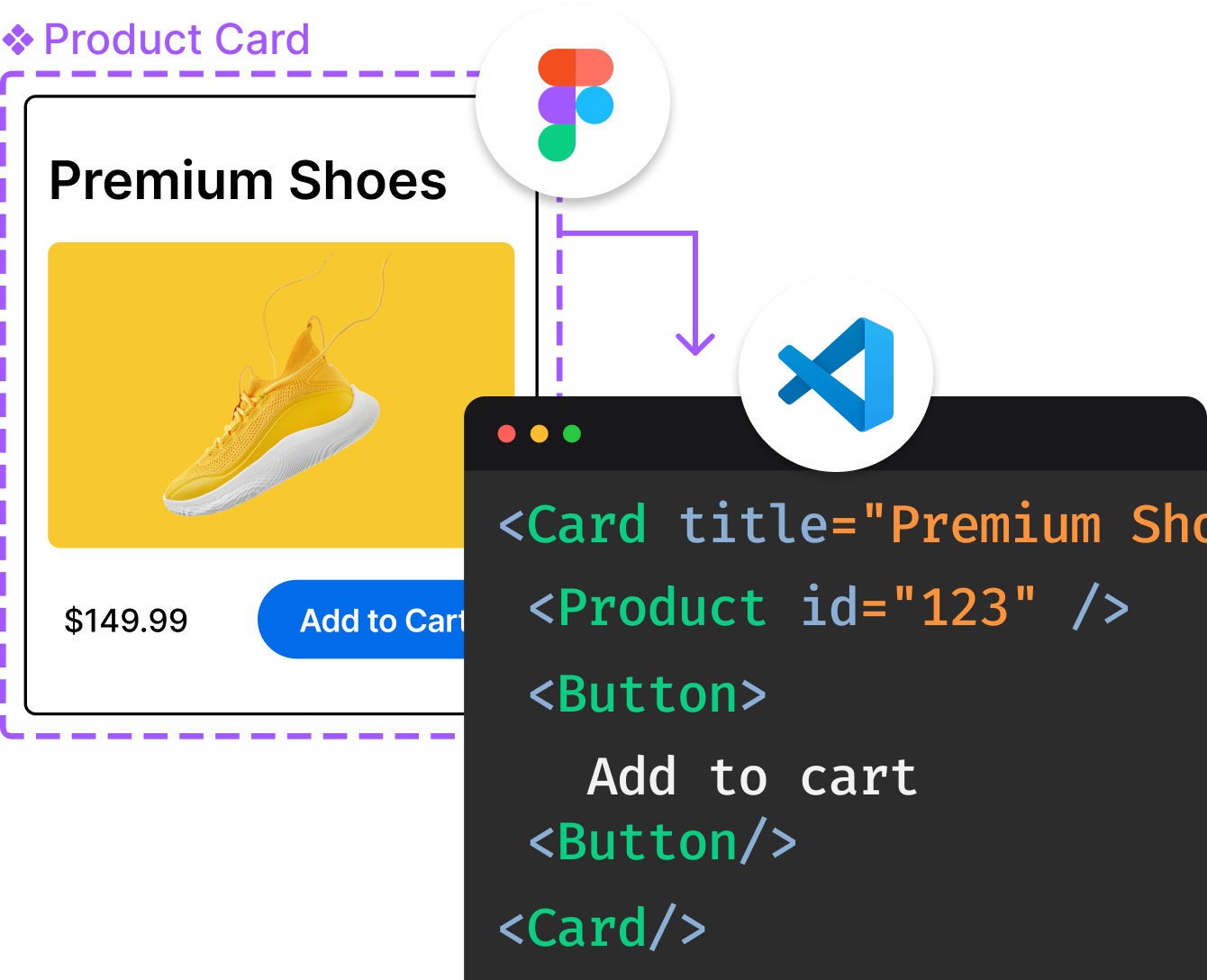
Introducing Visual Copilot: A new AI model to turn Figma designs to high quality code using your components.
Try Visual CopilotREADME



Deutsch | Español | français | æ¥æ¬èª | íêµì´ | Português | Ð ÑÑÑкий | ä¸æ
ð Awesome LLM Apps
100+ AI Agent & RAG apps you can actually run â clone, customize, ship.
AI Agents · Always-on Agents · Multi-agent Teams · MCP Agents · RAG · Voice Agents · Agent Skills · Fine-tuning
Free step-by-step tutorials on Unwind AI
Works with Claude · Gemini · OpenAI · xAI · Qwen · Llama


ð Quick Start ð Browse Templates ð Step-by-Step Tutorials
ð¡ Why this exists
You shouldn't have to rebuild the same RAG pipeline, agent loop, or MCP integration from scratch every time you start a new LLM project.
Awesome LLM Apps is a cookbook of ready-to-run templates - starter code you can fork, customize, and ship as a production LLM app. Every template here is self-contained with full source code, not collected from elsewhere.
- ð ï¸ Hand-built, not curated - every template is original work, tested end-to-end before it ships.
- 𧪠Runs in 3 commands - no broken
requirements.txt, no "figure it out yourself" scaffolding. - ð§ Covers the modern AI stack - AI Agents, Always-on Agents, Multi-agent Teams, MCP Agents, Voice AI Agents, RAG, Agent Skills, Fine-tuning.
- ð Provider-agnostic - switch between Claude, Gemini, GPT, Llama, Qwen, xAI and others with a config change.
- ð Step-by-step tutorials - every featured template has a free walkthrough on Unwind AI.
- ð¸ Apache-2.0 - fork it, ship it, sell it. No paywall, no signup, no telemetry.
â If this saves you time, star the repo - that's how the next developer discovers it.
ð Quick Start
Run your first agent in 30 seconds:
git clone https://github.com/Shubhamsaboo/awesome-llm-apps.git
cd awesome-llm-apps/starter_ai_agents/ai_travel_agent
pip install -r requirements.txt
streamlit run travel_agent.py
ð¥ Featured This Month
| Template | What it does | Stack |
|---|---|---|
| â°ï¸ Project Graveyard Skill | Finds your dead side projects, tells you why each one died, and helps you finish the one worth going back to | Agent Skill · Runs locally |
| ð° Always-on Hacker News Briefing Agent | Scheduled Hacker News scout that filters AI agent and LLM app signals into a delivery-ready daily brief | ADK + Agent Runtime |
| ð¡ï¸ Insurance Claim Live Agent Team | Real-time voice claim intake with Gemini Live and ADK | Voice + ADK |
| ð Home Renovation Agent | Photo â AI redesign with Nano Banana Pro | Vision + Multi-agent |
| â¾ï¸ Self-Improving Agent Skills | Automatically optimize agent skills using Gemini and ADK | Agent Skills + ADK |
ð¬ Subscribe on Unwind AI to get new template drops + tutorials in your inbox.
ð Table of Contents
15 categories · Click to expand
- 𧩠Agent Skills
- ð± Starter AI Agents
- ð Advanced AI Agents
- ð°ï¸ Always-on Agents
- ð¤ Multi-agent Teams
- ð£ï¸ Voice AI Agents
- ð¼ï¸ Generative UI and Agentic Frontends
- ð® Autonomous Game-Playing Agents
- â¾ï¸ MCP AI Agents
- ð RAG Tutorials
- ð¾ LLM Apps with Memory
- ð¬ Chat with X Tutorials
- ð¯ LLM Optimization Tools
- ð§ LLM Fine-tuning Tutorials
- ð§âð« AI Agent Framework Crash Courses
ð Featured AI Projects
𧩠Agent Skills
Give your coding agent new abilities. One command to install, plain English to use. Works with Claude Code, Codex, Cursor, and other coding agents. Browse all skills â
- â°ï¸ Project Graveyard - Finds every side project you abandoned, tells you why each one died, and helps you finish the one worth going back to
- ð§ Advisor Orchestrator Worker - Your agent runs a model team: cheap models do the work in parallel, a stronger model reviews the plan, your agent manages it all
- â¾ï¸ Self-Improving Agent Skills - Automatically optimize agent skills using Gemini and ADK
ð± Starter AI Agents
Single-file agents that run with just an API key - a great place to start.
- ðï¸ AI Blog to Podcast Agent
- â¤ï¸â𩹠AI Breakup Recovery Agent
- ð AI Data Analysis Agent
- ð©» AI Medical Imaging Agent
- ð AI Meme Generator Agent (Browser)
- ðµ AI Music Generator Agent
- ð« AI Travel Agent (Local & Cloud)
- ⨠Gemini Multimodal Agent
- ð Mixture of Agents
- ð xAI Finance Agent
- ð OpenAI Research Agent
- ð¸ï¸ Web Scraping AI Agent
ð Advanced AI Agents
Production-style agents with tools, memory, and multi-step reasoning.
- ðï¸ ð AI Home Renovation Agent with Nano Banana Pro
- ð§ DevPulse AI - Multi-Agent Signal Intelligence
- ð AI Deep Research Agent
- ð AI VC Due Diligence Agent Team
- ð¬ AI Research Planner & Executor (Google Interactions API)
- ð¤ AI Consultant Agent
- ðï¸ AI System Architect Agent
- ð° AI Financial Coach Agent
- ð¬ AI Movie Production Agent
- ð AI Investment Agent
- ð¡ Earnings Call Analyst Agent
- ðï¸ââï¸ AI Health & Fitness Agent
- ð AI Product Launch Intelligence Agent
- ð AI Fraud Investigation Agent
- ðï¸ AI Journalist Agent
- ð§ AI Mental Wellbeing Agent
- ð AI Meeting Agent
- 𧬠AI Self-Evolving Agent
- ð¨ð»âð¼ AI Sales Intelligence Agent Team
- ð§ AI Social Media News and Podcast Agent
- ð Openwork - Open Browser Automation Agent â external
- ð¡ï¸ Trust-Gated Multi-Agent Research Team
ð°ï¸ Always-on Agents
Background agents that run on schedules or events, monitor changing context, decide what needs attention, and proactively deliver updates, artifacts, or actions.
ð¤ Multi-agent Teams
Multiple agents collaborating to accomplish complex, cross-domain tasks.
- 𧲠AI Competitor Intelligence Agent Team
- ð² AI Finance Agent Team
- ð¨ AI Game Design Agent Team
- ð§ AG2 Adaptive Research Team
- ð¨ââï¸ AI Legal Agent Team (Cloud & Local)
- ð¼ AI Recruitment Agent Team
- ð AI Real Estate Agent Team
- ð¨âð¼ AI Services Agency (CrewAI)
- ð¨âð« AI Teaching Agent Team
- ð» Multimodal Coding Agent Team
- ⨠Multimodal Design Agent Team
- ð¨ ð Multimodal UI/UX Feedback Agent Team with Nano Banana
- ð AI Travel Planner Agent Team
ð£ï¸ Voice AI Agents
Speech-in, speech-out agents using real-time voice APIs.
- ð£ï¸ AI Audio Tour Agent
- ð Customer Support Voice Agent
- ð¡ï¸ Insurance Claim Live Agent Team
- ð Voice RAG Agent (OpenAI SDK)
- ðï¸ OpenSource Voice Dictation Agent (Wispr Flow clone) â external
ð¼ï¸ Generative UI and Agentic Frontends
Agents that render interactive UI components â forms, cards, charts, editable plans â not just text.
- ðï¸ Generative UI Starter Project
- ðª AI Financial Coach Agent
- ð AI Dashboard Canvas Agent
- ð ï¸ AI MCP App Builder
- âï¸ MCP Apps Generative UI Showcase
- ðï¸ AI Shadcn Component Generator
- ð AI Deep Research Agent
ð® Autonomous Game-Playing Agents
Agents that play games end-to-end - reasoning, strategy, and action.
â¾ï¸ MCP AI Agents
Agents that connect to external tools and data via Model Context Protocol.
- â¾ï¸ Browser MCP Agent
- ð GitHub MCP Agent
- ð Notion MCP Agent
- ð AI Travel Planner MCP Agent
- ð Multi-MCP Agent Router
ð RAG (Retrieval Augmented Generation)
Retrieval pipelines - from simple chains to agentic and multi-source.
- ð¥ Agentic RAG with Embedding Gemma
- ð§ Agentic RAG with Reasoning
- ð° AI Blog Search (RAG)
- ð Autonomous RAG
- ð Contextual AI RAG Agent
- ð Corrective RAG (CRAG)
- ð Deepseek Local RAG Agent
- ð¤ Gemini Agentic RAG
- ð Hybrid Search RAG (Cloud)
- ð Llama 3.1 Local RAG
- ð¥ï¸ Local Hybrid Search RAG
- 𧬠Multimodal Agentic RAG
- ð¦ Local RAG Agent
- 𧩠RAG-as-a-Service
- ⨠RAG Agent with Cohere
- âï¸ Basic RAG Chain
- ð RAG with Database Routing
- ð¼ï¸ Vision RAG
- 𩺠RAG Failure Diagnostics Clinic
- ð¸ï¸ Knowledge Graph RAG with Citations
ð¾ LLM Apps with Memory Tutorials
Agents and chatbots that remember conversations and user state across sessions.
- ð¾ AI ArXiv Agent with Memory
- ð©ï¸ AI Travel Agent with Memory
- ð¬ Llama3 Stateful Chat
- ð LLM App with Personalized Memory
- ðï¸ Local ChatGPT Clone with Memory
- ð§ Multi-LLM Application with Shared Memory
ð¬ Chat with X Tutorials
Turn any data source into a chat interface.
- ð¬ Chat with GitHub (GPT & Llama3)
- ð¨ Chat with Gmail
- ð Chat with PDF (GPT & Llama3)
- ð Chat with Research Papers (ArXiv) (GPT & Llama3)
- ð Chat with Substack
- ð½ï¸ Chat with YouTube Videos
ð¯ LLM Optimization Tools
Reduce token usage, context size, and API cost without losing quality.
- ð¯ Toonify Token Optimization - Reduce LLM API costs by 30â60% using TOON format
- ð§ Headroom Context Optimization - Reduce LLM API costs by 50â90%
ð§ LLM Fine-tuning Tutorials
End-to-end fine-tuning recipes for open-source models.
ð§âð« AI Agent Framework Crash Course
Deep-dive tutorials on the major agent frameworks.
- Starter agent; modelâagnostic (OpenAI, Claude)
- Structured outputs (Pydantic)
- Tools: builtâin, function, thirdâparty, MCP tools
- Memory; callbacks; Plugins
- Simple multiâagent; Multiâagent patterns
OpenAI Agents SDK Crash Course
- Starter agent; function calling; structured outputs
- Tools: builtâin, function, thirdâparty integrations
- Memory; callbacks; evaluation
- Multiâagent patterns; agent handoffs
- Swarm orchestration; routing logic
ð Built by
Created and maintained by Shubham Saboo with contributions from the amazing community members.
â Star History
ð Don't miss future drops - star the repo to get notified when new templates ship.
ð License
Apache-2.0. See LICENSE. Fork it, ship it, sell it.
Top Related Projects
General technology for enabling AI capabilities w/ LLMs and MLLMs
📋 A list of open LLMs available for commercial use.
An awesome & curated list of best LLMOps tools for developers
Resource list for generating JSON using LLMs via function calling, tools, CFG. Libraries, Models, Notebooks, etc.
Awesome-LLM: a curated list of Large Language Model
A curated list of practical guide resources of LLMs (LLMs Tree, Examples, Papers)
Convert designs to code with AI
Introducing Visual Copilot: A new AI model to turn Figma designs to high quality code using your components.
Try Visual Copilot