 ncnn
ncnn
ncnn is a high-performance neural network inference framework optimized for the mobile platform
Top Related Projects

MNN: A blazing-fast, lightweight inference engine battle-tested by Alibaba, powering high-performance on-device LLMs and Edge AI.

MACE is a deep learning inference framework optimized for mobile heterogeneous computing platforms.

Tengine is a lite, high performance, modular inference engine for embedded device

The Compute Library is a set of computer vision and machine learning functions optimised for both Arm CPUs and GPUs using SIMD technologies.

Open Machine Learning Compiler Framework
Quick Overview
ncnn is a high-performance neural network inference framework optimized for mobile platforms. Developed by Tencent, it is designed to run deep learning models on mobile devices efficiently, with a focus on speed and low memory footprint.
Pros
- Extremely fast inference speed on mobile devices
- Low memory footprint, suitable for resource-constrained environments
- Cross-platform support (Android, iOS, Windows, Linux, macOS)
- Supports a wide range of deep learning models and operations
Cons
- Steeper learning curve compared to some other inference frameworks
- Limited documentation and examples, especially for beginners
- Requires manual model conversion for some popular deep learning frameworks
- Smaller community compared to more mainstream frameworks like TensorFlow Lite
Code Examples
- Loading and running a model:
#include "net.h"

ncnn::Net net;
net.load_param("model.param");
net.load_model("model.bin");

ncnn::Mat in(224, 224, 3);
// Fill 'in' with input data

ncnn::Mat out;
ncnn::Extractor ex = net.create_extractor();
ex.input("data", in);
ex.extract("output", out);
- Creating a custom layer:
class MyCustomLayer : public ncnn::Layer
{
public:
    MyCustomLayer()
    {
        one_blob_only = true;
    }

    virtual int forward(const ncnn::Mat& bottom_blob, ncnn::Mat& top_blob, const ncnn::Option& opt) const
    {
        // Implement your custom layer logic here
        return 0;
    }
};

DEFINE_LAYER_CREATOR(MyCustomLayer)
- Using Vulkan compute:
ncnn::create_gpu_instance();

ncnn::VulkanDevice* vkdev = ncnn::get_gpu_device();
ncnn::Net net;
net.opt.use_vulkan_compute = true;
net.set_vulkan_device(vkdev);

// Load and run model as usual

ncnn::destroy_gpu_instance();
Getting Started
-
Clone the repository:
git clone https://github.com/Tencent/ncnn.git -
Build the project:
cd ncnn mkdir build && cd build cmake .. make -
Include ncnn in your project:
#include "net.h" -
Link against the built library and include the necessary headers in your project's build configuration.
Competitor Comparisons
MNN: A blazing-fast, lightweight inference engine battle-tested by Alibaba, powering high-performance on-device LLMs and Edge AI.
Pros of MNN
- Supports a wider range of platforms, including iOS, Android, Windows, Linux, and macOS
- Offers more comprehensive model conversion tools, supporting various deep learning frameworks
- Provides a higher-level API for easier integration and usage
Cons of MNN
- Generally slower performance compared to ncnn, especially on mobile devices
- Larger binary size, which may impact app size more significantly
- Less focus on minimalism and lightweight design
Code Comparison
MNN example:
auto interpreter = std::shared_ptr<Interpreter>(Interpreter::createFromFile(modelPath));
auto session = interpreter->createSession();
auto input = interpreter->getSessionInput(session, nullptr);
interpreter->runSession(session);
ncnn example:
ncnn::Net net;
net.load_param("model.param");
net.load_model("model.bin");
ncnn::Mat in(224, 224, 3);
ncnn::Mat out;
net.extract("output", out);
Both libraries aim to provide efficient neural network inference on mobile and embedded devices. ncnn focuses on minimalism and performance, particularly excelling on mobile platforms. MNN offers broader platform support and more comprehensive tools but may sacrifice some performance for flexibility. The choice between them depends on specific project requirements, target platforms, and performance needs.
MACE is a deep learning inference framework optimized for mobile heterogeneous computing platforms.
Pros of mace
- Supports a wider range of deep learning frameworks, including TensorFlow, Caffe, and ONNX
- Provides comprehensive performance optimization for various mobile platforms
- Offers a user-friendly command-line interface for model conversion and deployment
Cons of mace
- Larger library size compared to ncnn
- Steeper learning curve for beginners due to more complex architecture
- Less frequent updates and community contributions
Code Comparison
mace:
MaceEngine mace_engine(device_type);
mace_engine.Init(net_def, input_nodes, output_nodes, device_context);
mace_engine.Run(inputs, &outputs);
ncnn:
ncnn::Net net;
net.load_param("model.param");
net.load_model("model.bin");
ncnn::Extractor ex = net.create_extractor();
ex.input("input", in);
ex.extract("output", out);
Both libraries provide straightforward APIs for loading and running models, but mace's interface is slightly more verbose. ncnn's approach is more compact and may be easier for quick implementations. However, mace's structure allows for more flexibility in specifying device types and contexts, which can be beneficial for complex deployment scenarios.
Tengine is a lite, high performance, modular inference engine for embedded device
Pros of Tengine
- Supports a wider range of hardware platforms, including ARM, RISC-V, and x86
- Offers a more comprehensive set of operators and network models
- Provides better support for quantization and model compression techniques
Cons of Tengine
- Less optimized for mobile devices compared to ncnn
- Smaller community and fewer third-party contributions
- Documentation may be less comprehensive or up-to-date
Code Comparison
ncnn:
ncnn::Net net;
net.load_param("model.param");
net.load_model("model.bin");
ncnn::Mat in = ncnn::Mat::from_pixels(image_data, ncnn::Mat::PIXEL_BGR, w, h);
ncnn::Mat out;
net.extract("output", out);
Tengine:
graph_t graph = create_graph(NULL, "tengine", "model.tmfile");
tensor_t input_tensor = get_graph_input_tensor(graph, 0, 0);
set_tensor_shape(input_tensor, dims, 4);
set_tensor_buffer(input_tensor, input_data, img_size);
run_graph(graph, 1);
tensor_t output_tensor = get_graph_output_tensor(graph, 0, 0);
Both repositories focus on efficient neural network inference on various platforms, with ncnn being more specialized for mobile devices and Tengine offering broader hardware support. The code examples demonstrate the different approaches to loading and running models in each framework.
The Compute Library is a set of computer vision and machine learning functions optimised for both Arm CPUs and GPUs using SIMD technologies.
Pros of ComputeLibrary
- Optimized for ARM architectures, providing excellent performance on ARM-based devices
- Comprehensive support for various neural network operations and algorithms
- Extensive documentation and examples for easier integration
Cons of ComputeLibrary
- Limited cross-platform support compared to ncnn's wider compatibility
- Steeper learning curve due to its more complex API and architecture
- Larger codebase and potentially higher resource requirements
Code Comparison
ncnn:
ncnn::Net net;
net.load_param("model.param");
net.load_model("model.bin");

ncnn::Mat in(224, 224, 3);
ncnn::Mat out;
net.extract("input", in, "output", out);
ComputeLibrary:
arm_compute::graph::Graph graph;
arm_compute::graph::frontend::Stream stream(graph);
stream << arm_compute::graph::frontend::InputLayer(input_shape)
       << arm_compute::graph::frontend::ConvolutionLayer(...)
       << arm_compute::graph::frontend::OutputLayer();
Both libraries offer efficient neural network inference on mobile and embedded devices. ncnn focuses on cross-platform compatibility and ease of use, while ComputeLibrary provides optimized performance specifically for ARM architectures with a more comprehensive set of operations.
Open Machine Learning Compiler Framework
Pros of TVM
- More comprehensive and flexible, supporting a wider range of hardware targets and optimization techniques
- Offers automatic optimization and tuning capabilities for better performance across different platforms
- Provides a higher-level API and supports multiple frontend frameworks (e.g., TensorFlow, PyTorch)
Cons of TVM
- Steeper learning curve due to its complexity and extensive features
- Larger codebase and potentially higher resource requirements for compilation and deployment
Code Comparison
TVM example (Python):
import tvm
from tvm import relay

# Define a simple network
data = relay.var("data", relay.TensorType((1, 3, 224, 224), "float32"))
weight = relay.var("weight")
conv2d = relay.nn.conv2d(data, weight)
func = relay.Function([data, weight], conv2d)

# Compile the network
target = "llvm"
with tvm.transform.PassContext(opt_level=3):
    lib = relay.build(func, target)
NCNN example (C++):
#include "net.h"

ncnn::Net net;
net.load_param("model.param");
net.load_model("model.bin");

ncnn::Mat in(224, 224, 3);
ncnn::Mat out;
net.extract("output", out, in);
Convert  designs to code with AI
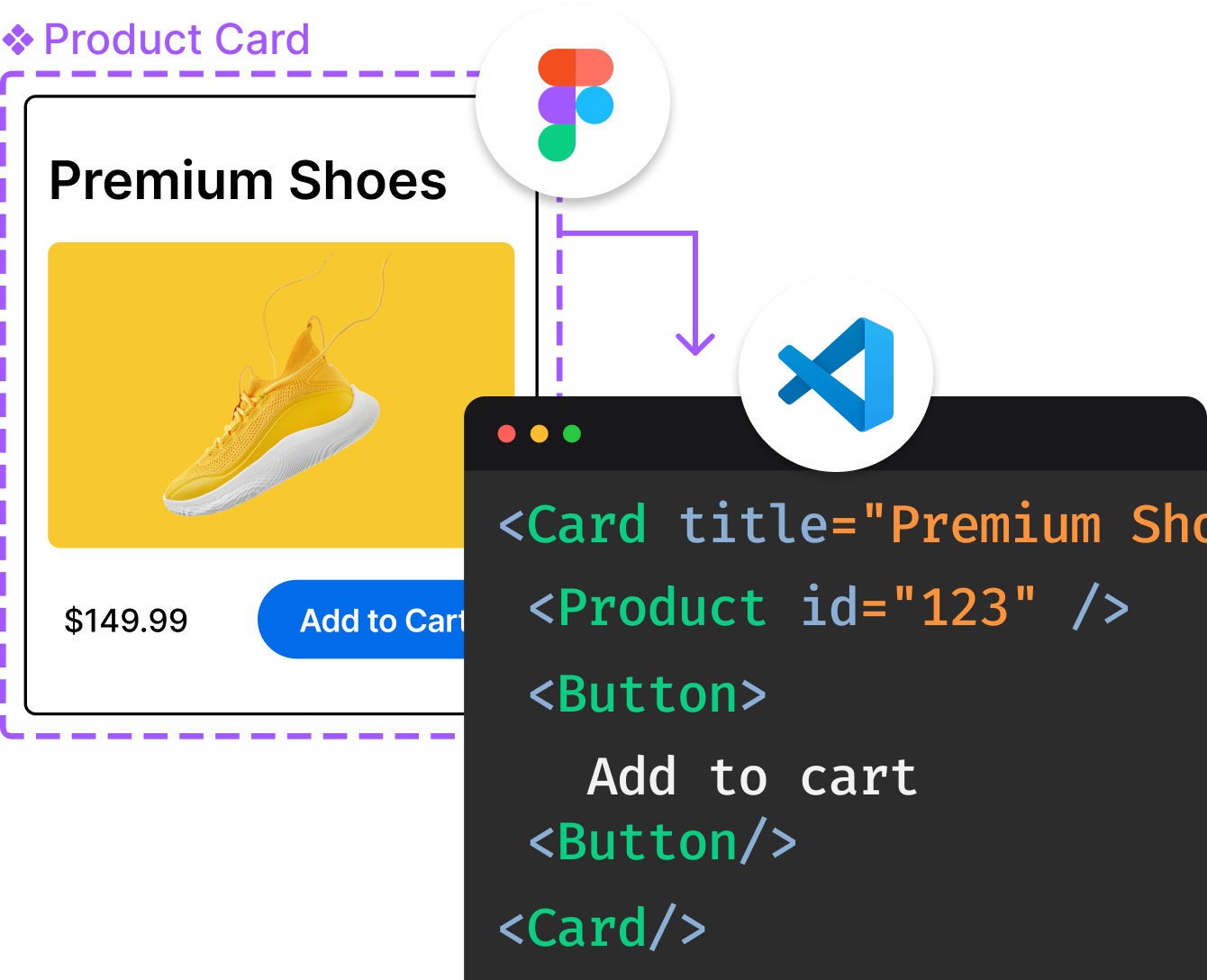
Introducing Visual Copilot: A new AI model to turn Figma designs to high quality code using your components.
Try Visual CopilotREADME

ncnn



ncnn is a high-performance neural network inference framework optimized for mobile, embedded, and desktop deployment. It has no third-party runtime dependencies, runs across CPU and Vulkan GPU backends, and provides tools such as pnnx for converting PyTorch and ONNX models to ncnn. Developers can deploy deep learning models efficiently on phones, PCs, browsers, and edge devices. ncnn is currently being used in many Tencent applications, such as QQ, Qzone, WeChat, Pitu, and so on.
ncnn æ¯ä¸ä¸ªé¢å移å¨ç«¯ãåµå ¥å¼åæ¡é¢ç«¯é¨ç½²ä¼åçé«æ§è½ç¥ç»ç½ç»æ¨çæ¡æ¶ã ncnn æ 第ä¸æ¹è¿è¡æ¶ä¾èµï¼æ¯æ CPU å Vulkan GPU å端ï¼å¹¶æä¾ pnnx çå·¥å ·å° PyTorch å ONNX 模å转æ¢ä¸º ncnn 模åã åºäº ncnnï¼å¼åè å¯ä»¥å°æ·±åº¦å¦ä¹ 模åé«æé¨ç½²å°ææºãPCãæµè§å¨åè¾¹ç¼è®¾å¤ä¸ã ncnn ç®åå·²å¨è ¾è®¯å¤æ¬¾åºç¨ä¸ä½¿ç¨ï¼å¦ï¼QQï¼Qzoneï¼å¾®ä¿¡ï¼å¤©å¤© P å¾çã
Quick Start
The recommended beginner path is PyTorch -> pnnx -> ncnn.
|
Install pnnx in a PyTorch environment Export a PyTorch model to ncnn This generates |
Run with ncnn C++ API Or use Python |
See pnnx, use ncnn with PyTorch or ONNX, Python API, and examples for complete workflows.
Community
|
ææ¯äº¤æµ QQ 群 637093648 (è¶ å¤å¤§ä½¬) çæ¡ï¼å·å·å·å·å·ï¼å·²æ»¡ï¼ |
Telegram Group | Discord Channel |
|
Pocky QQ 群ï¼MLIR YES!ï¼ 677104663 (è¶ å¤å¤§ä½¬) çæ¡ï¼multi-level intermediate representation |
||
|
ä»ä»¬é½ä¸ç¥é pnnx æå¤å¥½ç¨ç¾¤ 818998520 (æ°ç¾¤ï¼) |
Download & Build status
https://github.com/Tencent/ncnn/releases/latest

|
how to build ncnn library on Linux / Windows / macOS / Raspberry Pi3, Pi4 / POWER / Android / NVIDIA Jetson / iOS / WebAssembly / AllWinner D1 / Loongson 2K1000 |
||
| Source |
|
||

|
|||
| Android |
|
|
|
| Android shared |
|
||

|
|||
| HarmonyOS |
|
|
|
| HarmonyOS shared |
|
||

|
|||
| iOS |
|
|
|
| iOS-Simulator |
|
||

|
|||
| macOS |
|
|
|
| Mac-Catalyst |
|
|
|
| watchOS |
|
|
|
| watchOS-Simulator |
|
||
| tvOS |
|
|
|
| tvOS-Simulator |
|
||
| visionOS |
|
|
|
| visionOS-Simulator |
|
||
| Apple xcframework |
|
||

|
|||
| Ubuntu 22.04 |
|
|
|
| Ubuntu 24.04 |
|
||

|
|||
| VS2015 |
|
|
|
| VS2017 |
|
||
| VS2019 |
|
||
| VS2022 |
|
||

|
|||
| WebAssembly |
|
|
|
|
|
|||
| Linux (arm) |
|
||
| Linux (aarch64) |
|
||
| Linux (mips) |
|
||
| Linux (mips64) |
|
||
| Linux (ppc64) |
|
||
| Linux (riscv64) |
|
||
| Linux (loongarch64) |
|
||





















Build
Use the prebuilt packages above when possible. To build from source, see the full how to build ncnn library guide for Linux, Windows, macOS, Android, iOS, WebAssembly, HarmonyOS, Raspberry Pi, Jetson, and embedded targets.
Common Linux build:
git clone --recursive https://github.com/Tencent/ncnn.git
cd ncnn
mkdir build && cd build
cmake -DCMAKE_BUILD_TYPE=Release -DNCNN_VULKAN=ON -DNCNN_BUILD_EXAMPLES=ON ..
cmake --build . -j$(nproc)
Model Conversion
| Source model | Recommended path | Docs |
|---|---|---|
| PyTorch | pnnx.export(model, "model.pt", (input_tensor,)) or pnnx model.pt inputshape=[...] | pnnx, PyTorch / ONNX guide |
| ONNX | pnnx model.onnx | pnnx, onnx tools |
| ncnn model optimization | ncnnoptimize model.param model.bin new.param new.bin flag | quantization, model file spec |
| Legacy Caffe / MXNet / Darknet | Use compatibility converters when maintaining older models | caffe, mxnet, darknet, AlexNet legacy tutorial |
Use Netron to inspect .param, .onnx, and .pnnx.param graphs.
Features
- No third-party runtime dependencies and no BLAS / NNPACK requirement.
- Pure C++ implementation with C API and Python binding.
- Optimized CPU inference for mobile and embedded processors, including ARM NEON and multi-core scheduling.
- Vulkan GPU acceleration for supported platforms.
- Low memory footprint with explicit blob/workspace allocator design.
- Supports multi-input, multi-output, and multi-branch graphs.
- PyTorch and ONNX conversion through pnnx, plus legacy converter support for older model formats.
- Supports fp16 storage/arithmetic paths, int8 quantized inference, model optimization, and custom layers.
- Direct memory reference loading for
.paramand.binmodels.
Model and Workload Coverage
ncnn is still strong for classic and mobile CNN workloads, but current usage is broader than CNN-only deployment.
- Classification and backbones: VGG, AlexNet, GoogleNet, Inception, ResNet, DenseNet, SENet, SqueezeNet, MobileNet, ShuffleNet, MNasNet.
- Detection and face: SSD, Faster R-CNN, R-FCN, MTCNN, RetinaFace, scrfd, YOLOv2, YOLOv3, YOLOv4, YOLOv5, YOLOv7, YOLOv8, YOLOX, NanoDet.
- Segmentation, pose, and OCR: FCN, PSPNet, UNet, YOLACT, SimplePose, PP-OCR examples.
- Audio, generation, and language workloads are represented by community projects and examples where the model operators are supported.
For operator-level detail, see supported PyTorch operator status, supported ONNX operator status, and operation param weight table.
Project Examples
| Area | Project |
|---|---|
| Image generation | zimage-ncnn-vulkan - Z-Image generation with ncnn and Vulkan |
| LLM / embedding / vision-language | ncnn_llm - LLM, embedding, and vision-language examples with ncnn |
| Android classification | ncnn-android-squeezenet |
| Android style transfer | ncnn-android-styletransfer |
| Android detection | ncnn-android-mobilenetssd, ncnn-android-yolov5, ncnn-android-yolov7, ncnn-android-scrfd |
| Face detection | mtcnn_ncnn |
| Qt / Android integration | qt_android_ncnn_lib_encrypt_example |
| Colorization | ncnn-colorization-siggraph17 |
| Fortran binding | ncnn-fortran |
| Speech recognition | sherpa - real-time speech recognition on embedded and mobile devices |
Documentation And FAQ
| Topic | Links |
|---|---|
| Build | how to build |
| PyTorch / ONNX conversion | use ncnn with PyTorch or ONNX, pnnx, PyTorch converter notes |
| API and examples | C++ examples, Python API, low-level operation API |
| Model format | param and model file spec, operation param weight table |
| Extension | custom layer guide, plugin tools |
| FAQ | deepwiki, throw error, wrong result, Vulkan |
| Legacy beginner material | use ncnn with AlexNet, AlexNet Chinese tutorial |
License
Top Related Projects
MNN: A blazing-fast, lightweight inference engine battle-tested by Alibaba, powering high-performance on-device LLMs and Edge AI.
MACE is a deep learning inference framework optimized for mobile heterogeneous computing platforms.
Tengine is a lite, high performance, modular inference engine for embedded device
The Compute Library is a set of computer vision and machine learning functions optimised for both Arm CPUs and GPUs using SIMD technologies.
Open Machine Learning Compiler Framework
Convert designs to code with AI
Introducing Visual Copilot: A new AI model to turn Figma designs to high quality code using your components.
Try Visual Copilot