
Top Related Projects

A framework in react community ✨

This is the repo for Vue 2. For Vue 3, go to https://github.com/vuejs/core

The library for web and native user interfaces.

Deliver web apps with confidence 🚀

the full-stack Vue framework

Laravel is a web application framework with expressive, elegant syntax. We’ve already laid the foundation for your next big idea — freeing you to create without sweating the small things.
Quick Overview
Ant Design Pro is an enterprise-level UI solution based on Ant Design, designed for complex admin interfaces. It provides a set of high-quality React components, pre-built templates, and development tools to help developers quickly build robust and scalable admin applications.
Pros
- Rich set of pre-built components and templates tailored for enterprise applications
- Seamless integration with Ant Design, providing a consistent and professional look
- Built-in support for internationalization and theming
- Comprehensive documentation and active community support
Cons
- Steep learning curve for developers new to React or Ant Design ecosystem
- Can be overkill for smaller projects or simple admin interfaces
- Opinionated structure may limit flexibility for highly customized designs
- Regular updates may require frequent maintenance of existing projects
Code Examples
- Creating a basic form using Ant Design Pro components:
import { Form, Input, Button } from 'antd';

const BasicForm = () => {
  const [form] = Form.useForm();

  const onFinish = (values) => {
    console.log('Form values:', values);
  };

  return (
    <Form form={form} onFinish={onFinish}>
      <Form.Item name="username" rules={[{ required: true }]}>
        <Input placeholder="Username" />
      </Form.Item>
      <Form.Item name="password" rules={[{ required: true }]}>
        <Input.Password placeholder="Password" />
      </Form.Item>
      <Form.Item>
        <Button type="primary" htmlType="submit">
          Submit
        </Button>
      </Form.Item>
    </Form>
  );
};
- Implementing a data table with pagination:
import { Table } from 'antd';

const columns = [
  { title: 'Name', dataIndex: 'name', key: 'name' },
  { title: 'Age', dataIndex: 'age', key: 'age' },
  { title: 'Address', dataIndex: 'address', key: 'address' },
];

const DataTable = ({ data }) => {
  return (
    <Table
      columns={columns}
      dataSource={data}
      pagination={{ pageSize: 10 }}
    />
  );
};
- Using a pre-built dashboard component:
import { Statistic, Card, Row, Col } from 'antd';
import { ArrowUpOutlined, ArrowDownOutlined } from '@ant-design/icons';

const Dashboard = () => {
  return (
    <Row gutter={16}>
      <Col span={12}>
        <Card>
          <Statistic
            title="Active Users"
            value={11.28}
            precision={2}
            valueStyle={{ color: '#3f8600' }}
            prefix={<ArrowUpOutlined />}
            suffix="%"
          />
        </Card>
      </Col>
      <Col span={12}>
        <Card>
          <Statistic
            title="Idle Users"
            value={9.3}
            precision={2}
            valueStyle={{ color: '#cf1322' }}
            prefix={<ArrowDownOutlined />}
            suffix="%"
          />
        </Card>
      </Col>
    </Row>
  );
};
Getting Started
To start using Ant Design Pro, follow these steps:
-
Install the Ant Design Pro CLI:
npm i @ant-design/pro-cli -g -
Create a new project:
pro create myproject -
Navigate to the project directory and start the development server:
cd myproject
npm start
This will set up a new Ant Design Pro project and start the development server. You can now begin building your admin interface using the pre-built components and templates provided by Ant Design Pro.
Competitor Comparisons
A framework in react community ✨
Pros of umi
- More lightweight and flexible, suitable for various project types
- Faster development and build times due to its plugin-based architecture
- Extensive plugin ecosystem for easy customization and feature addition
Cons of umi
- Less opinionated, requiring more configuration for complex projects
- Smaller community compared to Ant Design Pro
- Steeper learning curve for developers new to the umi ecosystem
Code Comparison
umi configuration:
export default {
  routes: [
    { path: '/', component: '@/pages/index' },
    { path: '/users', component: '@/pages/users' },
  ],
  plugins: ['@umijs/plugin-antd'],
};
Ant Design Pro configuration:
export default [
  {
    path: '/',
    component: '../layouts/BasicLayout',
    routes: [
      { path: '/', redirect: '/dashboard' },
      { path: '/dashboard', component: './Dashboard' },
    ],
  },
];
umi focuses on a more flexible and plugin-based approach, while Ant Design Pro provides a more structured and opinionated setup out of the box. umi's configuration is generally simpler, but may require additional plugins for advanced features. Ant Design Pro includes more built-in components and layouts, making it easier to start with complex enterprise applications.
This is the repo for Vue 2. For Vue 3, go to https://github.com/vuejs/core
Pros of Vue
- Lightweight and fast, with a smaller bundle size
- More flexible and less opinionated, allowing for greater customization
- Easier learning curve for beginners
Cons of Vue
- Less comprehensive out-of-the-box solution for enterprise applications
- Smaller ecosystem compared to React-based solutions like Ant Design Pro
- Requires more setup and configuration for large-scale projects
Code Comparison
Vue component:
<template>
  <div>{{ message }}</div>
</template>

<script>
export default {
  data() {
    return {
      message: 'Hello, Vue!'
    }
  }
}
</script>
Ant Design Pro component (React-based):
import React from 'react';

const MyComponent = () => {
  const message = 'Hello, Ant Design Pro!';
  return <div>{message}</div>;
};

export default MyComponent;
Vue focuses on a template-based approach with a clear separation of concerns, while Ant Design Pro uses JSX syntax within React components. Vue's syntax is often considered more intuitive for beginners, but Ant Design Pro provides a more comprehensive solution for enterprise-level applications with pre-built components and layouts.
The library for web and native user interfaces.
Error generating comparison
Deliver web apps with confidence 🚀
Pros of Angular
- Comprehensive framework with built-in features for routing, forms, and HTTP client
- Strong TypeScript support and dependency injection system
- Large ecosystem and community support
Cons of Angular
- Steeper learning curve compared to Ant Design Pro
- More complex setup and configuration
- Potentially heavier bundle size for smaller applications
Code Comparison
Angular component:
@Component({
  selector: 'app-root',
  template: `<h1>{{ title }}</h1>`
})
export class AppComponent {
  title = 'Hello, Angular!';
}
Ant Design Pro component (React):
import { PageContainer } from '@ant-design/pro-layout';

const Welcome: React.FC = () => {
  return <PageContainer><h1>Welcome to Ant Design Pro</h1></PageContainer>;
};

export default Welcome;
Summary
Angular is a full-featured framework suitable for large-scale applications, offering robust tooling and a comprehensive ecosystem. Ant Design Pro, built on React, provides a more streamlined development experience with pre-built components and layouts, making it easier to create admin interfaces quickly. Angular's learning curve is steeper but offers more control, while Ant Design Pro emphasizes rapid development with less configuration overhead.
the full-stack Vue framework
Pros of Nuxt
- More flexible and versatile, suitable for a wide range of Vue.js projects
- Better performance optimization with automatic code splitting and server-side rendering
- Larger community and ecosystem, with more plugins and modules available
Cons of Nuxt
- Steeper learning curve for beginners compared to Ant Design Pro
- Less opinionated, requiring more configuration and decision-making
- Fewer built-in UI components, may need additional libraries for complex interfaces
Code Comparison
Nuxt.js (pages/index.vue):
<template>
  <div>
    <h1>{{ title }}</h1>
    <p>{{ description }}</p>
  </div>
</template>

<script>
export default {
  data() {
    return {
      title: 'Welcome to Nuxt',
      description: 'A Vue.js framework'
    }
  }
}
</script>
Ant Design Pro (src/pages/Welcome.tsx):
import React from 'react';
import { PageContainer } from '@ant-design/pro-layout';
import { Card, Typography } from 'antd';

export default (): React.ReactNode => (
  <PageContainer>
    <Card>
      <Typography.Title level={2}>Welcome to Ant Design Pro</Typography.Title>
      <Typography.Paragraph>A React-based admin system</Typography.Paragraph>
    </Card>
  </PageContainer>
);
Laravel is a web application framework with expressive, elegant syntax. We’ve already laid the foundation for your next big idea — freeing you to create without sweating the small things.
Pros of Laravel
- Full-featured PHP web application framework with extensive documentation and community support
- Built-in tools for authentication, routing, and database management
- Elegant syntax and robust ecosystem of packages via Composer
Cons of Laravel
- Steeper learning curve for beginners compared to Ant Design Pro's React-based approach
- Less focus on UI components and pre-built layouts
- May require more setup and configuration for complex applications
Code Comparison
Laravel (routes/web.php):
Route::get('/', function () {
    return view('welcome');
});
Ant Design Pro (src/pages/Welcome.tsx):
import { PageContainer } from '@ant-design/pro-components';

const Welcome: React.FC = () => {
  return <PageContainer><h1>Welcome</h1></PageContainer>;
};

export default Welcome;
Laravel focuses on backend routing and view rendering, while Ant Design Pro provides a component-based approach for building user interfaces. Laravel's routing is more explicit, whereas Ant Design Pro relies on React's component structure for navigation. Both frameworks offer different strengths, with Laravel excelling in backend development and Ant Design Pro providing a rich set of UI components and layouts for rapid frontend development.
Convert  designs to code with AI
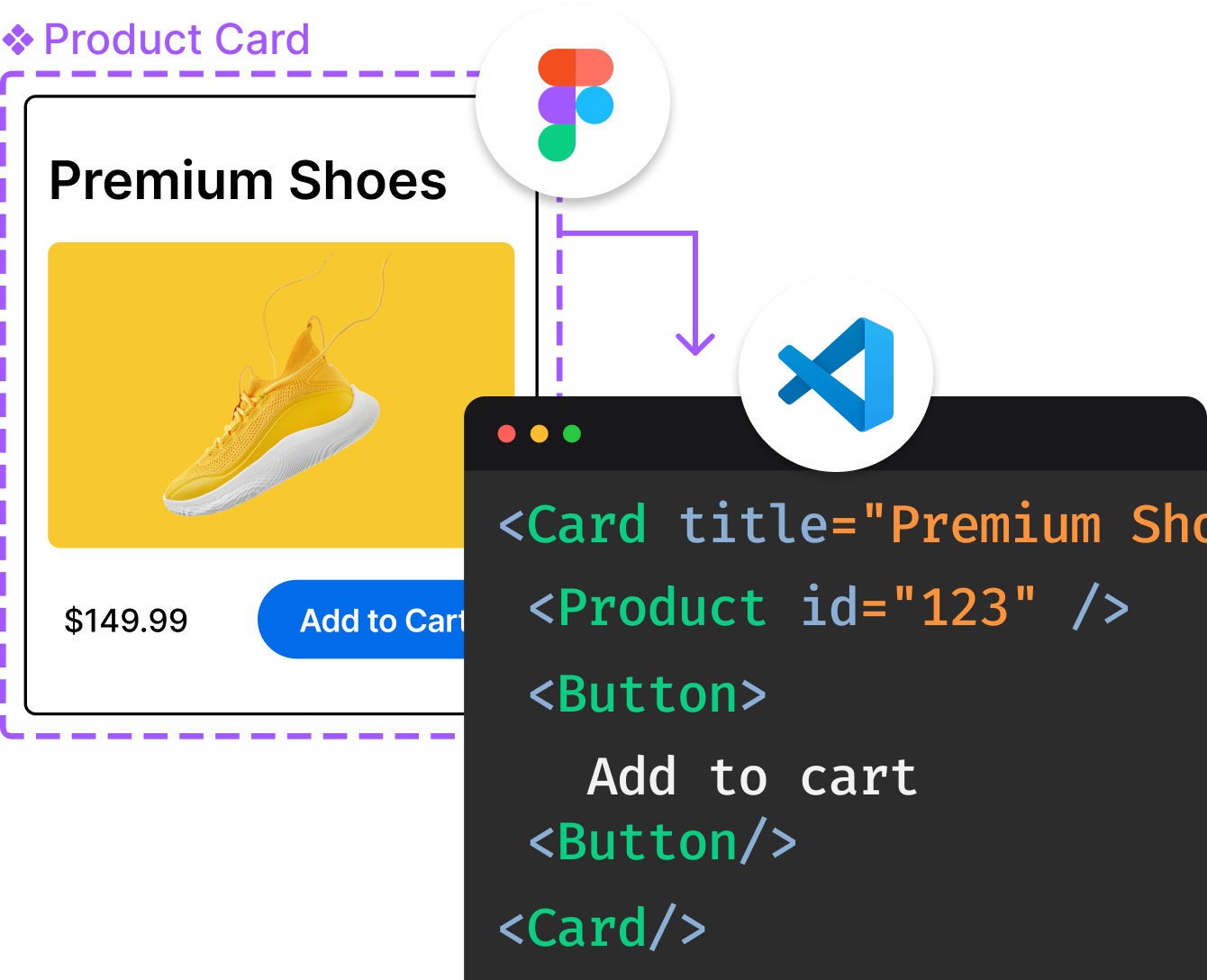
Introducing Visual Copilot: A new AI model to turn Figma designs to high quality code using your components.
Try Visual CopilotREADME
Ant Design Pro
An out-of-box UI solution for enterprise applications as a React boilerplate.





Language: ðºð¸ | ð¨ð³
- Preview: https://preview.pro.ant.design
- Documentation: docs/cheatsheet.en-US.md
- ChangeLog: https://github.com/ant-design/ant-design-pro/releases
- FAQ: docs/cheatsheet.en-US.md#faq
- v6 Released! â What's new in v6
Features
- :bulb: TypeScript: A language for application-scale JavaScript
- :scroll: Blocks: Build page with block template
- :gem: Neat Design: Built on Ant Design 6 specification
- :triangular_ruler: Common Templates: Typical templates for enterprise applications
- :rocket: State of The Art Development: Newest development stack of React 19/Umi Max 4/antd 6/utoopack
- :iphone: Responsive: Designed for variable screen sizes
- :art: Theming: Customizable theme with Tailwind CSS v4 + antd-style
- :globe_with_meridians: International: Built-in i18n solution
- :gear: Best Practices: Solid workflow to make your code healthy
- :1234: Mock development: Easy to use mock development solution
- :robot: AI Assistant: Built-in AI chatbot page powered by Ant Design X
- :white_check_mark: UI Test: Fly safely with unit and e2e tests
Templates
- Welcome
- Dashboard
  - Analysis
  - Monitor
  - Workplace
- Form
  - Basic Form
  - Step Form
  - Advanced Form
- List
  - Search List (Articles/Projects/Applications)
  - Table List
  - Basic List
  - Card List
- Profile
  - Basic Profile
  - Advanced Profile
- Result
  - Success
  - Fail
- Exception
  - 403
  - 404
  - 500
- Account
  - Account Center
  - Account Settings
- AI Assistant
- User
  - Login
  - Register
  - Register Result
Usage
Get Started
Clone or download this repository to your local machine:
git clone --depth=1 https://github.com/ant-design/ant-design-pro.git myapp
cd myapp
Installation
npm install
Development
# Start development server (full version by default)
npm start
Simplify to Simple Version
This project includes all blocks by default. If you need a minimal version, run:
npm run simple
This will:
- Remove extra page directories (dashboard, form, list/*, profile, result, exception, account, etc.)
- Remove extra mock files
- Replace routes with simple version
- Remove extra dependencies from package.json
Note: This operation is irreversible and will permanently delete files.
Build
npm run build
Browsers support
Modern browsers.
 Edge |  Firefox |  Chrome |  Safari |
|---|---|---|---|
| Edge | last 2 versions | last 2 versions | last 2 versions |
Contributing
Any type of contribution is welcome, here are some examples of how you may contribute to this project:
- Use Ant Design Pro in your daily work.
- Submit issues to report bugs or ask questions.
- Propose pull requests to improve our code.
Top Related Projects
A framework in react community ✨
This is the repo for Vue 2. For Vue 3, go to https://github.com/vuejs/core
The library for web and native user interfaces.
Deliver web apps with confidence 🚀
the full-stack Vue framework
Laravel is a web application framework with expressive, elegant syntax. We’ve already laid the foundation for your next big idea — freeing you to create without sweating the small things.
Convert designs to code with AI
Introducing Visual Copilot: A new AI model to turn Figma designs to high quality code using your components.
Try Visual Copilot