 camel
camel
Apache Camel is an open source integration framework with 350+ connectors. Write routes in Java, YAML, or XML. Run on Spring Boot, Quarkus, or standalone. Apache License 2.0.
Top Related Projects

Spring Integration provides an extension of the Spring programming model to support the well-known Enterprise Integration Patterns (EIP)
Apache NiFi
Apache Kafka - A distributed event streaming platform
Apache Flink
Apache Flume is a distributed, reliable, and available service for efficiently collecting, aggregating, and moving large amounts of log-like data
Quick Overview
Apache Camel is a versatile open-source integration framework based on known Enterprise Integration Patterns. It empowers you to define routing and mediation rules in a variety of domain-specific languages, including a Java-based Fluent API, Spring or Blueprint XML Configuration files, and a Scala DSL. Camel can be used as a routing and mediation engine for various scenarios, from small microservices to large enterprise systems.
Pros
- Extensive component library with support for numerous protocols and data formats
- Flexible and extensible architecture allowing easy integration with various systems
- Strong community support and regular updates
- Comprehensive documentation and examples
Cons
- Steep learning curve for beginners
- Can be overkill for simple integration tasks
- Performance overhead in certain scenarios
- Configuration complexity in large-scale deployments
Code Examples
- Simple route definition:
from("file:input")
    .to("file:output");
This code defines a route that moves files from an input directory to an output directory.
- Content-based routing:
from("direct:start")
    .choice()
        .when(simple("${body} contains 'urgent'"))
            .to("direct:priority")
        .otherwise()
            .to("direct:normal");
This example demonstrates content-based routing, where messages containing "urgent" are sent to a priority endpoint, while others go to a normal endpoint.
- Error handling:
errorHandler(deadLetterChannel("jms:queue:dead")
    .maximumRedeliveries(3)
    .redeliveryDelay(1000)
    .backOffMultiplier(2)
    .useExponentialBackOff());

from("file:input")
    .to("jms:queue:output");
This code sets up an error handler with a dead letter channel, configuring redelivery attempts and exponential backoff.
Getting Started
To get started with Apache Camel, follow these steps:
- Add the Camel dependency to your project's
pom.xml:
<dependency>
    <groupId>org.apache.camel</groupId>
    <artifactId>camel-core</artifactId>
    <version>3.18.0</version>
</dependency>
- Create a simple route in your Java code:
import org.apache.camel.builder.RouteBuilder;
import org.apache.camel.impl.DefaultCamelContext;

public class MyRouteBuilder extends RouteBuilder {
    @Override
    public void configure() throws Exception {
        from("file:input")
            .to("file:output");
    }

    public static void main(String[] args) throws Exception {
        DefaultCamelContext context = new DefaultCamelContext();
        context.addRoutes(new MyRouteBuilder());
        context.start();
        Thread.sleep(10000);
        context.stop();
    }
}
This example sets up a simple file transfer route and runs it for 10 seconds before stopping.
Competitor Comparisons
Spring Integration provides an extension of the Spring programming model to support the well-known Enterprise Integration Patterns (EIP)
Pros of Spring Integration
- Tighter integration with Spring ecosystem and easier setup for Spring-based applications
- More focused on enterprise integration patterns and message-driven architectures
- Simpler configuration using annotations and Java DSL
Cons of Spring Integration
- Less extensive component library compared to Camel
- More limited support for non-JVM languages and platforms
- Steeper learning curve for developers not familiar with Spring concepts
Code Comparison
Spring Integration:
@Bean
public IntegrationFlow fileFlow() {
    return IntegrationFlows.from(Files.inboundAdapter(new File("/input")))
            .filter(File.class, p -> p.getName().endsWith(".txt"))
            .transform(Files.toStringTransformer())
            .handle(System.out::println)
            .get();
}
Camel:
from("file:input?include=.*\\.txt")
    .convertBodyTo(String.class)
    .to("stream:out");
Both frameworks provide ways to create integration flows, but Spring Integration leverages Spring's dependency injection and configuration model, while Camel uses a more fluent DSL approach. Spring Integration's code tends to be more verbose but offers tighter Spring ecosystem integration, whereas Camel's syntax is more concise and focuses on route definitions.
Apache NiFi
Pros of NiFi
- User-friendly web-based interface for designing and managing data flows
- Built-in data provenance and lineage tracking
- Supports a wide range of data formats and protocols out-of-the-box
Cons of NiFi
- Steeper learning curve for complex data flows
- Higher resource consumption, especially for large-scale deployments
- Less flexibility for custom integrations compared to Camel
Code Comparison
NiFi uses a visual flow-based programming model, while Camel uses a more traditional coding approach. Here's a simple example of each:
NiFi (flow configuration in XML):
<processor>
  <name>GetFile</name>
  <class>org.apache.nifi.processors.standard.GetFile</class>
  <property name="Input Directory">/path/to/input</property>
</processor>
Camel (Java DSL):
from("file:///path/to/input")
  .to("file:///path/to/output");
Both Apache NiFi and Apache Camel are powerful integration frameworks, but they cater to different use cases and preferences. NiFi excels in visual data flow management and tracking, while Camel offers more flexibility and lightweight integration options. The choice between them depends on specific project requirements and team expertise.
Apache Kafka - A distributed event streaming platform
Pros of Kafka
- Higher throughput and scalability for large-scale data streaming
- Better suited for real-time event processing and analytics
- More robust fault-tolerance and data replication mechanisms
Cons of Kafka
- Steeper learning curve and more complex setup compared to Camel
- Less flexibility in terms of supported protocols and data formats
- Requires more infrastructure and resources to operate effectively
Code Comparison
Kafka producer example:
Properties props = new Properties();
props.put("bootstrap.servers", "localhost:9092");
props.put("key.serializer", "org.apache.kafka.common.serialization.StringSerializer");
props.put("value.serializer", "org.apache.kafka.common.serialization.StringSerializer");
Producer<String, String> producer = new KafkaProducer<>(props);
Camel route example:
from("file:data/inbox")
    .choice()
        .when(xpath("/person/city = 'London'"))
            .to("file:data/outbox/uk")
        .otherwise()
            .to("file:data/outbox/others");
Kafka focuses on high-throughput messaging, while Camel provides a more versatile integration framework. Kafka's code emphasizes configuration and producer setup, whereas Camel's code showcases its routing capabilities and domain-specific language for integration flows.
Apache Flink
Pros of Flink
- Designed for large-scale data processing with low latency and high throughput
- Supports both batch and stream processing in a unified framework
- Offers advanced features like exactly-once processing semantics and stateful computations
Cons of Flink
- Steeper learning curve due to its complex architecture and concepts
- Requires more resources and configuration for optimal performance
- Less extensive integration ecosystem compared to Camel
Code Comparison
Flink (Java):
DataStream<String> stream = env.addSource(new FlinkKafkaConsumer<>("topic", new SimpleStringSchema(), properties));
stream.map(s -> s.toUpperCase())
      .filter(s -> s.startsWith("A"))
      .addSink(new FlinkKafkaProducer<>("output-topic", new SimpleStringSchema(), properties));
Camel (Java):
from("kafka:input-topic")
    .transform().simple("${body.toUpperCase()}")
    .filter().simple("${body} startsWith 'A'")
    .to("kafka:output-topic");
Summary
Flink excels in large-scale data processing scenarios, offering advanced streaming capabilities. Camel, while less specialized for big data, provides a more extensive integration framework with a gentler learning curve. The code comparison illustrates Flink's more verbose but powerful API, contrasted with Camel's concise and intuitive route definitions.
Apache Flume is a distributed, reliable, and available service for efficiently collecting, aggregating, and moving large amounts of log-like data
Pros of Flume
- Specialized for log data collection and aggregation
- Simpler architecture for specific log-focused use cases
- Lower learning curve for basic log ingestion tasks
Cons of Flume
- Less versatile compared to Camel's wide range of integration options
- Smaller community and ecosystem
- Limited to Java, while Camel supports multiple languages
Code Comparison
Flume configuration example:
agent.sources = s1
agent.channels = c1
agent.sinks = k1

agent.sources.s1.type = netcat
agent.sources.s1.bind = localhost
agent.sources.s1.port = 44444
Camel route example:
from("file:data/inbox")
  .choice()
    .when(xpath("/person/city = 'London'"))
      .to("file:data/outbox/uk")
    .otherwise()
      .to("file:data/outbox/others");
Flume is more focused on configuring sources, channels, and sinks for log data, while Camel provides a more flexible routing system for various integration scenarios. Camel's DSL allows for more complex data processing and routing logic, whereas Flume's configuration is typically simpler but more limited in scope.
Convert  designs to code with AI
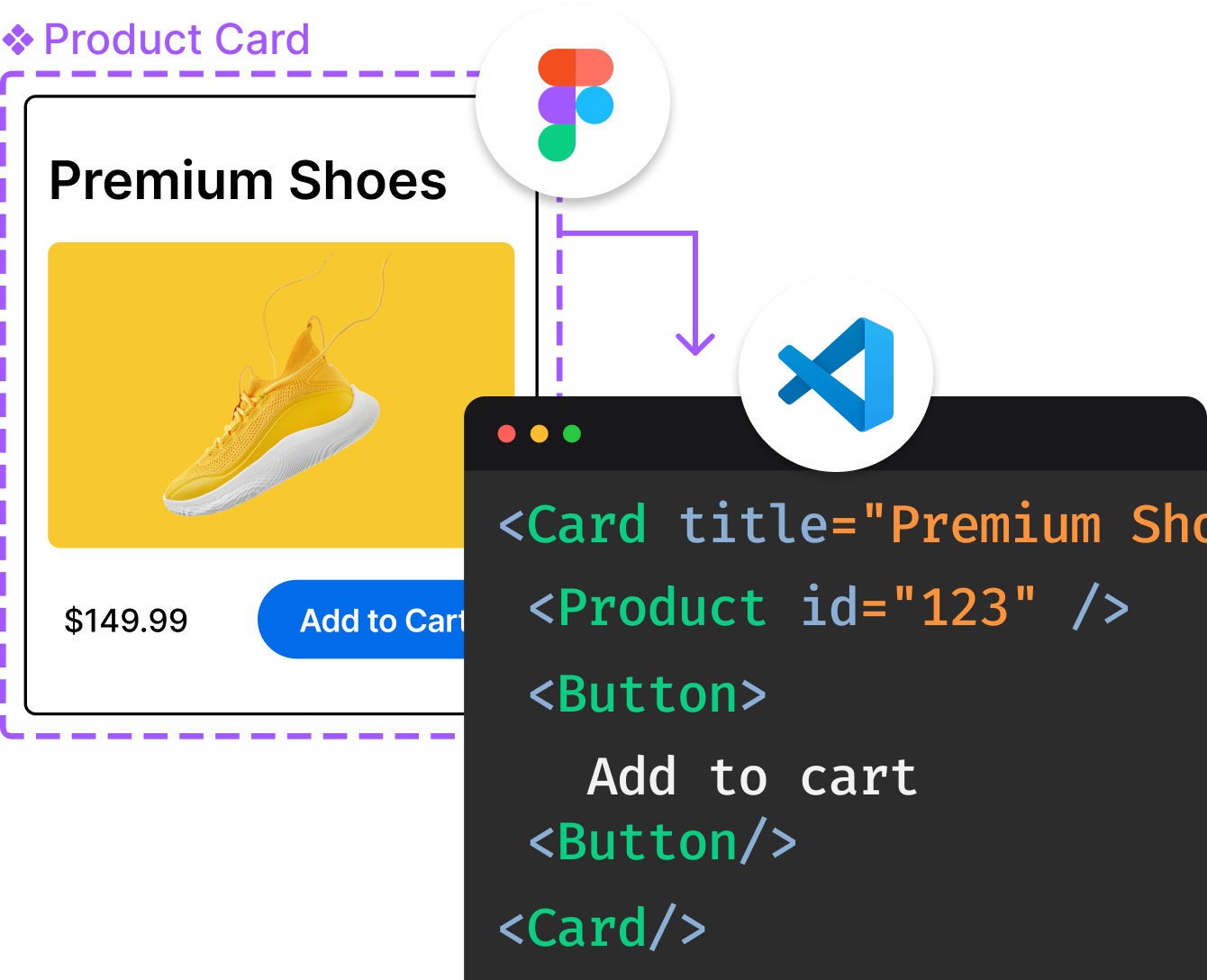
Introducing Visual Copilot: A new AI model to turn Figma designs to high quality code using your components.
Try Visual CopilotREADME
Apache Camel



Apache Camel is an open source integration framework with 350+ connectors for databases, APIs, message brokers, and cloud services. Write routes in Java, YAML, or XML. Run on Spring Boot, Quarkus, or standalone with the Camel CLI. In production since 2007 â used by thousands of companies worldwide. Apache License 2.0.
What is Apache Camel? | Getting Started | Components | Tooling
Get started in seconds
camel init hello.yaml
camel run hello.yaml
Or add to your existing Spring Boot project:
<dependency>
    <groupId>org.apache.camel.springboot</groupId>
    <artifactId>camel-spring-boot-starter</artifactId>
</dependency>
Write it your way
The same route in YAML, Java, or XML â pick what fits your team:
YAML:
- route:
    from:
      uri: kafka:incoming-orders
      steps:
        - unmarshal:
            json: {}
        - to:
            uri: sql:INSERT INTO orders(id, data) VALUES(:#${header.id}, :#${body})
Java:
from("kafka:incoming-orders")
    .unmarshal().json()
    .to("sql:INSERT INTO orders(id, data) VALUES(:#${header.id}, :#${body})");
Runtimes
| Runtime | What it does |
|---|---|
| Camel Spring Boot | Camel on Spring Boot with starters for 350+ connectors |
| Camel Quarkus | Cloud-native Camel with fast startup, low memory, native compilation |
| Camel CLI | Run, develop, test, and trace routes from the command line |
Other runtimes: Camel K (Kubernetes), Camel Karaf (OSGi), Camel Kafka Connector (Kafka Connect)
Components
350+ connectors for connecting to anything â Kafka, REST, JDBC, AWS, Azure, GCP, Salesforce, and more:
AI integration
Apache Camel provides an MCP server (Model Context Protocol) for AI coding assistants â Claude Code, GitHub Copilot, Cursor, and Gemini CLI get full Camel catalog context. Camel also includes components for LangChain4j and OpenAI, and supports the A2A agent-to-agent protocol for connecting AI agents to enterprise systems.
Visual designers
- Kaoto â open source visual designer for Camel routes, drag-and-drop, no code required
- Karavan â visual designer for Camel integrations in VS Code and standalone
Examples
- Camel CLI Examples â YAML and scripting examples
- Camel Examples â Camel Standalone examples
- Camel Spring Boot Examples â Camel Spring Boot integration
- Camel Quarkus Examples â Camel Quarkus integration
Contributing
We welcome all kinds of contributions:
https://github.com/apache/camel/blob/main/CONTRIBUTING.md
Community
- User Stories: https://camel.apache.org/community/user-stories/
- Website: https://camel.apache.org/
- Issue tracker: https://issues.apache.org/jira/projects/CAMEL
- Mailing list: https://camel.apache.org/community/mailing-list/
- Chat: https://camel.zulipchat.com/
- Stack Overflow: https://stackoverflow.com/questions/tagged/apache-camel
Licensing
Apache License 2.0 â see LICENSE.txt.
Top Related Projects
Spring Integration provides an extension of the Spring programming model to support the well-known Enterprise Integration Patterns (EIP)
Apache NiFi
Apache Kafka - A distributed event streaming platform
Apache Flink
Apache Flume is a distributed, reliable, and available service for efficiently collecting, aggregating, and moving large amounts of log-like data
Convert designs to code with AI
Introducing Visual Copilot: A new AI model to turn Figma designs to high quality code using your components.
Try Visual Copilot