 sagemaker-python-sdk
A library for training and deploying machine learning models on Amazon SageMaker
Top Related Projects

An Open Source Machine Learning Framework for Everyone

Tensors and Dynamic neural networks in Python with strong GPU acceleration

scikit-learn: machine learning in Python

H2O is an Open Source, Distributed, Fast & Scalable Machine Learning Platform: Deep Learning, Gradient Boosting (GBM) & XGBoost, Random Forest, Generalized Linear Modeling (GLM with Elastic Net), K-Means, PCA, Generalized Additive Models (GAM), RuleFit, Support Vector Machine (SVM), Stacked Ensembles, Automatic Machine Learning (AutoML), etc.

Scalable, Portable and Distributed Gradient Boosting (GBDT, GBRT or GBM) Library, for Python, R, Java, Scala, C++ and more. Runs on single machine, Hadoop, Spark, Dask, Flink and DataFlow
Quick Overview
The SageMaker Python SDK is an open-source library that provides Python APIs and abstractions for working with Amazon SageMaker. It simplifies the process of training and deploying machine learning models on AWS, offering a high-level interface for common ML tasks and seamless integration with popular frameworks like TensorFlow, PyTorch, and scikit-learn.
Pros
- Simplifies the process of building, training, and deploying ML models on AWS
- Supports a wide range of ML frameworks and algorithms
- Provides easy integration with other AWS services
- Offers built-in model optimization and hyperparameter tuning capabilities
Cons
- Learning curve for users new to AWS and SageMaker concepts
- Limited flexibility for advanced customization compared to using SageMaker directly
- Dependency on AWS infrastructure may lead to vendor lock-in
- Documentation can be overwhelming for beginners
Code Examples
- Training a model using a built-in algorithm:
from sagemaker.amazon.amazon_estimator import get_image_uri
from sagemaker.estimator import Estimator

container = get_image_uri(region, 'xgboost', '1.0-1')
xgb = Estimator(container, role, instance_count=1, instance_type='ml.m4.xlarge')
xgb.fit({'train': s3_input_train, 'validation': s3_input_validation})
- Deploying a trained model:
from sagemaker.predictor import csv_serializer

predictor = xgb.deploy(initial_instance_count=1, instance_type='ml.m4.xlarge',
                       serializer=csv_serializer)
- Using a pre-trained model:
from sagemaker import Model

model_data = 's3://my-bucket/model.tar.gz'
model = Model(model_data=model_data, image_uri=container, role=role)
predictor = model.deploy(initial_instance_count=1, instance_type='ml.m4.xlarge')
Getting Started
To get started with the SageMaker Python SDK:
- Install the SDK:
pip install sagemaker
- Set up your AWS credentials and region:
import boto3
import sagemaker

session = boto3.Session(profile_name='your_profile')
sagemaker_session = sagemaker.Session(boto_session=session)
- Create an estimator and train a model:
from sagemaker.amazon.amazon_estimator import get_image_uri
from sagemaker.estimator import Estimator

container = get_image_uri(region, 'xgboost', '1.0-1')
xgb = Estimator(container, role, instance_count=1, instance_type='ml.m4.xlarge')
xgb.fit({'train': s3_input_train, 'validation': s3_input_validation})
Competitor Comparisons
An Open Source Machine Learning Framework for Everyone
Pros of TensorFlow
- More comprehensive and flexible deep learning framework
- Larger community and ecosystem of tools/extensions
- Supports multiple programming languages beyond Python
Cons of TensorFlow
- Steeper learning curve for beginners
- More complex setup and configuration
- May be overkill for simpler machine learning tasks
Code Comparison
SageMaker Python SDK:
import sagemaker
from sagemaker.tensorflow import TensorFlow

estimator = TensorFlow(entry_point='train.py',
                       role='SageMakerRole',
                       instance_count=1,
                       instance_type='ml.p3.2xlarge')

estimator.fit('s3://bucket/training-data')
TensorFlow:
import tensorflow as tf

model = tf.keras.Sequential([
    tf.keras.layers.Dense(64, activation='relu'),
    tf.keras.layers.Dense(10, activation='softmax')
])

model.compile(optimizer='adam',
              loss='categorical_crossentropy',
              metrics=['accuracy'])

model.fit(x_train, y_train, epochs=5)
The SageMaker Python SDK simplifies deployment and management of TensorFlow models on AWS, while TensorFlow itself offers more granular control over model architecture and training processes. SageMaker is ideal for AWS-centric workflows, whereas TensorFlow provides greater flexibility for various environments and advanced deep learning applications.
Tensors and Dynamic neural networks in Python with strong GPU acceleration
Pros of PyTorch
- More versatile and widely used for general deep learning tasks
- Extensive community support and ecosystem of tools/libraries
- Dynamic computational graph for easier debugging and flexibility
Cons of PyTorch
- Steeper learning curve for beginners
- Less integrated with AWS services and infrastructure
- May require more setup and configuration for deployment
Code Comparison
SageMaker Python SDK:
import sagemaker
from sagemaker.pytorch import PyTorch

estimator = PyTorch(entry_point='train.py',
                    role='SageMakerRole',
                    instance_count=1,
                    instance_type='ml.p3.2xlarge',
                    framework_version='1.8.0')
estimator.fit({'training': 's3://bucket/path/to/training/data'})
PyTorch:
import torch
import torch.nn as nn
import torch.optim as optim

model = nn.Linear(10, 1)
criterion = nn.MSELoss()
optimizer = optim.SGD(model.parameters(), lr=0.01)

for epoch in range(100):
    # Training loop implementation
The SageMaker Python SDK simplifies deployment and integration with AWS services, while PyTorch offers more flexibility and control over the model architecture and training process. SageMaker is better suited for AWS-centric workflows, whereas PyTorch is more versatile for general deep learning tasks across various platforms.
scikit-learn: machine learning in Python
Pros of scikit-learn
- Comprehensive machine learning library with a wide range of algorithms and tools
- Well-established, mature project with extensive documentation and community support
- Can be used independently of any cloud platform or service
Cons of scikit-learn
- Limited scalability for large datasets and distributed computing
- Lacks built-in cloud integration and deployment features
- Requires more manual setup for model training and deployment pipelines
Code Comparison
scikit-learn:
from sklearn.ensemble import RandomForestClassifier
from sklearn.datasets import make_classification

X, y = make_classification(n_samples=1000, n_features=4)
clf = RandomForestClassifier()
clf.fit(X, y)
SageMaker Python SDK:
import sagemaker
from sagemaker.sklearn import SKLearn

sklearn_estimator = SKLearn(entry_point='train.py',
                            role='SageMakerRole',
                            instance_type='ml.m5.xlarge',
                            framework_version='0.23-1')
sklearn_estimator.fit({'train': s3_input_train})
The scikit-learn code focuses on direct model creation and training, while the SageMaker Python SDK code emphasizes cloud-based training setup and execution.
H2O is an Open Source, Distributed, Fast & Scalable Machine Learning Platform: Deep Learning, Gradient Boosting (GBM) & XGBoost, Random Forest, Generalized Linear Modeling (GLM with Elastic Net), K-Means, PCA, Generalized Additive Models (GAM), RuleFit, Support Vector Machine (SVM), Stacked Ensembles, Automatic Machine Learning (AutoML), etc.
Pros of h2o-3
- Open-source and community-driven, allowing for greater flexibility and customization
- Supports a wide range of algorithms and machine learning tasks out-of-the-box
- Offers a user-friendly web interface for non-programmers
Cons of h2o-3
- Requires more setup and configuration compared to SageMaker's managed environment
- May have less seamless integration with other AWS services
- Limited built-in support for distributed training on large clusters
Code Comparison
h2o-3:
import h2o
h2o.init()
data = h2o.import_file("path/to/data.csv")
model = h2o.automl(y="target", training_frame=data)
predictions = model.predict(data)
SageMaker Python SDK:
import sagemaker
from sagemaker.estimator import Estimator

estimator = Estimator(image_uri, role, instance_count=1, instance_type='ml.m5.xlarge')
estimator.fit({'train': s3_input_train})
predictor = estimator.deploy(instance_type='ml.m4.xlarge', initial_instance_count=1)
Both libraries offer straightforward ways to train and deploy models, but SageMaker provides a more AWS-integrated experience, while h2o-3 offers more flexibility and a broader range of built-in algorithms.
Scalable, Portable and Distributed Gradient Boosting (GBDT, GBRT or GBM) Library, for Python, R, Java, Scala, C++ and more. Runs on single machine, Hadoop, Spark, Dask, Flink and DataFlow
Pros of XGBoost
- Standalone library, usable across various platforms and frameworks
- More flexible and customizable for advanced machine learning tasks
- Extensive community support and contributions
Cons of XGBoost
- Requires more manual setup and configuration
- Less integrated with AWS services and infrastructure
- May need additional effort for deployment and scaling
Code Comparison
XGBoost:
import xgboost as xgb
model = xgb.XGBClassifier()
model.fit(X_train, y_train)
predictions = model.predict(X_test)
SageMaker Python SDK:
from sagemaker.xgboost import XGBoost
xgb_estimator = XGBoost(entry_point='script.py', role='SageMakerRole')
xgb_estimator.fit({'train': s3_train_data, 'validation': s3_val_data})
predictions = xgb_estimator.predict(s3_test_data)
Summary
XGBoost is a versatile, standalone library for gradient boosting, while the SageMaker Python SDK is specifically designed for use with AWS SageMaker. XGBoost offers more flexibility and broader applicability, but requires more manual setup. The SageMaker SDK provides easier integration with AWS services and streamlined deployment, but is limited to the AWS ecosystem. The code comparison illustrates the difference in setup and usage between the two libraries.
Convert  designs to code with AI
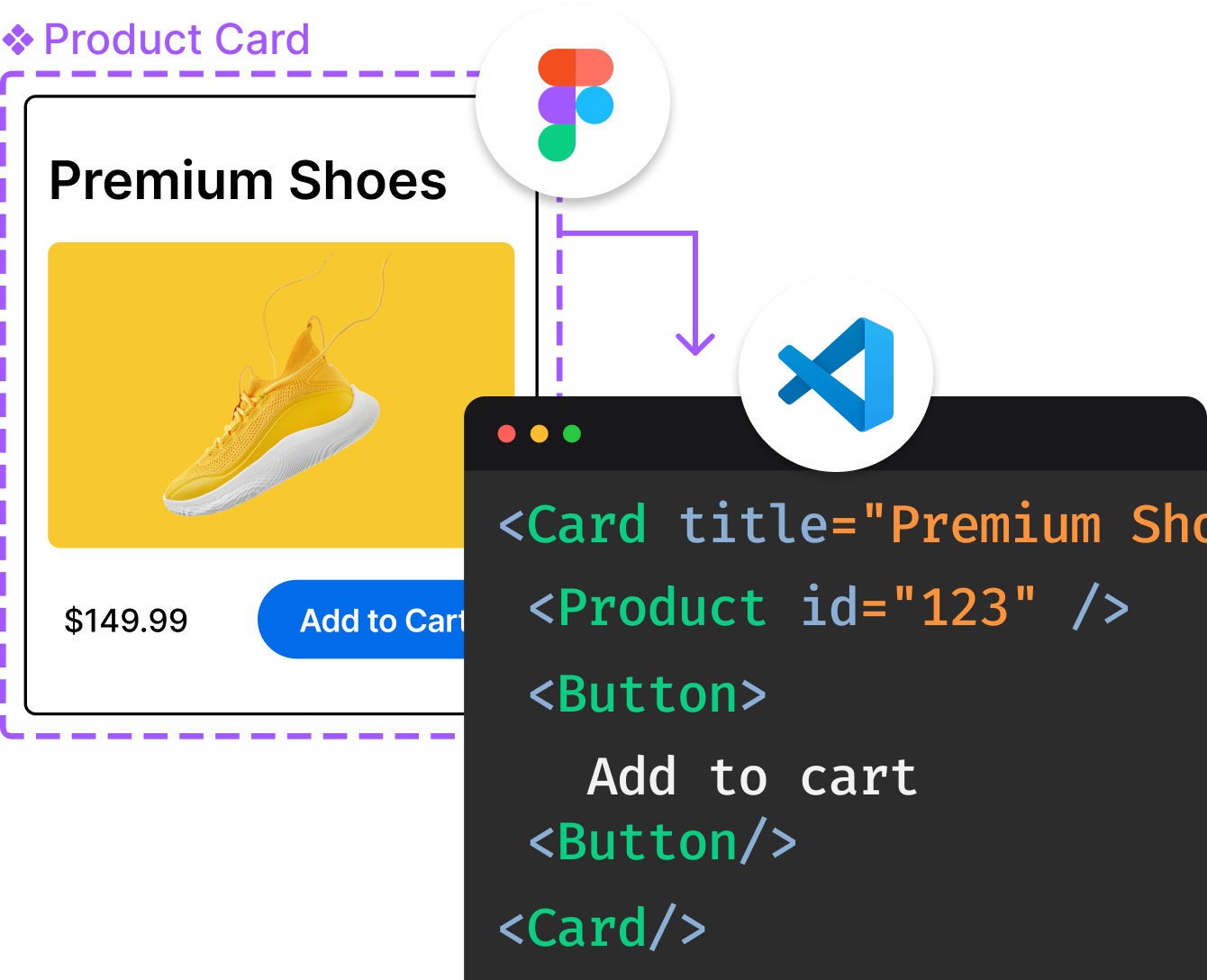
Introducing Visual Copilot: A new AI model to turn Figma designs to high quality code using your components.
Try Visual CopilotREADME
.. image:: https://github.com/aws/sagemaker-python-sdk/raw/master/branding/icon/sagemaker-banner.png :height: 100px :alt: SageMaker

==================== SageMaker Python SDK
.. image:: https://img.shields.io/pypi/v/sagemaker.svg :target: https://pypi.python.org/pypi/sagemaker :alt: Latest Version

.. image:: https://img.shields.io/pypi/pyversions/sagemaker.svg :target: https://pypi.python.org/pypi/sagemaker :alt: Supported Python Versions

.. image:: https://img.shields.io/badge/code_style-black-000000.svg :target: https://github.com/python/black :alt: Code style: black

.. image:: https://readthedocs.org/projects/sagemaker/badge/?version=stable :target: https://sagemaker.readthedocs.io/en/stable/ :alt: Documentation Status
.. image:: https://github.com/aws/sagemaker-python-sdk/actions/workflows/codebuild-ci-health.yml/badge.svg :target: https://github.com/aws/sagemaker-python-sdk/actions/workflows/codebuild-ci-health.yml :alt: CI Health

SageMaker Python SDK is an open source library for training and deploying machine learning models on Amazon SageMaker.
With the SDK, you can train and deploy models using popular deep learning frameworks Apache MXNet and PyTorch. You can also train and deploy models with Amazon algorithms, which are scalable implementations of core machine learning algorithms that are optimized for SageMaker and GPU training. If you have your own algorithms built into SageMaker compatible Docker containers, you can train and host models using these as well.
To install SageMaker Python SDK, see Installing SageMaker Python SDK <#installing-the-sagemaker-python-sdk>_.
âð¥ SageMaker V3 Release
Version 3.0.0 represents a significant milestone in our product's evolution. This major release introduces a modernized architecture, enhanced performance, and powerful new features while maintaining our commitment to user experience and reliability.
Important: Please review these breaking changes before upgrading.
- Older interfaces such as Estimator, Model, Predictor and all their subclasses will not be supported in V3.
- Please see our
V3 examples folder <https://github.com/aws/sagemaker-python-sdk/tree/master/v3-examples>__ for example notebooks and usage patterns.
Migrating to V3
Upgrading to 3.x
To upgrade to the latest version of SageMaker Python SDK 3.x:
::
pip install --upgrade sagemaker
If you prefer to downgrade to the 2.x version:
::
pip install sagemaker==2.*
See SageMaker V2 Examples <#sagemaker-v2-examples>__ for V2 documentation and examples.
Key Benefits of 3.x
-
Modular Architecture: Separate PyPI packages for core, training, and serving capabilities
sagemaker-core <https://pypi.org/project/sagemaker-core/>__sagemaker-train <https://pypi.org/project/sagemaker-train/>__sagemaker-serve <https://pypi.org/project/sagemaker-serve/>__sagemaker-mlops <https://pypi.org/project/sagemaker-mlops/>__
-
Unified Training & Inference: Single classes (ModelTrainer, ModelBuilder) replace multiple framework-specific classes
-
Object-Oriented API: Structured interface with auto-generated configs aligned with AWS APIs
-
Simplified Workflows: Reduced boilerplate and more intuitive interfaces
Training Experience
V3 introduces the unified ModelTrainer class to reduce complexity of initial setup and deployment for model training. This replaces the V2 Estimator class and framework-specific classes (PyTorchEstimator, SKLearnEstimator, etc.).
This example shows how to train a model using a custom training container with training data from S3.
SageMaker Python SDK 2.x:
.. code:: python
from sagemaker.estimator import Estimator
estimator = Estimator(
    image_uri="my-training-image",
    role="arn:aws:iam::123456789012:role/SageMakerRole",
    instance_count=1,
    instance_type="ml.m5.xlarge",
    output_path="s3://my-bucket/output"
)
estimator.fit({"training": "s3://my-bucket/train"})
SageMaker Python SDK 3.x:
.. code:: python
from sagemaker.train import ModelTrainer
from sagemaker.train.configs import InputData

trainer = ModelTrainer(
    training_image="my-training-image",
    role="arn:aws:iam::123456789012:role/SageMakerRole"
)

train_data = InputData(
    channel_name="training",
    data_source="s3://my-bucket/train"
)

trainer.train(input_data_config=[train_data])
See more examples: SageMaker V3 Examples <#sagemaker-v3-examples>__
Inference Experience
V3 introduces the unified ModelBuilder class for model deployment and inference. This replaces the V2 Model class and framework-specific classes (PyTorchModel, TensorFlowModel, SKLearnModel, XGBoostModel, etc.).
This example shows how to deploy a trained model for real-time inference.
SageMaker Python SDK 2.x:
.. code:: python
from sagemaker.model import Model
from sagemaker.predictor import Predictor
model = Model(
    image_uri="my-inference-image",
    model_data="s3://my-bucket/model.tar.gz",
    role="arn:aws:iam::123456789012:role/SageMakerRole"
)
predictor = model.deploy(
    initial_instance_count=1,
    instance_type="ml.m5.xlarge"
)
result = predictor.predict(data)
SageMaker Python SDK 3.x:
.. code:: python
from sagemaker.serve import ModelBuilder
model_builder = ModelBuilder(
    model="my-model",
    model_path="s3://my-bucket/model.tar.gz"
)
endpoint = model_builder.build()
result = endpoint.invoke(...)
See more examples: SageMaker V3 Examples <#sagemaker-v3-examples>__
SageMaker V3 Examples
Training Examples
#. Custom Distributed Training Example <https://github.com/aws/sagemaker-python-sdk/blob/master/v3-examples/training-examples/custom-distributed-training-example.ipynb>__
#. Distributed Local Training Example <https://github.com/aws/sagemaker-python-sdk/blob/master/v3-examples/training-examples/distributed-local-training-example.ipynb>__
#. Hyperparameter Training Example <https://github.com/aws/sagemaker-python-sdk/blob/master/v3-examples/training-examples/hyperparameter-training-example.ipynb>__
#. JumpStart Training Example <https://github.com/aws/sagemaker-python-sdk/blob/master/v3-examples/training-examples/jumpstart-training-example.ipynb>__
#. Local Training Example <https://github.com/aws/sagemaker-python-sdk/blob/master/v3-examples/training-examples/local-training-example.ipynb>__
Inference Examples
#. HuggingFace Example <https://github.com/aws/sagemaker-python-sdk/blob/master/v3-examples/inference-examples/huggingface-example.ipynb>__
#. In-Process Mode Example <https://github.com/aws/sagemaker-python-sdk/blob/master/v3-examples/inference-examples/in-process-mode-example.ipynb>__
#. Inference Spec Example <https://github.com/aws/sagemaker-python-sdk/blob/master/v3-examples/inference-examples/inference-spec-example.ipynb>__
#. JumpStart E2E Training Example <https://github.com/aws/sagemaker-python-sdk/blob/master/v3-examples/inference-examples/jumpstart-e2e-training-example.ipynb>__
#. JumpStart Example <https://github.com/aws/sagemaker-python-sdk/blob/master/v3-examples/inference-examples/jumpstart-example.ipynb>__
#. Local Mode Example <https://github.com/aws/sagemaker-python-sdk/blob/master/v3-examples/inference-examples/local-mode-example.ipynb>__
#. Optimize Example <https://github.com/aws/sagemaker-python-sdk/blob/master/v3-examples/inference-examples/optimize-example.ipynb>__
#. Train Inference E2E Example <https://github.com/aws/sagemaker-python-sdk/blob/master/v3-examples/inference-examples/train-inference-e2e-example.ipynb>__
ML Ops Examples
#. V3 Hyperparameter Tuning Example <https://github.com/aws/sagemaker-python-sdk/blob/master/v3-examples/ml-ops-examples/v3-hyperparameter-tuning-example/v3-hyperparameter-tuning-example.ipynb>__
#. V3 Hyperparameter Tuning Pipeline <https://github.com/aws/sagemaker-python-sdk/blob/master/v3-examples/ml-ops-examples/v3-hyperparameter-tuning-example/v3-hyperparameter-tuning-pipeline.ipynb>__
#. V3 Model Registry Example <https://github.com/aws/sagemaker-python-sdk/blob/master/v3-examples/ml-ops-examples/v3-model-registry-example/v3-model-registry-example.ipynb>__
#. V3 PyTorch Processing Example <https://github.com/aws/sagemaker-python-sdk/blob/master/v3-examples/ml-ops-examples/v3-processing-job-pytorch/v3-pytorch-processing-example.ipynb>__
#. V3 Pipeline Train Create Registry <https://github.com/aws/sagemaker-python-sdk/blob/master/v3-examples/ml-ops-examples/v3-pipeline-train-create-registry.ipynb>__
#. V3 Processing Job Sklearn <https://github.com/aws/sagemaker-python-sdk/blob/master/v3-examples/ml-ops-examples/v3-processing-job-sklearn.ipynb>__
#. V3 SageMaker Clarify <https://github.com/aws/sagemaker-python-sdk/blob/master/v3-examples/ml-ops-examples/v3-sagemaker-clarify.ipynb>__
#. V3 Transform Job Example <https://github.com/aws/sagemaker-python-sdk/blob/master/v3-examples/ml-ops-examples/v3-transform-job-example.ipynb>__
Looking for V2 Examples? See SageMaker V2 Examples <#sagemaker-v2-examples>__ below.
Installing the SageMaker Python SDK
The SageMaker Python SDK is built to PyPI and the latest version of the SageMaker Python SDK can be installed with pip as follows ::
pip install sagemaker==<Latest version from pyPI from https://pypi.org/project/sagemaker/>
You can install from source by cloning this repository and running a pip install command in the root directory of the repository:
::
git clone https://github.com/aws/sagemaker-python-sdk.git
cd sagemaker-python-sdk
pip install .
Supported Operating Systems
SageMaker Python SDK supports Unix/Linux and Mac.
Supported Python Versions
~~~~~~~~~~~~~~~~~~~~~~~~~
SageMaker Python SDK is tested on:
- Python 3.9
- Python 3.10
- Python 3.11
- Python 3.12
Telemetry
~~~~~~~~~~~~~~~
The ``sagemaker`` library has telemetry enabled to help us better understand user needs, diagnose issues, and deliver new features. This telemetry tracks the usage of various SageMaker functions.
If you prefer to opt out of telemetry, you can easily do so by setting the ``TelemetryOptOut`` parameter to ``true`` in the SDK defaults configuration. For detailed instructions, please visit `Configuring and using defaults with the SageMaker Python SDK <https://sagemaker.readthedocs.io/en/stable/overview.html#configuring-and-using-defaults-with-the-sagemaker-python-sdk>`__.
AWS Permissions
~~~~~~~~~~~~~~~
As a managed service, Amazon SageMaker performs operations on your behalf on the AWS hardware that is managed by Amazon SageMaker.
Amazon SageMaker can perform only operations that the user permits.
You can read more about which permissions are necessary in the `AWS Documentation <https://docs.aws.amazon.com/sagemaker/latest/dg/sagemaker-roles.html>`__.
The SageMaker Python SDK should not require any additional permissions aside from what is required for using SageMaker.
However, if you are using an IAM role with a path in it, you should grant permission for ``iam:GetRole``.
Licensing
~~~~~~~~~
SageMaker Python SDK is licensed under the Apache 2.0 License. It is copyright Amazon.com, Inc. or its affiliates. All Rights Reserved. The license is available at:
http://aws.amazon.com/apache2.0/
Running tests
~~~~~~~~~~~~~
SageMaker Python SDK has unit tests and integration tests.
You can install the libraries needed to run the tests by running :code:`pip install --upgrade .[test]` or, for Zsh users: :code:`pip install --upgrade .\[test\]`
**Unit tests**
We run unit tests with tox, which is a program that lets you run unit tests for multiple Python versions, and also make sure the
code fits our style guidelines. We run tox with `all of our supported Python versions <#supported-python-versions>`_, so to run unit tests
with the same configuration we do, you need to have interpreters for those Python versions installed.
To run the unit tests with tox, run:
::
tox tests/unit
**Integration tests**
To run the integration tests, the following prerequisites must be met
1. AWS account credentials are available in the environment for the boto3 client to use.
2. The AWS account has an IAM role named :code:`SageMakerRole`.
It should have the AmazonSageMakerFullAccess policy attached as well as a policy with `the necessary permissions to use Elastic Inference <https://docs.aws.amazon.com/sagemaker/latest/dg/ei-setup.html>`__.
3. To run remote_function tests, dummy ecr repo should be created. It can be created by running -
:code:`aws ecr create-repository --repository-name remote-function-dummy-container`
We recommend selectively running just those integration tests you'd like to run. You can filter by individual test function names with:
::
tox -- -k 'test_i_care_about'
You can also run all of the integration tests by running the following command, which runs them in sequence, which may take a while:
::
tox -- tests/integ
You can also run them in parallel:
::
tox -- -n auto tests/integ
Git Hooks
~~~~~~~~~
to enable all git hooks in the .githooks directory, run these commands in the repository directory:
::
find .git/hooks -type l -exec rm {} \;
find .githooks -type f -exec ln -sf ../../{} .git/hooks/ \;
To enable an individual git hook, simply move it from the .githooks/ directory to the .git/hooks/ directory.
Building Sphinx docs
~~~~~~~~~~~~~~~~~~~~
Setup a Python environment, and install the dependencies listed in ``doc/requirements.txt``:
::
# conda
conda create -n sagemaker python=3.12
conda activate sagemaker
conda install sphinx=5.1.1 sphinx_rtd_theme=0.5.0
# pip
pip install -r doc/requirements.txt
Clone/fork the repo, and install your local version:
::
pip install --upgrade .
Then ``cd`` into the ``sagemaker-python-sdk/doc`` directory and run:
::
make html
You can edit the templates for any of the pages in the docs by editing the .rst files in the ``doc`` directory and then running ``make html`` again.
Preview the site with a Python web server:
::
cd _build/html
python -m http.server 8000
View the website by visiting http://localhost:8000
SageMaker SparkML Serving
-------------------------
With SageMaker SparkML Serving, you can now perform predictions against a SparkML Model in SageMaker.
In order to host a SparkML model in SageMaker, it should be serialized with ``MLeap`` library.
For more information on MLeap, see https://github.com/combust/mleap .
Supported major version of Spark: 3.3 (MLeap version - 0.20.0)
Here is an example on how to create an instance of ``SparkMLModel`` class and use ``deploy()`` method to create an
endpoint which can be used to perform prediction against your trained SparkML Model.
.. code:: python
sparkml_model = SparkMLModel(model_data='s3://path/to/model.tar.gz', env={'SAGEMAKER_SPARKML_SCHEMA': schema})
model_name = 'sparkml-model'
endpoint_name = 'sparkml-endpoint'
predictor = sparkml_model.deploy(initial_instance_count=1, instance_type='ml.c4.xlarge', endpoint_name=endpoint_name)
Once the model is deployed, we can invoke the endpoint with a ``CSV`` payload like this:
.. code:: python
payload = 'field_1,field_2,field_3,field_4,field_5'
predictor.predict(payload)
For more information about the different ``content-type`` and ``Accept`` formats as well as the structure of the
``schema`` that SageMaker SparkML Serving recognizes, please see `SageMaker SparkML Serving Container`_.
.. _SageMaker SparkML Serving Container: https://github.com/aws/sagemaker-sparkml-serving-container
SageMaker V2 Examples
---------------------
#. `Using the SageMaker Python SDK <https://sagemaker.readthedocs.io/en/stable/overview.html>`__
#. `Using MXNet <https://sagemaker.readthedocs.io/en/stable/using_mxnet.html>`__
#. `Using TensorFlow <https://sagemaker.readthedocs.io/en/stable/using_tf.html>`__
#. `Using Chainer <https://sagemaker.readthedocs.io/en/stable/using_chainer.html>`__
#. `Using PyTorch <https://sagemaker.readthedocs.io/en/stable/using_pytorch.html>`__
#. `Using Scikit-learn <https://sagemaker.readthedocs.io/en/stable/using_sklearn.html>`__
#. `Using XGBoost <https://sagemaker.readthedocs.io/en/stable/using_xgboost.html>`__
#. `SageMaker Reinforcement Learning Estimators <https://sagemaker.readthedocs.io/en/stable/using_rl.html>`__
#. `SageMaker SparkML Serving <#sagemaker-sparkml-serving>`__
#. `Amazon SageMaker Built-in Algorithm Estimators <src/sagemaker/amazon/README.rst>`__
#. `Using SageMaker AlgorithmEstimators <https://sagemaker.readthedocs.io/en/stable/overview.html#using-sagemaker-algorithmestimators>`__
#. `Consuming SageMaker Model Packages <https://sagemaker.readthedocs.io/en/stable/overview.html#consuming-sagemaker-model-packages>`__
#. `BYO Docker Containers with SageMaker Estimators <https://sagemaker.readthedocs.io/en/stable/overview.html#byo-docker-containers-with-sagemaker-estimators>`__
#. `SageMaker Automatic Model Tuning <https://sagemaker.readthedocs.io/en/stable/overview.html#sagemaker-automatic-model-tuning>`__
#. `SageMaker Batch Transform <https://sagemaker.readthedocs.io/en/stable/overview.html#sagemaker-batch-transform>`__
#. `Secure Training and Inference with VPC <https://sagemaker.readthedocs.io/en/stable/overview.html#secure-training-and-inference-with-vpc>`__
#. `BYO Model <https://sagemaker.readthedocs.io/en/stable/overview.html#byo-model>`__
#. `Inference Pipelines <https://sagemaker.readthedocs.io/en/stable/overview.html#inference-pipelines>`__
#. `Amazon SageMaker Operators in Apache Airflow <https://sagemaker.readthedocs.io/en/stable/using_workflow.html>`__
#. `SageMaker Autopilot <src/sagemaker/automl/README.rst>`__
#. `Model Monitoring <https://sagemaker.readthedocs.io/en/stable/amazon_sagemaker_model_monitoring.html>`__
#. `SageMaker Debugger <https://sagemaker.readthedocs.io/en/stable/amazon_sagemaker_debugger.html>`__
#. `SageMaker Processing <https://sagemaker.readthedocs.io/en/stable/amazon_sagemaker_processing.html>`__
ð Model Fine-Tuning Support Now Available in V3
-------------------------------------------------
We're excited to announce model fine-tuning capabilities in SageMaker Python SDK V3!
**What's New**
Four new trainer classes for fine-tuning foundation models:
* SFTTrainer - Supervised fine-tuning
* DPOTrainer - Direct preference optimization
* RLAIFTrainer - RL from AI feedback
* RLVRTrainer - RL from verifiable rewards
**Quick Example**
.. code:: python
from sagemaker.train import SFTTrainer
from sagemaker.train.common import TrainingType
trainer = SFTTrainer(
model="meta-llama/Llama-2-7b-hf",
training_type=TrainingType.LORA,
model_package_group_name="my-models",
training_dataset="s3://bucket/train.jsonl"
)
training_job = trainer.train()
**Key Features**
* ⨠LoRA & full fine-tuning
* ð MLflow integration with real-time metrics
* ð Deploy to SageMaker or Bedrock
* ð Built-in evaluation (11 benchmarks)
* âï¸ Serverless training
**Get Started**
.. code:: python
pip install sagemaker>=3.1.0
`ð Example notebooks <https://github.com/aws/sagemaker-python-sdk/tree/master/v3-examples/model-customization-examples>`__
Top Related Projects
An Open Source Machine Learning Framework for Everyone
Tensors and Dynamic neural networks in Python with strong GPU acceleration
scikit-learn: machine learning in Python
H2O is an Open Source, Distributed, Fast & Scalable Machine Learning Platform: Deep Learning, Gradient Boosting (GBM) & XGBoost, Random Forest, Generalized Linear Modeling (GLM with Elastic Net), K-Means, PCA, Generalized Additive Models (GAM), RuleFit, Support Vector Machine (SVM), Stacked Ensembles, Automatic Machine Learning (AutoML), etc.
Scalable, Portable and Distributed Gradient Boosting (GBDT, GBRT or GBM) Library, for Python, R, Java, Scala, C++ and more. Runs on single machine, Hadoop, Spark, Dask, Flink and DataFlow
Convert designs to code with AI
Introducing Visual Copilot: A new AI model to turn Figma designs to high quality code using your components.
Try Visual Copilot