
Top Related Projects

🔮 ChatGPT Desktop Application (Mac, Windows and Linux)

✨ Light and Fast AI Assistant. Support: Web | iOS | MacOS | Android | Linux | Windows

用 Express 和 Vue3 搭建的 ChatGPT 演示网页

Minimal web UI for ChatGPT.

GUI for ChatGPT API and many LLMs. Supports agents, file-based QA, GPT finetuning and query with web search. All with a neat UI.

The official gpt4free repository | various collection of powerful language models | opus 4.6 gpt 5.3 kimi 2.5 deepseek v3.2 gemini 3
Quick Overview
Chatbox is an open-source desktop application that provides a user-friendly interface for interacting with various AI models, including ChatGPT and Claude. It offers a seamless chatbot experience with features like conversation management, prompt library, and model switching.
Pros
- Cross-platform compatibility (Windows, macOS, Linux)
- Support for multiple AI models and APIs
- User-friendly interface with conversation management
- Customizable settings and prompt library
Cons
- Requires API keys for some models, which may involve costs
- Limited advanced features compared to official web interfaces
- Potential for slower updates compared to rapidly evolving AI models
- May have occasional stability issues as an open-source project
Getting Started
- Download the latest release from the GitHub releases page.
- Install the application on your system.
- Launch Chatbox and navigate to the settings.
- Enter your API keys for the desired AI models (e.g., OpenAI API key for ChatGPT).
- Start a new conversation and select your preferred AI model.
- Begin chatting with the AI assistant.
Note: Chatbox is a desktop application, not a code library, so there are no code examples or quick start code snippets to provide.
Competitor Comparisons
🔮 ChatGPT Desktop Application (Mac, Windows and Linux)
Pros of ChatGPT
- More active development with frequent updates and new features
- Supports multiple platforms (Windows, macOS, Linux)
- Offers a wider range of customization options and settings
Cons of ChatGPT
- Larger application size and potentially higher resource usage
- More complex setup process for some features
- May have a steeper learning curve for new users
Code Comparison
ChatGPT:
const tray = new Tray(trayIcon);
tray.setToolTip('ChatGPT');
tray.setContextMenu(Menu.buildFromTemplate(trayMenuTemplate));
Chatbox:
const tray = new Tray(iconPath);
tray.setToolTip('Chatbox');
tray.on('click', () => {
  mainWindow.show();
});
Both projects use Electron for creating desktop applications, but ChatGPT implements a more extensive tray menu system, while Chatbox opts for a simpler approach with a single click action.
ChatGPT generally offers more features and customization options, making it suitable for power users who want granular control over their ChatGPT experience. Chatbox, on the other hand, provides a more streamlined and lightweight solution that may be preferable for users seeking a simpler interface with lower resource requirements.
✨ Light and Fast AI Assistant. Support: Web | iOS | MacOS | Android | Linux | Windows
Pros of NextChat
- More active development with frequent updates and contributions
- Supports multiple languages and has a more internationalized interface
- Offers a wider range of customization options for chat interactions
Cons of NextChat
- Larger codebase, potentially more complex to understand and maintain
- Heavier reliance on external dependencies and frameworks
Code Comparison
NextChat (React-based):
const Chat: React.FC<{ messages: Message[] }> = ({ messages }) => {
  return (
    <div className="chat-container">
      {messages.map((message, index) => (
        <ChatMessage key={index} message={message} />
      ))}
    </div>
  );
};
Chatbox (Electron-based):
const renderMessages = () => {
  return messages.map((message, index) => (
    <div key={index} className={`message ${message.type}`}>
      {message.content}
    </div>
  ));
};
Both projects aim to provide chat interfaces for AI interactions, but they differ in their implementation approaches. NextChat uses React and offers a more web-oriented solution, while Chatbox is built with Electron for desktop applications. NextChat's codebase suggests a more component-based structure, whereas Chatbox appears to have a simpler, more direct rendering approach. The choice between them would depend on the specific use case and deployment requirements.
用 Express 和 Vue3 搭建的 ChatGPT 演示网页
Pros of chatgpt-web
- Multi-language support with i18n integration
- Server-side implementation for enhanced security
- Clean and modern UI design
Cons of chatgpt-web
- Less customization options for appearance
- Fewer built-in AI model integrations
- Limited offline functionality
Code Comparison
chatgpt-web:
import { defineConfig, loadEnv } from 'vite'
import path from 'path'
import vue from '@vitejs/plugin-vue'
import { VitePWA } from 'vite-plugin-pwa'
Chatbox:
import { app, BrowserWindow, ipcMain, dialog } from 'electron'
import path from 'path'
import { electronApp, optimizer, is } from '@electron-toolkit/utils'
import icon from '../../resources/icon.png?asset'
The code snippets show that chatgpt-web uses Vite for building the frontend, while Chatbox utilizes Electron for creating a desktop application. This difference in frameworks reflects their distinct approaches: chatgpt-web focuses on web-based deployment, while Chatbox aims for cross-platform desktop compatibility.
chatgpt-web's use of Vue.js and PWA capabilities suggests a more modern web development approach, potentially offering better performance and offline capabilities in browser environments. Conversely, Chatbox's Electron-based structure provides deeper integration with the operating system and potentially more robust offline functionality.
Minimal web UI for ChatGPT.
Pros of chatgpt-demo
- Lightweight and easy to deploy
- Supports multiple languages out of the box
- Clean and intuitive user interface
Cons of chatgpt-demo
- Limited customization options
- Lacks advanced features like conversation management
- No built-in support for multiple AI models
Code Comparison
chatgpt-demo:
export async function generateAnswer(
  messages: Message[],
  functions: Function[]
): Promise<{ answer: string; functionCall: any }> {
  // Implementation details
}
Chatbox:
export async function generateChatCompletion(
  messages: ChatMessage[],
  options: ChatCompletionOptions
): Promise<ChatCompletionResponse> {
  // Implementation details
}
The code comparison shows that both projects use TypeScript and have similar function signatures for generating responses. However, Chatbox's implementation appears to be more flexible with additional options and a more specific return type.
chatgpt-demo is a simpler, more straightforward implementation focused on quick deployment and ease of use. It's ideal for users who want a basic ChatGPT interface without complex features.
Chatbox, on the other hand, offers more advanced features and customization options. It supports multiple AI models and provides conversation management, making it suitable for users who need a more robust and flexible chatbot solution.
Both projects have their merits, and the choice between them depends on the specific requirements and complexity of the intended use case.
GUI for ChatGPT API and many LLMs. Supports agents, file-based QA, GPT finetuning and query with web search. All with a neat UI.
Pros of ChuanhuChatGPT
- Supports multiple language models, including GPT-3.5, GPT-4, and Claude
- Offers a web-based interface for easier access and deployment
- Includes features like conversation history and API key management
Cons of ChuanhuChatGPT
- Less focus on privacy and local processing compared to Chatbox
- May have a steeper learning curve for non-technical users
- Requires more setup and configuration for advanced features
Code Comparison
Chatbox (JavaScript):
const chatbox = new Chatbox({
  apiKey: 'your-api-key',
  model: 'gpt-3.5-turbo'
});

chatbox.sendMessage('Hello, how are you?');
ChuanhuChatGPT (Python):
from chuanhuchatgpt import ChuanhuChatGPT

chatbot = ChuanhuChatGPT(api_key='your-api-key')
response = chatbot.chat('Hello, how are you?')
print(response)
Both repositories provide chat interfaces for interacting with language models, but they differ in their implementation and target audience. Chatbox focuses on a desktop application with privacy features, while ChuanhuChatGPT offers a web-based solution with support for multiple models. The code examples demonstrate the basic usage of each library, highlighting the different programming languages and initialization processes.
The official gpt4free repository | various collection of powerful language models | opus 4.6 gpt 5.3 kimi 2.5 deepseek v3.2 gemini 3
Pros of gpt4free
- Offers free access to GPT-4 and other AI models
- Supports multiple providers and APIs
- More flexible and customizable for developers
Cons of gpt4free
- Less user-friendly interface for non-technical users
- May require more setup and configuration
- Potential legal and ethical concerns regarding API usage
Code Comparison
gpt4free:
from g4f import ChatCompletion

response = ChatCompletion.create(
    model="gpt-3.5-turbo",
    messages=[{"role": "user", "content": "Hello, how are you?"}]
)
print(response)
Chatbox:
import { ChatboxAI } from 'chatbox-ai';

const chatbox = new ChatboxAI();
const response = await chatbox.sendMessage('Hello, how are you?');
console.log(response);
Summary
gpt4free is a more developer-oriented solution, offering free access to various AI models and APIs. It provides greater flexibility and customization options but may require more technical expertise to set up and use effectively. Chatbox, on the other hand, appears to be more user-friendly and easier to integrate, but potentially with fewer advanced features and customization options. The choice between the two depends on the specific needs of the project and the technical skills of the user.
Convert  designs to code with AI
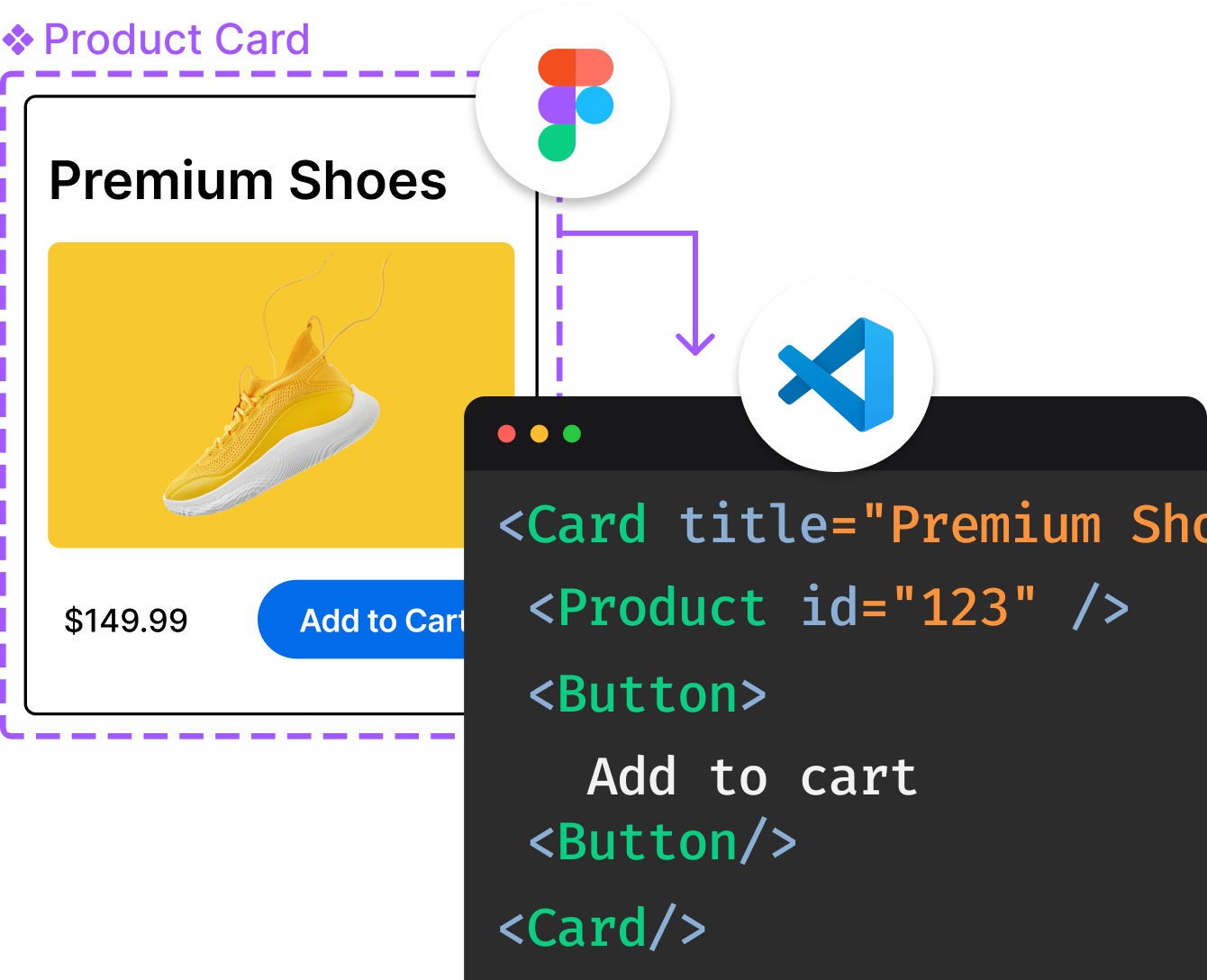
Introducing Visual Copilot: A new AI model to turn Figma designs to high quality code using your components.
Try Visual CopilotREADME
 Chatbox
(Community Edition)
Chatbox
(Community Edition)
Your Ultimate AI Copilot on the Desktop.
Chatbox is a desktop client for ChatGPT, Claude and other LLMs, available on Windows, Mac, Linux







This is the repository for the Chatbox Community Edition, open-sourced under the GPLv3 license.
Chatbox is going open-source Again!
We regularly sync code from the pro repo to this repo, and vice versa.
Download
Desktop
| Windows | MacOS | Linux | |

Setup.exe |

Intel |
Apple Silicon |

AppImage |
iOS/Android


 .APK
.APK
For more information: chatboxai.app
Quick Start
For End Users
- Download the appropriate installer for your platform from the releases page
- Install and launch Chatbox
- Configure your AI provider (OpenAI, Claude, etc.) in settings
- Start chatting!
System Requirements
| Platform | Minimum Version | Architecture |
|---|---|---|
| Windows | Windows 10 | x64 |
| macOS | macOS 11 (Big Sur) | Intel/Apple Silicon |
| Linux | Ubuntu 20.04+ / AppImage supported distros | x64 |
Features
ð¤ AI Model Support
-
Support for Multiple LLM Providers
:gear: Seamlessly integrate with a variety of cutting-edge language models:- OpenAI (ChatGPT)
- Azure OpenAI
- Claude
- Google Gemini Pro
- Ollama (enable access to local models like llama2, Mistral, Mixtral, codellama, vicuna, yi, and solar)
- ChatGLM-6B
-
Image Generation with Dall-E-3
:art: Create the images of your imagination with Dall-E-3. -
Enhanced Prompting
:speech_balloon: Advanced prompting features to refine and focus your queries for better responses.
ð¥ï¸ User Experience
-
Local Data Storage
:floppy_disk: Your data remains on your device, ensuring it never gets lost and maintains your privacy. -
No-Deployment Installation Packages
:package: Get started quickly with downloadable installation packages. No complex setup necessary! -
Ergonomic UI & Dark Theme
:new_moon: A user-friendly interface with a night mode option for reduced eye strain during extended use. -
Keyboard Shortcuts
:keyboard: Stay productive with shortcuts that speed up your workflow. -
Streaming Reply
:arrow_forward: Provide rapid responses to your interactions with immediate, progressive replies.
ð Content & Formatting
-
Markdown, Latex & Code Highlighting
:scroll: Generate messages with the full power of Markdown and Latex formatting, coupled with syntax highlighting for various programming languages, enhancing readability and presentation. -
Prompt Library & Message Quoting
:books: Save and organize prompts for reuse, and quote messages for context in discussions.
ð¥ Collaboration & Sharing
- Team Collaboration
:busts_in_silhouette: Collaborate with ease and share OpenAI API resources among your team. Learn More
ð Platform Availability
-
Cross-Platform Desktop
:computer: Chatbox is ready for Windows, Mac, and Linux users. -
Web Version
:globe_with_meridians: Use the web application on any device with a browser, anywhere. -
Mobile Apps
:phone: Native iOS and Android applications for on-the-go access.
ð Localization
- Multilingual Support
:earth_americas: Catering to a global audience by offering support in multiple languages:- English
- ç®ä½ä¸æ (Simplified Chinese)
- ç¹é«ä¸æ (Traditional Chinese)
- æ¥æ¬èª (Japanese)
- íêµì´ (Korean)
- Français (French)
- Deutsch (German)
- Ð ÑÑÑкий (Russian)
- Español (Spanish)
⨠More Features
- And More...
:sparkles: Constantly enhancing the experience with new features!
FAQ
How to Contribute
We welcome contributions from the community! Here's how you can help make Chatbox better:
ð Reporting Issues
- Use GitHub Issues to report bugs or request features
- Before creating a new issue, please search existing issues to avoid duplicates
- Provide detailed information including steps to reproduce, expected behavior, and screenshots if applicable
ð§ Pull Requests
- Fork the repository and create your branch from
main - Make your changes and ensure the code follows our coding standards
- Test your changes thoroughly
- Update documentation if needed
- Submit a pull request with a clear description of the changes
ð Translations
Help make Chatbox accessible to more people by contributing translations:
- Translation files are located in the
src/localesdirectory - Follow the existing translation format
- Submit a PR with your translation improvements
ð Documentation
- Improve README, API documentation, or user guides
- Fix typos or clarify unclear instructions
- Add examples and tutorials
ð Other Ways to Contribute
- Star the repository to show your support
- Share Chatbox with others
- Answer questions in GitHub Discussions
- Provide feedback and suggestions
Thank you for contributing! ð
Development
Prerequisites
Before you begin, ensure you have the following installed:
- Node.js (v20.x â v22.x) - Download here
- pnpm (v10.x or later) - Install via
corepack enable && corepack prepare pnpm@latest --activate - Git - Download here
Quick Setup
-
Clone the repository
git clone https://github.com/chatboxai/chatbox.git cd chatbox -
Install dependencies
pnpm install -
Start development server
pnpm run devThe application will start in development mode with hot-reload enabled.
Build Commands
| Command | Description |
|---|---|
pnpm run dev | Start development server with hot-reload |
pnpm run package | Build and package for current platform |
pnpm run package:all | Build and package for all platforms |
pnpm run build | Build for production without packaging |
pnpm run lint | Run Biome to check code quality |
pnpm run test | Run Vitest test suite |
Project Structure
chatbox/
âââ src/
â âââ main/ # Electron main process
â âââ renderer/ # React renderer (UI)
â âââ preload/ # Electron preload scripts
â âââ shared/ # Shared utilities
âââ doc/ # Documentation and assets
âââ resources/ # App resources and icons
âââ team-sharing/ # Team collaboration features
âââ package.json # Project configuration
Development Tips
- Use
pnpm run lintbefore committing to ensure code quality - Follow the existing code style and patterns
- Test your changes on both light and dark themes
- Ensure cross-platform compatibility when making UI changes
Troubleshooting
Issue: pnpm install fails
- Solution: Ensure you're using pnpm (not npm or yarn) and Node.js version is within the required range. Run
corepack enableif pnpm is not found.
Issue: Build fails on Windows
- Solution: Run
pnpm config set script-shell "C:\\Program Files\\git\\bin\\bash.exe"if using Git Bash
Issue: Changes not reflecting in development
- Solution: Stop the dev server, delete
node_modules/.vite, and restart
Star History
Contact
License
Top Related Projects
🔮 ChatGPT Desktop Application (Mac, Windows and Linux)
✨ Light and Fast AI Assistant. Support: Web | iOS | MacOS | Android | Linux | Windows
用 Express 和 Vue3 搭建的 ChatGPT 演示网页
Minimal web UI for ChatGPT.
GUI for ChatGPT API and many LLMs. Supports agents, file-based QA, GPT finetuning and query with web search. All with a neat UI.
The official gpt4free repository | various collection of powerful language models | opus 4.6 gpt 5.3 kimi 2.5 deepseek v3.2 gemini 3
Convert designs to code with AI
Introducing Visual Copilot: A new AI model to turn Figma designs to high quality code using your components.
Try Visual Copilot