
Top Related Projects

The React Framework

Next generation frontend tooling. It's fast!

Storybook is the industry standard workshop for building, documenting, and testing UI components in isolation

The library for web and native user interfaces.

This is the repo for Vue 2. For Vue 3, go to https://github.com/vuejs/core

web development for the rest of us
Quick Overview
PreviewJS is an open-source tool that provides instant previews for React, Vue, and Svelte components directly in your IDE. It allows developers to visualize and interact with their components in real-time without the need to run a full development server, significantly speeding up the development process.
Pros
- Instant previews without running a full dev server
- Supports multiple frameworks (React, Vue, Svelte)
- Integrates seamlessly with popular IDEs
- Improves development speed and productivity
Cons
- Limited to specific frameworks (not universal)
- May require additional setup or configuration
- Potential for discrepancies between preview and final rendering
- Learning curve for developers new to the tool
Getting Started
To get started with PreviewJS, follow these steps:
- Install the PreviewJS extension for your IDE (e.g., VS Code, IntelliJ).
- Open a project containing React, Vue, or Svelte components.
- Click on a component file to open it.
- Use the PreviewJS commands or buttons in your IDE to open the preview pane.
- Make changes to your component and see the preview update in real-time.
For more detailed instructions and configuration options, refer to the official documentation on the PreviewJS GitHub repository.
Competitor Comparisons
The React Framework
Pros of Next.js
- Comprehensive full-stack React framework with built-in routing, server-side rendering, and API routes
- Large ecosystem and community support, with extensive documentation and third-party integrations
- Optimized for performance with automatic code splitting and image optimization
Cons of Next.js
- Steeper learning curve for developers new to server-side rendering concepts
- More opinionated structure, which may limit flexibility for some projects
- Larger bundle size compared to client-side-only React applications
Code Comparison
Next.js:
// pages/index.js
export default function Home() {
  return <h1>Welcome to Next.js!</h1>
}
PreviewJS:
// App.jsx
export default function App() {
  return <h1>Welcome to PreviewJS!</h1>
}
Key Differences
- Next.js is a full-featured framework, while PreviewJS focuses on component previewing and development
- PreviewJS offers a more lightweight solution for rapid UI development, whereas Next.js provides a complete application structure
- Next.js includes server-side rendering capabilities, while PreviewJS is primarily client-side focused
Use Cases
- Choose Next.js for building complete web applications with server-side rendering requirements
- Opt for PreviewJS when focusing on rapid component development and visual testing in isolation
Next generation frontend tooling. It's fast!
Pros of Vite
- Broader ecosystem support and larger community
- More comprehensive build tooling and optimization features
- Supports multiple frameworks beyond just React
Cons of Vite
- Steeper learning curve for configuration and customization
- Potentially slower startup time for large projects
- Less focused on component preview functionality
Code Comparison
PreviewJS:
import { preview } from "previewjs";

preview({
  component: MyComponent,
  props: { name: "John" }
});
Vite:
import { defineConfig } from 'vite'
import react from '@vitejs/plugin-react'

export default defineConfig({
  plugins: [react()]
})
PreviewJS is specifically designed for previewing React components, offering a simpler API for that purpose. Vite, on the other hand, provides a more comprehensive build and development setup that can be used across various frameworks and project types.
While PreviewJS excels in its focused approach to component previewing, Vite offers a broader range of features for full application development and building. The choice between the two depends on the specific needs of the project and the desired level of control over the development environment.
Storybook is the industry standard workshop for building, documenting, and testing UI components in isolation
Pros of Storybook
- Extensive ecosystem with a wide range of addons and integrations
- Robust documentation and large community support
- Supports multiple frameworks and libraries out of the box
Cons of Storybook
- Heavier setup and configuration process
- Slower startup and build times, especially for larger projects
- Steeper learning curve for beginners
Code Comparison
PreviewJS:
// preview.config.js
export default {
  stories: ['src/**/*.stories.{js,jsx,ts,tsx}'],
  viteConfig: './vite.config.js',
};
Storybook:
// .storybook/main.js
module.exports = {
  stories: ['../src/**/*.stories.mdx', '../src/**/*.stories.@(js|jsx|ts|tsx)'],
  addons: ['@storybook/addon-links', '@storybook/addon-essentials'],
};
Both PreviewJS and Storybook aim to improve component development workflows, but they differ in approach and features. PreviewJS focuses on simplicity and fast startup times, making it ideal for quick prototyping and smaller projects. Storybook offers a more comprehensive solution with extensive customization options, making it suitable for larger, more complex projects that require advanced features and integrations.
The library for web and native user interfaces.
Error generating comparison
This is the repo for Vue 2. For Vue 3, go to https://github.com/vuejs/core
Pros of Vue
- Mature and widely adopted framework with a large ecosystem
- Comprehensive documentation and extensive community support
- Flexible and scalable for both small and large applications
Cons of Vue
- Steeper learning curve for beginners compared to PreviewJS
- Requires more setup and configuration for complex projects
- Potentially overkill for simple component previewing tasks
Code Comparison
Vue component example:
<template>
  <div>{{ message }}</div>
</template>

<script>
export default {
  data() {
    return {
      message: 'Hello, Vue!'
    }
  }
}
</script>
PreviewJS usage example:
import { defineConfig } from "previewjs";

export default defineConfig({
  // Configuration options
});
Summary
Vue is a full-fledged JavaScript framework for building user interfaces, while PreviewJS is a tool specifically designed for previewing UI components. Vue offers more comprehensive features and scalability, but may be excessive for simple component previewing. PreviewJS provides a more focused and lightweight solution for component development and testing, potentially offering a smoother experience for this specific use case.
web development for the rest of us
Pros of Svelte
- Mature, widely-adopted framework with a large community and ecosystem
- Offers a complete solution for building web applications, including routing and state management
- Compiles to highly efficient vanilla JavaScript, resulting in smaller bundle sizes
Cons of Svelte
- Steeper learning curve for developers new to the framework
- Less flexibility for integrating with other tools or frameworks
- Requires compilation step, which can slow down development process
Code Comparison
Svelte component:
<script>
  export let name = 'World';
</script>

<h1>Hello {name}!</h1>
PreviewJS doesn't have a specific component format, as it's a tool for previewing components from various frameworks. It supports multiple frameworks, including Svelte.
Additional Notes
PreviewJS is a tool for previewing UI components, while Svelte is a full-fledged web application framework. PreviewJS can be used with Svelte components, among others, making it a complementary tool rather than a direct competitor.
Svelte offers a more opinionated and integrated approach to building web applications, while PreviewJS focuses on providing a flexible preview environment for components across different frameworks.
The choice between the two depends on the specific needs of the project: Svelte for building complete applications, and PreviewJS for enhancing the development workflow when working with UI components.
Convert  designs to code with AI
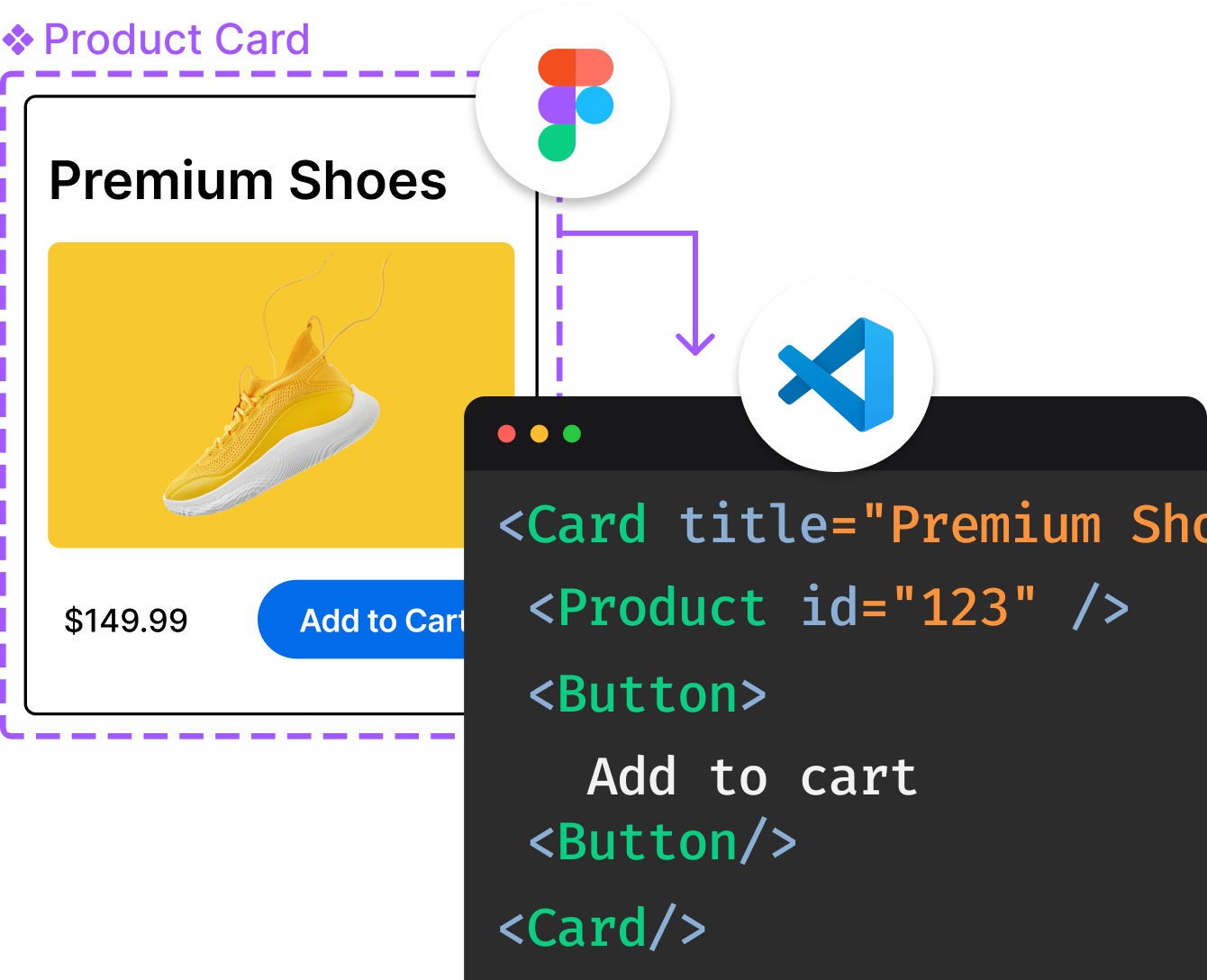
Introducing Visual Copilot: A new AI model to turn Figma designs to high quality code using your components.
Try Visual CopilotREADME
[!WARNING] This project is no longer maintained.
Life got busy â work, kids, and the usual chaos. I no longer have the time or energy to keep up with issues, PRs, or framework updates. Preview.js has been effectively abandoned.
The code is still here and you're welcome to fork it, but don't expect updates or support.
Preview.js
Preview.js lets you preview React components and Storybook stories instantly in your IDE.

Get started
Preview.js is available for Visual Studio Code.
Documentation
Contributing
Please see the contributing guide.
License
Preview.js is divided into multiple packages, each licensed under either AGPL-3.0 or MIT.
Preview.js Pro is proprietary and not available under an open source license.
Please refer to LICENSE under each directory to find out which license applies.
Copyright (c) 2022-present Zenc Labs Pty Ltd
Top Related Projects
The React Framework
Next generation frontend tooling. It's fast!
Storybook is the industry standard workshop for building, documenting, and testing UI components in isolation
The library for web and native user interfaces.
This is the repo for Vue 2. For Vue 3, go to https://github.com/vuejs/core
web development for the rest of us
Convert designs to code with AI
Introducing Visual Copilot: A new AI model to turn Figma designs to high quality code using your components.
Try Visual Copilot