
Quick Overview
Error generating quick overview
Convert  designs to code with AI
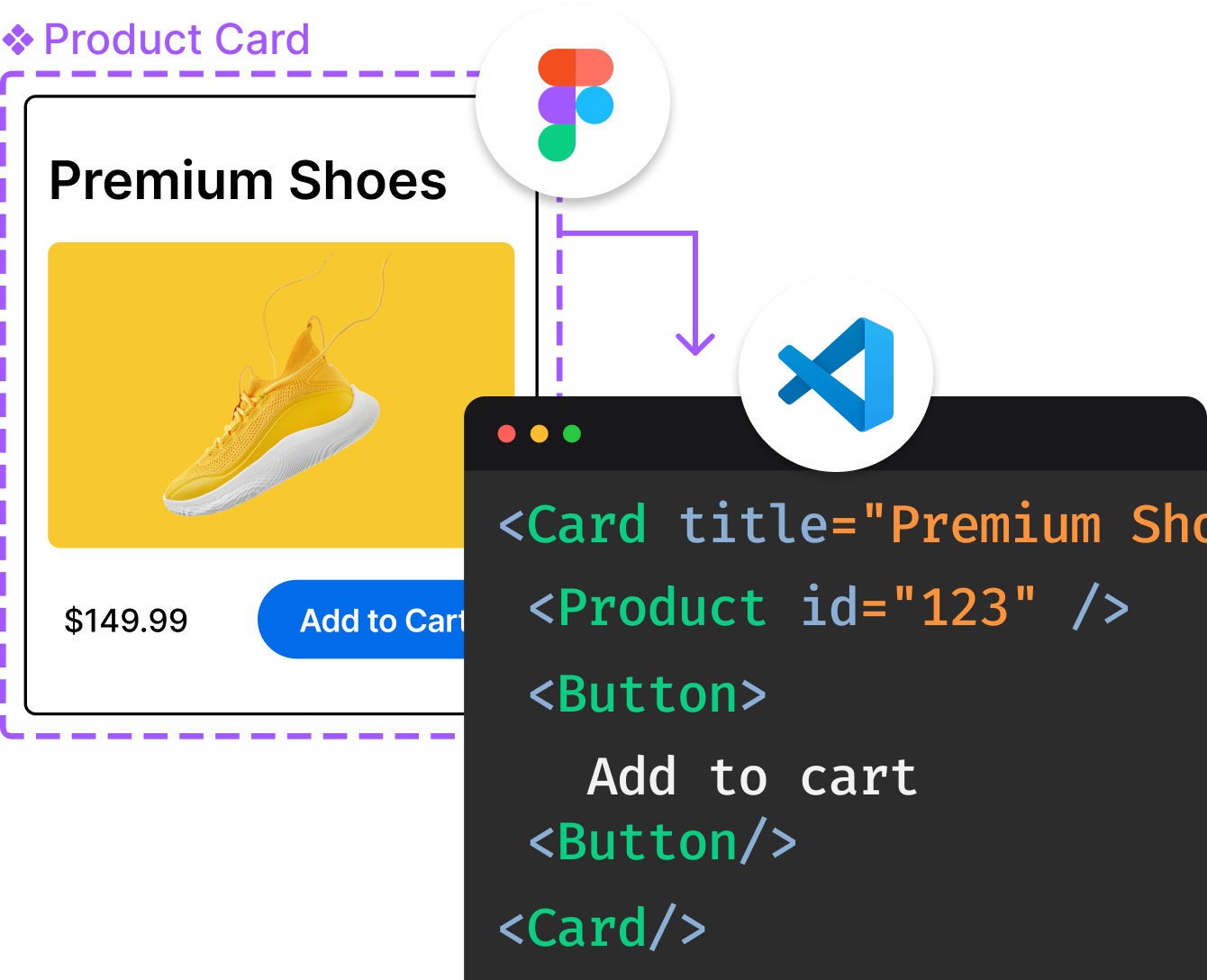
Introducing Visual Copilot: A new AI model to turn Figma designs to high quality code using your components.
Try Visual CopilotREADME
Hugging Face Skills
Hugging Face Skills are definitions for AI/ML tasks like dataset creation, model training, and evaluation. The client plugin marketplaces expose the hf-cli skill as the bootstrap path for core Hub operations; additional workflow skills can be installed on demand with hf skills add <skill-name> or discovered by skill-aware clients over CLI/MCP integrations.
The skills in this repository follow the standardized Agent Skills format.
[!NOTE] Just want to give your agent access to the Hugging Face Hub? Start with
hf-cli. It's the recommended first Skill to install: it teaches your agent everyhfcommand (search models, manage datasets and buckets, launch Spaces, run jobs) and is generated from your locally installed CLI so it stays current.
How do Skills work?
In practice, skills are self-contained folders that package instructions, scripts, and resources together for an AI agent to use on a specific use case. Each folder includes a SKILL.md file with YAML frontmatter (name and description) followed by the guidance your coding agent follows while the skill is active.
[!TIP] If your agent doesn't support skills, you can use
agentsmd/AGENTS.mddirectly as a fallback.
The hf-cli skill in this repository is also available through:
- Cursor Marketplace (https://cursor.com/marketplace/huggingface)
- Codex Plugins Directory (https://developers.openai.com/codex/plugins)
Installation
Hugging Face skills are compatible with Claude Code, Codex, Gemini CLI, and Cursor.
Claude Code
- Register the repository as a plugin marketplace:
/plugin marketplace add huggingface/skills
- Install the CLI skill:
/plugin install hf-cli@huggingface/skills
- To install another Hugging Face skill, use the
hfCLI:
hf skills add <skill-name>
Codex
-
Copy or symlink any skills you want to use from this repository's
skills/directory into one of Codex's standard.agents/skillslocations (for example,$REPO_ROOT/.agents/skillsor$HOME/.agents/skills) as described in the Codex Skills guide. -
Once a skill is available in one of those locations, Codex will discover it using the Agent Skills standard and load the
SKILL.mdinstructions when it decides to use that skill or when you explicitly invoke it. -
If your Codex setup still relies on
AGENTS.md, you can use the generatedagentsmd/AGENTS.mdfile in this repo as a fallback bundle of instructions.
Gemini CLI
-
This repo includes
gemini-extension.jsonto integrate with the Gemini CLI. -
Install locally:
gemini extensions install . --consent
or use the GitHub URL:
gemini extensions install https://github.com/huggingface/skills.git --consent
- See Gemini CLI extensions docs for more help.
Cursor
This repository includes Cursor plugin manifests:
.cursor-plugin/plugin.json.mcp.json(configured with the Hugging Face MCP server URL)
Install from repository URL (or local checkout) via the Cursor plugin flow. The marketplace entry is intentionally limited to hf-cli; use hf skills add <skill-name> to install additional workflow skills.
For contributors, regenerate manifests with:
./scripts/publish.sh
Skills
This repository contains a few skills to get you started. You can also contribute your own skills to the repository.
Available skills
| Name | Description | Documentation |
|---|---|---|
hf-cli | Hugging Face Hub CLI (hf) for downloading, uploading, and managing models, datasets, spaces, buckets, repos, papers, jobs, and more on the Hugging Face Hub. | SKILL.md |
hf-cloud-aws-context-discovery | Discover the user''s local AWS context (active profile, region, account ID, caller identity) at the start of any AWS task. | SKILL.md |
hf-cloud-python-env-setup | Set up an isolated Python environment for SageMaker / AWS work, with the right Python version and current boto3. | SKILL.md |
hf-cloud-sagemaker-deployment-planner | Plan and coordinate the deployment of a model to Amazon SageMaker AI. | SKILL.md |
hf-cloud-sagemaker-iam-preflight | Ensure a usable SageMaker execution role exists before deploying or training. | SKILL.md |
hf-cloud-sagemaker-production-defaults | Create a SageMaker endpoint (real-time or async) with autoscaling, CloudWatch alarms, and tagging enabled by default. | SKILL.md |
hf-cloud-serving-image-selection | Pick the right serving container for a SageMaker model deployment and find its current image URI. | SKILL.md |
hf-mem | Hugging Face CLI to estimate the required memory to load Safetensors or GGUF model weights for inference from the Hugging Face Hub | SKILL.md |
huggingface-best | Use when the user asks about finding the best, top, or recommended model for a task, wants to know what AI model to use, or wants to compare models by benchmark scores. | SKILL.md |
huggingface-community-evals | Run evaluations for Hugging Face Hub models using inspect-ai and lighteval on local hardware. | SKILL.md |
huggingface-datasets | Use this skill for Hugging Face Dataset Viewer API workflows that fetch subset/split metadata, paginate rows, search text, apply filters, download parquet URLs, and read size or statistics. | SKILL.md |
huggingface-gradio | Build Gradio web UIs and demos in Python. | SKILL.md |
huggingface-llm-trainer | Train or fine-tune language and vision models using TRL (Transformer Reinforcement Learning) or Unsloth with Hugging Face Jobs infrastructure. | SKILL.md |
huggingface-local-models | Use to select models to run locally with llama.cpp and GGUF on CPU, Mac Metal, CUDA, or ROCm. | SKILL.md |
huggingface-lora-space-builder | Build and publish a Gradio demo on Hugging Face Spaces for a user-provided LoRA. | SKILL.md |
huggingface-paper-publisher | Publish and manage research papers on Hugging Face Hub. | SKILL.md |
huggingface-papers | Look up and read Hugging Face paper pages in markdown, and use the papers API for structured metadata such as authors, linked models/datasets/spaces, Github repo and project page. | SKILL.md |
huggingface-spaces | Build, deploy, and maintain applications on Hugging Face Spaces â Gradio / Docker / Static SDKs, ZeroGPU and dedicated hardware, model loading, debugging, buckets, inference providers, community grants. | SKILL.md |
huggingface-tool-builder | Use this skill when the user wants to build tool/scripts or achieve a task where using data from the Hugging Face API would help. | SKILL.md |
huggingface-trackio | Track and visualize ML training experiments with Trackio. | SKILL.md |
huggingface-vision-trainer | Trains and fine-tunes vision models for object detection (D-FINE, RT-DETR v2, DETR, YOLOS), image classification (timm models â MobileNetV3, MobileViT, ResNet, ViT/DINOv3 â plus any Transformers classifier), and SAM/SAM2 segmentation using Hugging Face Transformers on Hugging Face Jobs cloud GPUs. | SKILL.md |
huggingface-zerogpu | AI demos and GPU compute with Gradio Spaces and Hugging Face Spaces ZeroGPU. | SKILL.md |
train-sentence-transformers | Train or fine-tune sentence-transformers models across SentenceTransformer (bi-encoder; dense or static embedding model; for retrieval, similarity, clustering, classification, paraphrase mining, dedup, multimodal), CrossEncoder (reranker; pair scoring for two-stage retrieval / pair classification), and SparseEncoder (SPLADE, sparse embedding model; for learned-sparse retrieval). | SKILL.md |
transformers-js | Use Transformers.js to run state-of-the-art machine learning models directly in JavaScript/TypeScript. | SKILL.md |
trl-training | Train and fine-tune transformer language models using TRL (Transformers Reinforcement Learning). | SKILL.md |
Using skills in your coding agent
Once a skill is installed, mention it directly while giving your coding agent instructions:
- "Use the HF LLM trainer skill to estimate the GPU memory needed for a 70B model run."
- "Use the HF model evaluation skill to launch
run_eval_job.pyon the latest checkpoint." - "Use the HF dataset creator skill to draft new few-shot classification templates."
- "Use the HF paper publisher skill to index my arXiv paper and link it to my model."
Your coding agent automatically loads the corresponding SKILL.md instructions and helper scripts while it completes the task.
Contribute or customize a skill
- Copy one of the existing skill folders (for example,
hf-datasets/) and rename it. - Update the new folder's
SKILL.mdfrontmatter:--- name: my-skill-name description: Describe what the skill does and when to use it --- # Skill Title Guidance + examples + guardrails - Add or edit supporting scripts, templates, and documents referenced by your instructions.
- Do not add the skill to
.claude-plugin/marketplace.jsonby default. Client marketplaces are intentionally limited tohf-cli; the full Hub CLI marketplace is generated at.claude-plugin/marketplace-internal.json. - Run:
to regenerate and validate all generated metadata../scripts/publish.sh - Reinstall or reload the skill bundle in your coding agent so the updated folder is available.
Marketplace
The .claude-plugin/marketplace.json and .cursor-plugin/marketplace.json files intentionally expose only hf-cli for client marketplace installation. This keeps install-time manifests focused on core Hub operations and points users to hf skills add <skill-name> for the rest of the repository.
The generated .claude-plugin/marketplace-internal.json file contains the full skill list. Publish automation uploads it to the Hub bucket as marketplace.json so hf skills list, hf skills add, and hf skills update continue to see every available skill.
Newer skill-aware integrations can also pull capabilities dynamically. Hugging Face's discovery flow lets clients search skills, MCP servers, and Spaces, while Skills-over-MCP work is standardizing how skills are discovered and consumed through MCP resources.
Additional references
- Browse the latest instructions, scripts, and templates directly at huggingface/skills.
- Review Hugging Face documentation for the specific libraries or workflows you reference inside each skill.
Convert designs to code with AI
Introducing Visual Copilot: A new AI model to turn Figma designs to high quality code using your components.
Try Visual Copilot