
Top Related Projects

Facilitating high-level interactions between Wasm modules and JavaScript

Rust / Wasm framework for creating reliable and efficient web applications

A Rust framework for creating web apps

A modular toolkit for building fast, reliable Web applications and libraries with Rust and WASM
📦✨ your favorite rust -> wasm workflow tool!
Quick Overview
The stdweb crate provides a way to interact with the Web APIs from Rust code, allowing developers to build full-fledged web applications using Rust. It aims to provide a seamless integration between Rust and the browser's JavaScript environment.
Pros
- Seamless Integration:
stdwebprovides a Rust-idiomatic API that closely matches the browser's Web APIs, making it easy for Rust developers to work with the web platform. - Cross-Compilation: Rust's cross-compilation capabilities allow
stdwebto be used to build web applications that can run on a variety of platforms and devices. - Performance: Rust's focus on performance and safety translates to efficient web applications built with
stdweb. - Ecosystem Integration:
stdwebintegrates well with other Rust crates, allowing developers to leverage the broader Rust ecosystem for their web development needs.
Cons
- Browser Support: While
stdwebsupports a wide range of browsers, it may not work with all browsers or browser versions, especially older ones. - Dependency Management: The
stdwebcrate has a relatively large number of dependencies, which can make dependency management more complex. - Learning Curve: Developers new to Rust may face a steeper learning curve when working with
stdweb, as they need to understand both Rust and the web platform. - Maturity: Compared to more established web development frameworks and libraries,
stdwebis a relatively young project, which may mean fewer resources and community support.
Code Examples
Rendering a Simple HTML Element
use stdweb::web::document;
use stdweb::web::html_element::DivElement;

fn main() {
    stdweb::initialize();
    let div: DivElement = document().create_element("div").unwrap().try_into().unwrap();
    div.set_inner_html("Hello, World!");
    document().body().append_child(&div);
    stdweb::event_loop();
}
This code creates a new div element, sets its inner HTML to "Hello, World!", and appends it to the document's body.
Handling User Interactions
use stdweb::web::document;
use stdweb::web::html_element::ButtonElement;
use stdweb::web::event::ClickEvent;

fn main() {
    stdweb::initialize();
    let button: ButtonElement = document().create_element("button").unwrap().try_into().unwrap();
    button.set_inner_html("Click me!");

    let onclick_callback = |_: ClickEvent| {
        js! { alert("You clicked the button!"); }
    };

    button.add_event_listener(onclick_callback);
    document().body().append_child(&button);
    stdweb::event_loop();
}
This code creates a button element, sets its inner HTML, and adds a click event listener that displays an alert when the button is clicked.
Interacting with the Browser's Web APIs
use stdweb::web::{document, IParentNode, IWindowObject};
use stdweb::web::window;

fn main() {
    stdweb::initialize();
    let title = document().title();
    println!("The current page title is: {}", title);

    let width = window().inner_width();
    let height = window().inner_height();
    println!("The current window size is: {}x{}", width, height);

    stdweb::event_loop();
}
This code retrieves the current page title and the size of the browser window, and prints the information to the console.
Getting Started
To get started with stdweb, you'll need to have Rust installed on your system. You can then add the stdweb crate to your Cargo.toml file:
[dependencies]
stdweb = "0.4.20"
Next, you can start writing your web application using the stdweb APIs. Here's a simple example that creates a button and displays an alert when it's clicked:
use stdweb::web::document;
use stdweb::web::
Competitor Comparisons
Facilitating high-level interactions between Wasm modules and JavaScript
Pros of wasm-bindgen
- More actively maintained and widely adopted in the Rust ecosystem
- Offers better integration with JavaScript tooling and bundlers
- Supports a wider range of JavaScript types and features
Cons of wasm-bindgen
- Steeper learning curve for beginners
- Requires more boilerplate code for simple use cases
- Can be more verbose for certain tasks
Code Comparison
stdweb:
#[macro_use]
extern crate stdweb;
use stdweb::web::Window;

fn main() {
    stdweb::initialize();
    let window: Window = stdweb::web::window();
    js! { console.log(@{window.location().href()}); }
}
wasm-bindgen:
use wasm_bindgen::prelude::*;

#[wasm_bindgen]
extern "C" {
    #[wasm_bindgen(js_namespace = console)]
    fn log(s: &str);
}

#[wasm_bindgen(start)]
pub fn main() {
    log("Hello from Rust!");
}
Summary
While stdweb provides a simpler API for basic Web interop, wasm-bindgen offers more comprehensive JavaScript integration and is better suited for complex projects. stdweb's syntax may be more intuitive for some developers, but wasm-bindgen's approach aligns more closely with the direction of the Rust and WebAssembly ecosystem.
Rust / Wasm framework for creating reliable and efficient web applications
Pros of Yew
- More active development and larger community support
- Better performance due to its virtual DOM implementation
- Comprehensive documentation and examples
Cons of Yew
- Steeper learning curve for developers new to Rust and web development
- Larger bundle sizes compared to simpler alternatives
Code Comparison
Yew:
use yew::prelude::*;

#[function_component(App)]
fn app() -> Html {
    html! { <h1>{"Hello, World!"}</h1> }
}
stdweb:
use stdweb::web::document;
use stdweb::unstable::TryInto;

fn main() {
    let body: web::Element = document().body().unwrap();
    body.append_html("<h1>Hello, World!</h1>");
}
Summary
Yew is a more modern and feature-rich framework for building client-side web applications in Rust. It offers better performance and a more active ecosystem compared to stdweb. However, it may have a steeper learning curve and result in larger bundle sizes.
stdweb, on the other hand, provides a simpler approach to web development in Rust, with a more straightforward API. It may be easier for beginners to grasp but lacks some of the advanced features and optimizations found in Yew.
The choice between the two depends on the project requirements, developer experience, and desired level of control over the application's structure and performance.
A Rust framework for creating web apps
Pros of Seed
- More actively maintained with regular updates
- Focuses on a complete frontend framework, offering a more opinionated structure
- Better documentation and examples for getting started
Cons of Seed
- Steeper learning curve for developers new to Rust web development
- Less flexibility compared to the lower-level approach of stdweb
- Potentially larger bundle sizes due to included framework features
Code Comparison
Seed example:
#[derive(Default)]
struct Model {
    count: i32,
}

fn update(msg: Msg, model: &mut Model, _: &mut impl Orders<Msg>) {
    match msg {
        Msg::Increment => model.count += 1,
    }
}
stdweb example:
#[derive(Clone, Debug)]
struct Model {
    count: i32,
}

fn update(model: &mut Model, msg: Msg) {
    match msg {
        Msg::Increment => model.count += 1,
    }
}
Summary
Seed provides a more comprehensive framework for building web applications in Rust, offering better documentation and a more structured approach. However, it may be less flexible and have a steeper learning curve compared to stdweb. stdweb, on the other hand, offers a lower-level interface to web APIs, providing more flexibility but requiring more manual setup and configuration.
A modular toolkit for building fast, reliable Web applications and libraries with Rust and WASM
Error generating comparison
📦✨ your favorite rust -> wasm workflow tool!
Error generating comparison
Convert  designs to code with AI
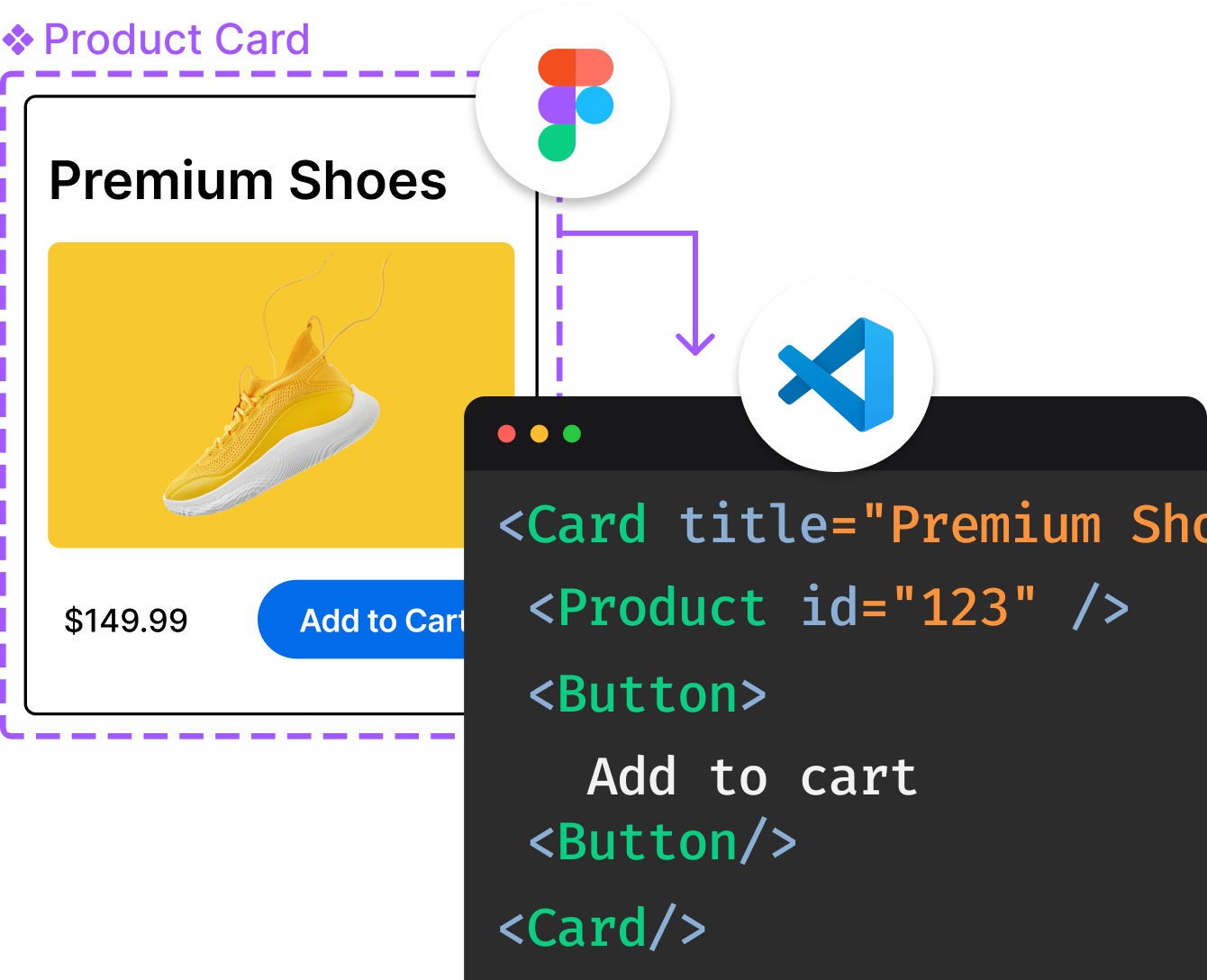
Introducing Visual Copilot: A new AI model to turn Figma designs to high quality code using your components.
Try Visual CopilotREADME


A standard library for the client-side Web

The goal of this crate is to provide Rust bindings to the Web APIs and to allow a high degree of interoperability between Rust and JavaScript.
Donate

Patrons
This software was brought to you thanks to these wonderful people:
- Embark Studios
- Joe Narvaez
- Eduard Knyshov
- Anselm Eickhoff
- Johan Andersson
- Stephen Sugden
- is8ac
Thank you!
Examples
You can directly embed JavaScript code into Rust:
let message = "Hello, ä¸ç!";
let result = js! {
alert( @{message} );
return 2 + 2 * 2;
};
println!( "2 + 2 * 2 = {:?}", result );
Closures are also supported:
let print_hello = |name: String| {
    println!( "Hello, {}!", name );
};

js! {
    var print_hello = @{print_hello};
    print_hello( "Bob" );
    print_hello.drop(); // Necessary to clean up the closure on Rust's side.
}
You can also pass arbitrary structures thanks to serde:
#[derive(Serialize)]
struct Person {
    name: String,
    age: i32
}

js_serializable!( Person );

js! {
    var person = @{person};
    console.log( person.name + " is " + person.age + " years old." );
};
This crate also exposes a number of Web APIs, for example:
let button = document().query_selector( "#hide-button" ).unwrap().unwrap();
button.add_event_listener( move |_: ClickEvent| {
    for anchor in document().query_selector_all( "#main a" ) {
        js!( @{anchor}.style = "display: none;"; );
    }
});
Exposing Rust functions to JavaScript is supported too:
#[js_export]
fn hash( string: String ) -> String {
    let mut hasher = Sha1::new();
    hasher.update( string.as_bytes() );
    hasher.digest().to_string()
}
Then you can do this from Node.js:
var hasher = require( "hasher.js" ); // Where `hasher.js` is generated from Rust code.
console.log( hasher.hash( "Hello world!" ) );
Or you can take the same .js file and use it in a web browser:
<script src="hasher.js"></script>
<script>
    Rust.hasher.then( function( hasher ) {
        console.log( hasher.hash( "Hello world!" ) );
    });
</script>
If you're using Parcel you can also use our experimental Parcel plugin; first do this in your existing Parcel project:
$ npm install --save parcel-plugin-cargo-web
And then simply:
import hasher from "./hasher/Cargo.toml";
console.log( hasher.hash( "Hello world!" ) );
Design goals
- Expose a full suite of Web APIs as exposed by web browsers.
- Try to follow the original JavaScript conventions and structure as much as possible, except in cases where doing otherwise results in a clearly superior design.
- Be a building block from which higher level frameworks and libraries can be built.
- Make it convenient and easy to embed JavaScript code directly into Rust and to marshal data between the two.
- Integrate with the wider Rust ecosystem, e.g. support marshaling of structs which implement serde's Serializable.
- Put Rust in the driver's seat where a non-trivial Web application can be written without touching JavaScript at all.
- Allow Rust to take part in the upcoming WebAssembly (re)volution.
- Make it possible to trivially create standalone libraries which are easily callable from JavaScript.
Getting started
Take a look at some of the examples:
examples/minimal- a totally minimal example which calls alertexamples/todomvc- a naively implemented TodoMVC application; shows how to call into the DOMexamples/hasher- shows how to export Rust functions to JavaScript and how to call them from a vanilla web browser environment or from Nodejsexamples/hasher-parcel- shows how to import and call exported Rust functions in a Parcel projectpinky-web- an NES emulator; you can play with the precompiled version here
The API documentation is also available for you to look at.
Running the examples
-
Install cargo-web:
$ cargo install -f cargo-web -
Go into
examples/todomvcand start the example using one of these commands:-
Compile to WebAssembly using Rust's native WebAssembly backend:
$ cargo web start --target=wasm32-unknown-unknown -
Compile to asm.js using Emscripten:
$ cargo web start --target=asmjs-unknown-emscripten -
Compile to WebAssembly using Emscripten:
$ cargo web start --target=wasm32-unknown-emscripten
-
-
Visit
http://localhost:8000with your browser.
For the *-emscripten targets cargo-web is not necessary, however
the native wasm32-unknown-unknown which doesn't need Emscripten
requires cargo-web to work!
Changelog
-
stdweb 0.4.20- Compatibility with the newest
wasm-bindgen - New events:
FullscreenChangeEvent
- Compatibility with the newest
-
stdweb 0.4.19- New methods:
Document::fullscreen_enabledDocument::fullscreen_elementInputElement::selection_startInputElement::selection_endInputElement::set_selection_startInputElement::set_selection_endObject::to_iterWindow::confirm
&Arrays can now be converted toVecs throughTryFrom- The runtime should now be compatible with newer versions of Emscripten
- The unstable
futures-related APIs were updated to work with the latest nightlies - The
syndependency was updated to version 1
- New methods:
-
stdweb 0.4.18- The
js!macro can now be imported with anuse - New events:
BeforeUnloadEventUnloadEvent
- New methods:
IBlob::sliceIBlob::slice_with_content_typeIWindowOrWorker::set_clearable_timeout
- The
-
stdweb 0.4.17- The unstable
futures-related APIs were updated to work with the latest nightlies
- The unstable
-
stdweb 0.4.16- Initial
wasm-bindgencompatibility; you can now usestdwebin projects usingwasm-bindgen - Minimum supported Rust version is now 1.33.0
- Minimum required
cargo-webversion is now 0.6.24
- Initial
-
stdweb 0.4.15- The unstable
futures-related APIs were updated to work with the latest nightlies - New types:
FormDataFormDataEntryMouseButtonsState
- New methods:
Blob::new
- The unstable
-
stdweb 0.4.14- The
js!macro now generates slightly more efficient code if you're not returning anything from your JS snippet. This makes it unnecessary to add the@(no_return)annotation in the vast majority of cases. - New types:
File
- The
-
stdweb 0.4.13- Fixed the procedural
js!macro's whitespace handling - New types:
ITouchEventTouchTouchType
- New events:
TouchEventTouchMoveTouchLeaveTouchEnterTouchEndTouchCancelTouchStart
- New methods:
XmlHttpRequest::set_response_type
- Fixed the procedural
-
stdweb 0.4.12- Improved diagnostics when trying to compile for the
wasm32-unknown-unknowntarget withoutcargo-web
- Improved diagnostics when trying to compile for the
-
stdweb 0.4.11- The minimum required Rust version is now 1.30.1
- The minimum required
cargo-webversion is now 0.6.22 wasm32-unknown-unknownis now officially supported on stable Rust- Debug builds on
wasm32-unknown-unknownare now supported - The
js!macro is now partially implemented using a procedural macro - String decoding/encoding is now a lot faster due to the use of native codec APIs
- New methods:
Document::import_nodeIElement::slotIElement::attach_shadowIElement::shadow_root
- New types:
ISlotableShadowRootShadowRootModeTemplateElementSlotElement
- New events:
SlotChangeEvent
IParentNode::query_selectorandIParentNode::query_selector_allnow return a proper error type
-
stdweb 0.4.10,stdweb-derive 0.5.1- New methods:
IElement::insert_adjacent_htmlIElement::insert_html_beforeIElement::insert_html_afterIElement::prepend_htmlIElement::append_htmlIElement::namespace_uriIElement::closestDocument::create_element_nsWindow::get_selection
- New types:
AbortErrorSelectionTypeSelectionRange
- The error messages for failed type conversions are now improved
- The error type of failed conversions (when using
.try_into()/.try_from()) is now convertible into aTypeError - Aggregate error types (like, e.g.
DrawImageError) are now serializable through thejs!macro TypeErroris now fixed (it was incorrectly treated as aDOMException)Numbercan now be converted intof64with.into()/.from()- Added
Mut, which is a new wrapper type for safely passingFnMutclosures into thejs!macro; it is optional for now, however the usage of this wrapper type will be mandatory in the future! FnMutclosures cannot be called recursively anymore#[derive(ReferenceType)]now supports a limited subset of generic types- Asynchronous unit tests are now supported with a new
#[async_test]attribute macro (nightly only) - Updated to
futures 0.3(nightly only)
- New methods:
-
stdweb 0.4.9,stdweb-derive 0.5.0- Performance improvements; serialization through serde is now twice as fast
- New events:
ScrollEventDragRelatedEventDragEventDragStartEventDragEndEventDragEnterEventDragLeaveEventDragOverEventDragExitEventDragDropEvent
- New types:
DataTransferEffectAllowedDropEffectDataTransferItemListDataTransferItemDataTransferItemKindIDragEvent
Values can now be converted toOption< Serde< T > >withtry_into- Deserialization of numbers through serde now works in the majority of cases
allowing types other than
i32andf64to be used - All of the events are now more strongly-typed
- Previously in was possible to deserialize e.g. a
keyupevent as aKeyDownEventsince only the event's JS type was checked and bothkeyupandkeydownshare the same JS type (KeyboardEvent). From now on thetypefield of the event is also checked, so such conversions are not allowed anymore.
- Previously in was possible to deserialize e.g. a
-
0.4.8- Fixed compilation on the newest nightly when targeting
wasm32-unknown-unknown - New events:
PointerLockChangeEventPointerLockErrorEventMouseWheelEvent
- New types:
MouseWheelDeltaModeXhrResponseType
- New methods:
XmlHttpRequest::raw_responseWindow::device_pixel_ratioDocument::pointer_lock_elementDocument::exit_pointer_lock
- Fixed compilation on the newest nightly when targeting
-
0.4.7- New events:
AuxClickEventMouseEnterEventMouseLeaveEventContextMenuEventSelectionChangeEvent
- New types:
FileListFileReaderReadyState
- Implement gamepad APIs:
GamepadGamepadButtonGamepadButtonMappingGamepadEvent
- Fixed
CanvasRenderingContext2d::clear_rect - Fixed a leak when creating
TypedArrays fromVecs andArrayBuffers.
- New events:
-
0.4.6- Fix
docs.rsagain - New types:
SubmitEventIChildNode
- Fix
CanvasElement::to_data_url
- Fix
-
0.4.5- New types:
DocumentFragmentSelectElementOptionElementHtmlCollection
- New methods:
Node::from_htmlValue::is_null
- Expose enums:
SocketMessageDataNodeType
- Update to
futures0.2
- New types:
-
0.4.4- Fix
docs.rs(hopefully). - New methods:
Location::originLocation::protocolLocation::hostLocation::hostnameLocation::portLocation::pathnameLocation::search
- These now return
SecurityErrorin the error case:Location::hashLocation::href
- Fix
-
0.4.3- Objects which cannot be used as keys in a
WeakMapshould be supported now (e.g. some of the WebGL-related objects under Firefox) - New methods:
Element::get_bounding_client_rectElement::scroll_topElement::scroll_leftWindow::page_x_offsetWindow::page_y_offsetNodeList::itemDocument::bodyDocument::headDocument::titleDocument::set_titleIMouseEvent::offset_xIMouseEvent::offset_y
- Expose more canvas related types:
CompositeOperationLineCapLineJoinRepetitionTextAlignTextBaseline
- Expose canvas related error types:
AddColorStopError,DrawImageError,GetImageDataError - New events:
MouseOverEventMouseOutEventPointerOverEventPointerEnterEventPointerDownEventPointerMoveEventPointerUpEventPointerCancelEventPointerOutEventPointerLeaveEventGotPointerCaptureEventLostPointerCaptureEvent
- New interface for pointer events:
IPointerEvent
- Objects which cannot be used as keys in a
-
0.4.2- Fixed a leak when deserializing references
- Fixed
CanvasRenderingContext2d::get_canvas - Exposed
FillRuleandSocketReadyState - New attribute related methods added to
IElement - New
Datebindings
-
0.4.1- Support for newest nightly Rust on
wasm32-unknown-unknown - Exposed
SocketBinaryTypeenum - New canvas APIs:
- Numerous new methods for
CanvasRenderingContext2d - New types:
CanvasGradient,CanvasPattern,CanvasStyle,ImageData,TextMetrics
- Numerous new methods for
- New error types:
IndexSizeError,NotSupportedError,TypeError
- Support for newest nightly Rust on
-
0.4- (breaking change) Removed
ArrayandObjectvariants fromValue; these are now treated asReferences - (breaking change) The
Valuehas an extra variant:Symbol - (breaking change) Removed:
InputElement::set_kindInputElement::files
- (breaking change) Renamed:
KeydownEvent->KeyDownEventKeyupEvent->KeyUpEventKeypressEvent->KeyPressEventReadyState->FileReaderReadyStateInputElement::value->InputElement::raw_valueInputElement::set_value->InputElement::set_raw_value
- (breaking change)
ArrayBuffer::newnow takes anu64argument - (breaking change)
InputElement::set_raw_valuenow takes&strinstead ofInto< Value > - (breaking change) Changed return types:
- Every method which returned
usizenow returnsu32 INode::remove_childnow returnsNodein theOkcase- The following now return an
u64:ArrayBuffer::len
- The following now return an
i32instead off64:IMouseEvent::client_xIMouseEvent::client_yIMouseEvent::movement_xIMouseEvent::movement_yIMouseEvent::screen_xIMouseEvent::screen_y
- The following now return a
Result:INode::insert_beforeINode::replace_childINode::clone_nodeStringMap::insertTokenList::addTokenList::removeDocument::create_elementIEventTarget::dispatch_eventFileReader::read_as_textFileReader::read_as_array_bufferFileReader::read_as_textHistory::replace_stateHistory::goHistory::backHistory::forwardLocation::hrefLocation::hashCanvasElement::to_data_urlCanvasElement::to_blobArrayBuffer::new
INode::base_urinow returns aStringinstead ofOption< String >InputElement::raw_valuenow returns aStringinstead ofValue
- Every method which returned
- (breaking change)
INode::inner_textwas moved toIHtmlElement::inner_text - (breaking change)
Document::query_selectorandDocument::query_selector_allwere moved toIParentNode - (breaking change)
IElement::query_selectorandIElement::query_selector_allwere moved toIParentNode - (breaking change)
Document::get_element_by_idwas moved toINonElementParentNode - (breaking change) A blanket impl for converting between arbitrary reference-like objects using
TryFrom/TryIntohas been removed - When building using a recent
cargo-webit's not necessary to callstdweb::initializenorstdweb::event_loopanymore - Support for
cdylibcrates onwasm32-unknown-unknown - New bindings:
XmlHttpRequestWebSocketMutationObserverHistoryTextAreaElementCanvasElement
- New event types:
MouseDownEventMouseUpEventMouseMoveEventPopStateEventResizeEventReadyStateChangeSocketCloseEventSocketErrorEventSocketOpenEventSocketMessageEvent
- Initial support for the Canvas APIs
- New traits:
ReferenceTypeandInstanceOf - Add
#[derive(ReferenceType)]instdweb-derivecrate; it's now possible to define custom API bindings outside ofstdweb - Add
#[js_export]procedural attribute (wasm32-unknown-unknownonly) - Add
DomExceptionand subtypes for passing around JavaScript exceptions IElementnow inherits fromINode- Every interface now inherits from
ReferenceType - Add
stdweb::traitsmodule to act as a prelude foruse-ing all of our interface traits - Add
console!macro - Most types now implement
PartialEqandEq
- (breaking change) Removed
-
0.3- (breaking change) Deleted
ErrorEventmethods - (breaking change) Renamed:
LoadEvent->ResourceLoadEventAbortEvent->ResourceAbortEventErrorEvent->ResourceErrorEvent
- Add
UnsafeTypedArrayfor zero cost slice passing tojs! - Add
Oncefor passingFnOnceclosures tojs!
- (breaking change) Deleted
License
Licensed under either of
- Apache License, Version 2.0, (LICENSE-APACHE or http://www.apache.org/licenses/LICENSE-2.0)
- MIT license (LICENSE-MIT or http://opensource.org/licenses/MIT)
at your option.
Snippets of documentation which come from Mozilla Developer Network are covered under the CC-BY-SA, version 2.5 or later.
Contributing
See CONTRIBUTING.md
Top Related Projects
Facilitating high-level interactions between Wasm modules and JavaScript
Rust / Wasm framework for creating reliable and efficient web applications
A Rust framework for creating web apps
A modular toolkit for building fast, reliable Web applications and libraries with Rust and WASM
📦✨ your favorite rust -> wasm workflow tool!
Convert designs to code with AI
Introducing Visual Copilot: A new AI model to turn Figma designs to high quality code using your components.
Try Visual Copilot