
Top Related Projects

TOML parser for Golang with reflection.

Go configuration with fangs

YAML support for the Go language.

A Go port of Ruby's dotenv library (Loads environment variables from .env files)

Golang library for managing configuration data from environment variables

Mergo: merging Go structs and maps since 2013
Quick Overview
pelletier/go-toml is a Go library for parsing and manipulating TOML (Tom's Obvious, Minimal Language) files. It provides a robust and efficient implementation for working with TOML data in Go applications, supporting both reading and writing TOML files.
Pros
- Full support for TOML v1.0.0 specification
- High performance and memory efficiency
- Extensive API for querying and modifying TOML data
- Well-maintained with regular updates and bug fixes
Cons
- Learning curve for complex operations
- Limited support for older TOML versions
- Occasional breaking changes between major versions
Code Examples
- Parsing a TOML file:
config, err := toml.LoadFile("config.toml")
if err != nil {
    log.Fatal(err)
}
fmt.Println(config.Get("database.server").(string))
- Creating and writing a TOML file:
newConfig := toml.NewTable()
newConfig.Set("name", "John Doe")
newConfig.Set("age", 30)

f, err := os.Create("output.toml")
if err != nil {
    log.Fatal(err)
}
defer f.Close()

encoder := toml.NewEncoder(f)
err = encoder.Encode(newConfig)
if err != nil {
    log.Fatal(err)
}
- Querying nested TOML data:
tree, _ := toml.Load(`
[fruits]
  [fruits.apple]
    color = "red"
    taste = "sweet"
`)

apple := tree.Get("fruits.apple").(*toml.Tree)
fmt.Println(apple.Get("color").(string)) // Output: red
Getting Started
To use pelletier/go-toml in your Go project:
-
Install the library:
go get github.com/pelletier/go-toml/v2 -
Import it in your Go code:
import "github.com/pelletier/go-toml/v2" -
Start using the library to parse or create TOML data:
data, err := toml.Load(`
[server]
host = "localhost"
port = 8080
`)
if err != nil {
    log.Fatal(err)
}
fmt.Println(data.Get("server.port").(int64))
Competitor Comparisons
TOML parser for Golang with reflection.
Pros of toml
- More established and widely used in the Go community
- Extensive documentation and examples available
- Supports both encoding and decoding of TOML data
Cons of toml
- Slightly slower performance compared to go-toml
- Less frequent updates and maintenance
Code Comparison
go-toml:
config, err := toml.LoadFile("config.toml")
if err != nil {
    log.Fatal(err)
}
value := config.Get("database.server").(string)
toml:
var config struct {
    Database struct {
        Server string `toml:"server"`
    } `toml:"database"`
}
_, err := toml.DecodeFile("config.toml", &config)
if err != nil {
    log.Fatal(err)
}
value := config.Database.Server
Both libraries offer similar functionality for parsing TOML files, but go-toml provides a more flexible API for accessing values, while toml uses struct tags for mapping TOML data to Go structs.
go-toml offers additional features like querying with dotted keys and modifying the parsed tree, making it more versatile for complex configurations. However, toml's approach of using struct tags can lead to more type-safe and idiomatic Go code.
Ultimately, the choice between these libraries depends on specific project requirements, performance needs, and personal preference for API design.
Go configuration with fangs
Pros of Viper
- Supports multiple configuration formats (YAML, JSON, TOML, etc.)
- Offers live watching and automatic reloading of configuration files
- Provides environment variable support and command-line flag integration
Cons of Viper
- More complex setup and usage compared to go-toml
- Larger dependency footprint
- May be overkill for simple configuration needs
Code Comparison
go-toml:
config, _ := toml.LoadFile("config.toml")
value := config.Get("database.host").(string)
Viper:
viper.SetConfigFile("config.toml")
viper.ReadInConfig()
value := viper.GetString("database.host")
Summary
Viper offers a more comprehensive configuration management solution with support for multiple formats and dynamic reloading. However, it comes with increased complexity and a larger footprint. go-toml is simpler and more lightweight, focusing specifically on TOML parsing. Choose Viper for more advanced configuration needs and go-toml for straightforward TOML handling in Go projects.
YAML support for the Go language.
Pros of yaml
- More widely used and established in the Go community
- Supports both YAML 1.1 and 1.2 specifications
- Offers more advanced features like custom tags and type-safe unmarshaling
Cons of yaml
- Generally slower performance compared to go-toml
- More complex API, which can lead to a steeper learning curve
- Larger codebase and dependencies
Code Comparison
yaml:
type Config struct {
    Name string `yaml:"name"`
    Age  int    `yaml:"age"`
}

var cfg Config
err := yaml.Unmarshal([]byte(yamlData), &cfg)
go-toml:
type Config struct {
    Name string
    Age  int
}

var cfg Config
err := toml.Unmarshal([]byte(tomlData), &cfg)
Both libraries offer similar unmarshaling capabilities, but yaml requires explicit struct tags for field mapping, while go-toml can infer field names automatically.
yaml provides more flexibility in handling complex data structures and custom types, making it suitable for more advanced use cases. However, go-toml offers a simpler API and better performance for basic configuration needs.
The choice between these libraries depends on the specific requirements of your project, such as the complexity of your data structures, performance needs, and familiarity with YAML or TOML formats.
A Go port of Ruby's dotenv library (Loads environment variables from .env files)
Pros of godotenv
- Simpler and more focused on handling .env files
- Lightweight and easy to integrate into projects
- Follows the widely-used .env file format standard
Cons of godotenv
- Limited to .env file format, less versatile than go-toml
- Lacks advanced features like marshaling/unmarshaling structs
- No support for writing or modifying configuration files
Code Comparison
godotenv:
import "github.com/joho/godotenv"

err := godotenv.Load()
if err != nil {
    log.Fatal("Error loading .env file")
}
go-toml:
import "github.com/pelletier/go-toml/v2"

config, err := toml.LoadFile("config.toml")
if err != nil {
    log.Fatal(err)
}
Summary
godotenv is a straightforward library for loading environment variables from .env files, making it ideal for simple configuration management. go-toml, on the other hand, offers more comprehensive TOML file handling capabilities, including reading, writing, and manipulating TOML data structures. While godotenv is easier to use for basic .env file operations, go-toml provides greater flexibility and features for working with TOML-formatted configuration files.
Golang library for managing configuration data from environment variables
Pros of envconfig
- Simpler and more lightweight, focusing solely on environment variable configuration
- Directly populates struct fields, reducing boilerplate code
- Supports custom parsing for complex types
Cons of envconfig
- Limited to environment variables, less flexible for complex configurations
- Lacks support for hierarchical data structures
- No built-in file parsing capabilities
Code Comparison
envconfig:
type Config struct {
    Host string `envconfig:"HOST"`
    Port int    `envconfig:"PORT"`
}

var c Config
err := envconfig.Process("myapp", &c)
go-toml:
type Config struct {
    Host string
    Port int
}

var c Config
tree, _ := toml.LoadFile("config.toml")
err := tree.Unmarshal(&c)
Key Differences
- go-toml is more versatile, supporting TOML file parsing and manipulation
- envconfig is focused on environment variables, making it simpler for specific use cases
- go-toml offers more advanced features like querying and modifying TOML data
- envconfig provides a more straightforward approach for environment-based configuration
Use Case Considerations
- Choose envconfig for projects primarily using environment variables for configuration
- Opt for go-toml when dealing with complex, hierarchical configurations or TOML files
- Consider go-toml for projects requiring both file-based and programmatic configuration management
Mergo: merging Go structs and maps since 2013
Pros of mergo
- Focuses on merging Go structs and maps, offering more specialized functionality
- Provides options for customizing merge behavior, such as overwriting or appending slices
- Supports deep merging of nested structures
Cons of mergo
- Limited to merging Go data structures, unlike go-toml's TOML parsing capabilities
- May require more manual setup for complex merging scenarios
- Less suitable for configuration file handling compared to go-toml
Code Comparison
mergo:
type Foo struct {
    A string
    B int
}

var src = Foo{A: "one", B: 2}
var dst = Foo{A: "two"}
mergo.Merge(&dst, src)
go-toml:
type Config struct {
    Name string
    Port int
}

var config Config
toml.Unmarshal([]byte(`name = "example"`), &config)
Summary
mergo is specialized for merging Go structs and maps, offering customizable merge options. go-toml focuses on parsing and manipulating TOML configuration files. While mergo provides more control over merging data structures, go-toml is better suited for handling configuration files in the TOML format. The choice between the two depends on the specific use case and data format requirements of your project.
Convert  designs to code with AI
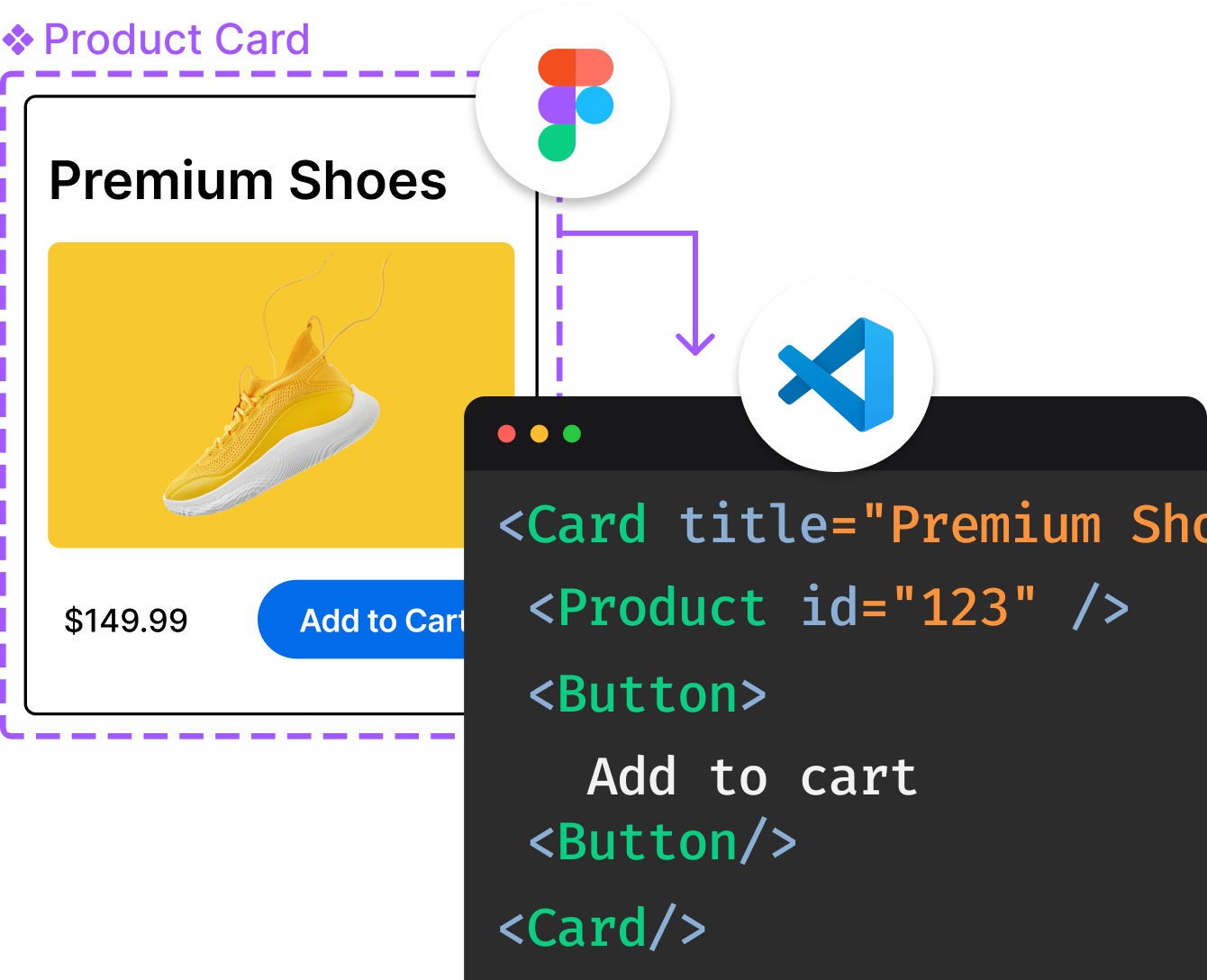
Introducing Visual Copilot: A new AI model to turn Figma designs to high quality code using your components.
Try Visual CopilotREADME
go-toml v2
Go library for the TOML format.
This library supports TOML v1.1.0.
Documentation
Full API, examples, and implementation notes are available in the Go documentation.

Import
import "github.com/pelletier/go-toml/v2"
Features
Stdlib behavior
As much as possible, this library is designed to behave similarly as the
standard library's encoding/json.
When encoding structs, fields tagged with omitempty are omitted if they are
empty. For time.Time, the zero value is considered empty, so timestamps such
as created_at or updated_at are not written unless you remove omitempty
from the struct tag or use a pointer type (*time.Time).
Performance
While go-toml favors usability, it is written with performance in mind. Most operations should not be shockingly slow. See benchmarks.
Strict mode
Decoder can be set to "strict mode", which makes it error when some parts of
the TOML document was not present in the target structure. This is a great way
to check for typos. See example in the documentation.
Contextualized errors
When most decoding errors occur, go-toml returns DecodeError,
which contains a human readable contextualized version of the error. For
example:
1| [server]
2| path = 100
 |        ~~~ cannot decode TOML integer into struct field toml_test.Server.Path of type string
3| port = 50
Local date and time support
TOML supports native local date/times. It allows to represent a given
date, time, or date-time without relation to a timezone or offset. To support
this use-case, go-toml provides LocalDate, LocalTime, and
LocalDateTime. Those types can be transformed to and from time.Time,
making them convenient yet unambiguous structures for their respective TOML
representation.
Commented config
Since TOML is often used for configuration files, go-toml can emit documents annotated with comments and commented-out values. For example, it can generate the following file:
# Host IP to connect to.
host = '127.0.0.1'
# Port of the remote server.
port = 4242

# Encryption parameters (optional)
# [TLS]
# cipher = 'AEAD-AES128-GCM-SHA256'
# version = 'TLS 1.3'
Getting started
Given the following struct, let's see how to read it and write it as TOML:
type MyConfig struct {
	Version int
	Name    string
	Tags    []string
}
Unmarshaling
Unmarshal reads a TOML document and fills a Go structure with its
content.
Note that the struct variable names are capitalized, while the variables in the toml document are lowercase.
For example:
doc := `
version = 2
name = "go-toml"
tags = ["go", "toml"]
`

var cfg MyConfig
err := toml.Unmarshal([]byte(doc), &cfg)
if err != nil {
	panic(err)
}
fmt.Println("version:", cfg.Version)
fmt.Println("name:", cfg.Name)
fmt.Println("tags:", cfg.Tags)

// Output:
// version: 2
// name: go-toml
// tags: [go toml]
Here is an example using tables with some simple nesting:
doc := `
age = 45
fruits = ["apple", "pear"]

# these are very important!
[my-variables]
first = 1
second = 0.2
third = "abc"

# this is not so important.
[my-variables.b]
bfirst = 123
`

var Document struct {
	Age int
	Fruits []string

	Myvariables struct {
		First  int
		Second float64
		Third  string

		B struct {
			Bfirst int
		}
	} `toml:"my-variables"`
}

err := toml.Unmarshal([]byte(doc), &Document)
if err != nil {
	panic(err)
}

fmt.Println("age:", Document.Age)
fmt.Println("fruits:", Document.Fruits)
fmt.Println("my-variables.first:", Document.Myvariables.First)
fmt.Println("my-variables.second:", Document.Myvariables.Second)
fmt.Println("my-variables.third:", Document.Myvariables.Third)
fmt.Println("my-variables.B.Bfirst:", Document.Myvariables.B.Bfirst)

// Output:
// age: 45
// fruits: [apple pear]
// my-variables.first: 1
// my-variables.second: 0.2
// my-variables.third: abc
// my-variables.B.Bfirst: 123
Marshaling
Marshal is the opposite of Unmarshal: it represents a Go structure
as a TOML document:
cfg := MyConfig{
	Version: 2,
	Name:    "go-toml",
	Tags:    []string{"go", "toml"},
}

b, err := toml.Marshal(cfg)
if err != nil {
	panic(err)
}
fmt.Println(string(b))

// Output:
// Version = 2
// Name = 'go-toml'
// Tags = ['go', 'toml']
Unstable API
This API does not yet follow the backward compatibility guarantees of this library. They provide early access to features that may have rough edges or an API subject to change.
Parser
Parser is the unstable API that allows iterative parsing of a TOML document at the AST level. See https://pkg.go.dev/github.com/pelletier/go-toml/v2/unstable.
Marshaler and Unmarshaler interfaces
unstable.Marshaler and
unstable.Unmarshaler let types produce and consume
their own raw TOML representation, similar to the equivalent encoding/json
interfaces. They are opt-in: enable them with
Encoder.EnableMarshalerInterface and
Decoder.EnableUnmarshalerInterface.
RawMessage
unstable.RawMessage is a raw encoded TOML value
implementing both interfaces above. Like json.RawMessage, it can delay the
decoding of part of a document or splice pre-encoded TOML verbatim into the
output.
Document editing
The unstable/edit package modifies TOML documents in place while preserving
comments, whitespace, and ordering. Parse a document with edit.Parse, then
Get, Set, and Delete values by key path â including array elements by
index and keys inside inline tables â and read or write the comments attached
to any key or table with Comment/SetComment. Only the bytes expressing an
edit are rewritten, everything else is kept byte-for-byte. See
https://pkg.go.dev/github.com/pelletier/go-toml/v2/unstable/edit.
Benchmarks
Execution time speedup compared to other Go TOML libraries:
| Benchmark | go-toml v1 | BurntSushi/toml |
|---|---|---|
| Marshal/HugoFrontMatter-2 | 2.3x | 2.4x |
| Marshal/ReferenceFile/map-2 | 2.2x | 2.6x |
| Marshal/ReferenceFile/struct-2 | 4.9x | 5.0x |
| Unmarshal/HugoFrontMatter-2 | 7.8x | 5.9x |
| Unmarshal/ReferenceFile/map-2 | 6.8x | 6.4x |
| Unmarshal/ReferenceFile/struct-2 | 6.8x | 6.3x |
See more
The table above has the results of the most common use-cases. The table below contains the results of all benchmarks, including unrealistic ones. It is provided for completeness.
| Benchmark | go-toml v1 | BurntSushi/toml |
|---|---|---|
| Marshal/SimpleDocument/map-2 | 2.1x | 3.1x |
| Marshal/SimpleDocument/struct-2 | 3.4x | 4.8x |
| Unmarshal/SimpleDocument/map-2 | 10.1x | 7.0x |
| Unmarshal/SimpleDocument/struct-2 | 12.4x | 8.0x |
| UnmarshalDataset/example-2 | 8.2x | 6.9x |
| UnmarshalDataset/code-2 | 7.5x | 8.3x |
| UnmarshalDataset/twitter-2 | 9.0x | 7.6x |
| UnmarshalDataset/citm_catalog-2 | 5.0x | 4.5x |
| UnmarshalDataset/canada-2 | 6.4x | 4.7x |
| UnmarshalDataset/config-2 | 10.2x | 6.1x |
| geomean | 5.8x | 5.3x |
This table can be generated with ./ci.sh benchmark -a -html.
Tools
Go-toml provides three handy command line tools:
-
tomljson: Reads a TOML file and outputs its JSON representation.$ go install github.com/pelletier/go-toml/v2/cmd/tomljson@latest $ tomljson --help -
jsontoml: Reads a JSON file and outputs a TOML representation.$ go install github.com/pelletier/go-toml/v2/cmd/jsontoml@latest $ jsontoml --help -
tomll: Lints and reformats a TOML file.$ go install github.com/pelletier/go-toml/v2/cmd/tomll@latest $ tomll --help
Docker image
Those tools are also available as a Docker image. For example, to use
tomljson:
docker run -i ghcr.io/pelletier/go-toml:v2 tomljson < example.toml
Multiple versions are available on ghcr.io.
Versioning
Expect for parts explicitly marked otherwise, go-toml follows Semantic Versioning. The supported version of TOML is indicated at the beginning of this document. The last two major versions of Go are supported (see Go Release Policy).
License
The MIT License (MIT). Read LICENSE.
Top Related Projects
TOML parser for Golang with reflection.
Go configuration with fangs
YAML support for the Go language.
A Go port of Ruby's dotenv library (Loads environment variables from .env files)
Golang library for managing configuration data from environment variables
Mergo: merging Go structs and maps since 2013
Convert designs to code with AI
Introducing Visual Copilot: A new AI model to turn Figma designs to high quality code using your components.
Try Visual Copilot