 react-docgen
A CLI and library to extract information from React component files for documentation generation purposes.
Top Related Projects

The library for web and native user interfaces.

Runtime type checking for React props and similar objects

A simple parser for react properties defined in typescript instead of propTypes.

Storybook is the industry standard workshop for building, documenting, and testing UI components in isolation

An API documentation generator for JavaScript.
Quick Overview
React-docgen is a CLI and toolbox to extract information from React component files for documentation generation purposes. It analyzes the source code of React components and extracts metadata about their props, methods, and other relevant information, making it easier to generate comprehensive documentation for React projects.
Pros
- Automates the process of extracting component documentation
- Supports various React component definition styles (class, functional, etc.)
- Integrates well with other documentation generation tools
- Customizable through plugins and custom handlers
Cons
- May struggle with complex or non-standard component structures
- Limited support for some advanced TypeScript features
- Requires manual configuration for optimal results in some cases
- Documentation can become outdated if not regularly maintained
Code Examples
- Basic usage to extract component information:
import { parse } from 'react-docgen';

const componentCode = `
  import React from 'react';

  const MyComponent = ({ name }) => <div>Hello, {name}!</div>;

  MyComponent.propTypes = {
    name: PropTypes.string.isRequired,
  };

  export default MyComponent;
`;

const componentInfo = parse(componentCode);
console.log(componentInfo);
- Using a custom resolver:
import { parse, resolver } from 'react-docgen';

const customResolver = (ast) => {
  // Custom logic to find component definition
  // ...
  return resolver.findAllExportedComponentDefinitions(ast);
};

const componentInfo = parse(componentCode, customResolver);
- Extracting documentation from a file:
import { parseFile } from 'react-docgen';

parseFile('./src/components/MyComponent.js')
  .then((componentInfo) => {
    console.log(componentInfo);
  })
  .catch((error) => {
    console.error('Error parsing file:', error);
  });
Getting Started
To use react-docgen in your project:
-
Install the package:
npm install --save-dev react-docgen -
Create a script to extract component information:
import { parse } from 'react-docgen'; import fs from 'fs'; const componentCode = fs.readFileSync('./src/components/MyComponent.js', 'utf8'); const componentInfo = parse(componentCode); console.log(JSON.stringify(componentInfo, null, 2)); -
Run the script to generate documentation:
node extract-docs.js > component-docs.json
Competitor Comparisons
The library for web and native user interfaces.
Error generating comparison
Runtime type checking for React props and similar objects
Pros of prop-types
- Lightweight and focused solely on runtime type checking
- Easy to integrate into existing React projects
- Provides clear error messages for type mismatches during development
Cons of prop-types
- Limited to runtime type checking, doesn't provide static analysis
- Requires manual definition of prop types for each component
- Can impact performance if not stripped out in production builds
Code Comparison
prop-types:
import PropTypes from 'prop-types';

MyComponent.propTypes = {
  name: PropTypes.string.isRequired,
  age: PropTypes.number
};
react-docgen:
/**
 * @param {Object} props
 * @param {string} props.name
 * @param {number} [props.age]
 */
function MyComponent(props) {
  // Component logic
}
Key Differences
- Purpose: prop-types focuses on runtime type checking, while react-docgen is used for generating documentation from component definitions
- Usage: prop-types is used directly in component code, react-docgen is typically part of a build process
- Output: prop-types provides runtime warnings, react-docgen generates static documentation
Use Cases
- Use prop-types for immediate feedback during development and basic type safety
- Use react-docgen for generating comprehensive documentation and API references for React components
Both tools serve different purposes in the React ecosystem and can be used complementarily to improve component development and documentation.
A simple parser for react properties defined in typescript instead of propTypes.
Pros of react-docgen-typescript
- Better support for TypeScript, including type inference and handling of complex TypeScript types
- More accurate parsing of PropTypes and default props in TypeScript files
- Ability to generate documentation for styled-components
Cons of react-docgen-typescript
- May have slower performance for large projects due to TypeScript parsing
- Less extensive documentation compared to react-docgen
- Potentially more complex setup for non-TypeScript projects
Code Comparison
react-docgen:
import React from 'react';
import PropTypes from 'prop-types';

const MyComponent = ({ name }) => <div>{name}</div>;

MyComponent.propTypes = {
  name: PropTypes.string.isRequired,
};
react-docgen-typescript:
import React from 'react';

interface Props {
  name: string;
}

const MyComponent: React.FC<Props> = ({ name }) => <div>{name}</div>;

export default MyComponent;
Both libraries aim to extract information from React components for documentation purposes. react-docgen is more suitable for JavaScript projects and has been around longer, while react-docgen-typescript is optimized for TypeScript projects and offers better type inference. The choice between the two depends on the project's primary language and specific documentation needs.
Storybook is the industry standard workshop for building, documenting, and testing UI components in isolation
Pros of Storybook
- Provides a visual development environment for UI components
- Supports multiple frontend frameworks (React, Vue, Angular, etc.)
- Offers extensive addon ecosystem for enhanced functionality
Cons of Storybook
- Steeper learning curve and more complex setup
- Requires additional configuration for advanced features
- Can increase project size and build time
Code Comparison
React-docgen:
import { parse } from 'react-docgen';

const componentInfo = parse(source);
console.log(componentInfo.props);
Storybook:
import { Button } from './Button';

export default {
  title: 'Components/Button',
  component: Button,
};

export const Primary = () => <Button primary>Click me</Button>;
React-docgen focuses on extracting component information programmatically, while Storybook provides a visual environment for component development and documentation. React-docgen is lightweight and easy to integrate into existing workflows, but lacks the interactive features of Storybook. Storybook offers a more comprehensive solution for component development, testing, and documentation, but requires more setup and resources. The choice between the two depends on project requirements, team preferences, and the desired level of visual component representation.
An API documentation generator for JavaScript.
Pros of JSDoc
- Broader language support: Works with JavaScript, TypeScript, and other languages
- Extensive documentation capabilities: Supports a wide range of tags for detailed documentation
- Large community and ecosystem: Many plugins and tools available
Cons of JSDoc
- Steeper learning curve: More complex syntax and numerous tags to learn
- Potentially verbose: Can lead to lengthy documentation blocks in code
Code Comparison
JSDoc example:
/**
 * Calculates the sum of two numbers.
 * @param {number} a - The first number.
 * @param {number} b - The second number.
 * @returns {number} The sum of a and b.
 */
function add(a, b) {
  return a + b;
}
React-docgen example:
import PropTypes from 'prop-types';

/**
 * A button component.
 */
function Button({ label, onClick }) {
  return <button onClick={onClick}>{label}</button>;
}

Button.propTypes = {
  label: PropTypes.string.isRequired,
  onClick: PropTypes.func,
};
While JSDoc is a more general-purpose documentation tool, React-docgen is specifically designed for React components. JSDoc offers more flexibility and broader language support, but React-docgen provides a more streamlined experience for React projects with automatic prop type inference and component-specific documentation features.
Convert  designs to code with AI
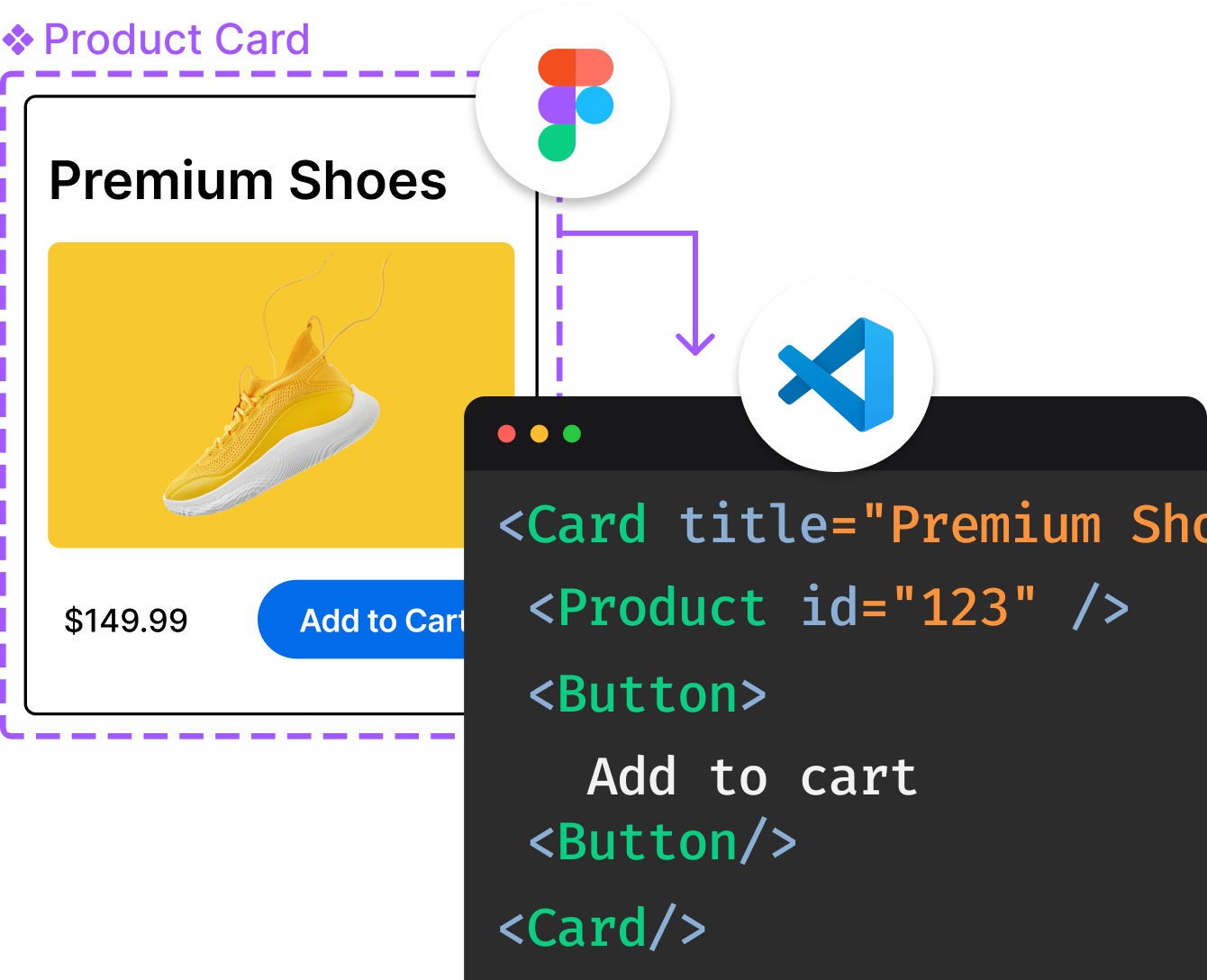
Introducing Visual Copilot: A new AI model to turn Figma designs to high quality code using your components.
Try Visual CopilotREADME
react-docgen
react-docgen is a highly customizable library that
extracts information from React components and returns
this information in a structured machine readable format from which
documentations can be generated.
@react-docgen/cli is a cli wrapper around the
library allowing using react-docgen on the command line.
Typescript
See this issue about the status of TypeScript.
Documentation
For version 5.x please checkout the README.md on the 5.x branch
For version 6.x and newer please visit react-docgen.dev
License
This project is licensed under the MIT License.
Top Related Projects
The library for web and native user interfaces.
Runtime type checking for React props and similar objects
A simple parser for react properties defined in typescript instead of propTypes.
Storybook is the industry standard workshop for building, documenting, and testing UI components in isolation
An API documentation generator for JavaScript.
Convert designs to code with AI
Introducing Visual Copilot: A new AI model to turn Figma designs to high quality code using your components.
Try Visual Copilot