
Top Related Projects

React runtime for Rive

Render After Effects animations natively on Web, Android and iOS, and React Native. http://airbnb.io/lottie/

A modern animation library for React and JavaScript

✌️ A spring physics based React animation library
🇨🇭 A React renderer for Three.js

GSAP (GreenSock Animation Platform), a JavaScript animation library for the modern web
Quick Overview
Remotion is a powerful framework for creating videos programmatically using React. It allows developers to leverage their web development skills to produce high-quality videos with dynamic content, animations, and custom logic.
Pros
- Utilizes familiar React concepts and components for video creation
- Offers fine-grained control over video composition and timing
- Supports integration with external data sources and APIs
- Provides a rich ecosystem of plugins and extensions
Cons
- Steep learning curve for those new to video production concepts
- Rendering can be resource-intensive for complex compositions
- Limited built-in video editing features compared to traditional video software
- Requires Node.js environment for video rendering
Code Examples
- Creating a simple video composition:
import {Composition} from 'remotion';
import {MyComposition} from './MyComposition';

export const RemotionVideo: React.FC = () => {
  return (
    <Composition
      id="MyVideo"
      component={MyComposition}
      durationInFrames={150}
      fps={30}
      width={1920}
      height={1080}
    />
  );
};
- Animating elements using interpolation:
import {useCurrentFrame, interpolate} from 'remotion';

export const AnimatedText: React.FC = () => {
  const frame = useCurrentFrame();
  const opacity = interpolate(frame, [0, 30], [0, 1]);

  return <h1 style={{opacity}}>Hello, Remotion!</h1>;
};
- Incorporating audio into a composition:
import {Audio} from 'remotion';

export const VideoWithAudio: React.FC = () => {
  return (
    <div>
      <h1>My Video Content</h1>
      <Audio src="path/to/audio.mp3" />
    </div>
  );
};
Getting Started
To start using Remotion, follow these steps:
-
Install Remotion:
npm init video -
Create a new composition in
src/Composition.tsx:import {useCurrentFrame} from 'remotion'; export const MyComposition = () => { const frame = useCurrentFrame(); return <div>The current frame is {frame}</div>; }; -
Preview your video:
npm start -
Render your video:
npm run build
For more detailed instructions and advanced features, refer to the official Remotion documentation.
Competitor Comparisons
React runtime for Rive
Pros of Rive React
- Lightweight and optimized for performance, especially for mobile devices
- Supports interactive animations with real-time user input
- Seamless integration with React components
Cons of Rive React
- Limited to Rive-specific animations, less flexible for custom animations
- Steeper learning curve for designers not familiar with Rive's tooling
- Smaller community and ecosystem compared to Remotion
Code Comparison
Rive React:
import { useRive } from '@rive-app/react-canvas';

function MyComponent() {
  const { rive, RiveComponent } = useRive({
    src: 'animation.riv',
    stateMachines: 'State Machine 1',
  });

  return <RiveComponent />;
}
Remotion:
import { Composition } from 'remotion';
import { MyAnimation } from './MyAnimation';

export const RemotionVideo = () => {
  return (
    <Composition
      id="MyAnimation"
      component={MyAnimation}
      durationInFrames={120}
      fps={30}
      width={1920}
      height={1080}
    />
  );
};
Summary
Rive React excels in lightweight, interactive animations for React applications, particularly on mobile devices. It offers seamless integration but is limited to Rive-specific animations. Remotion, on the other hand, provides more flexibility for custom animations and has a larger community, but may have a higher performance overhead for simpler animations.
Render After Effects animations natively on Web, Android and iOS, and React Native. http://airbnb.io/lottie/
Pros of Lottie-web
- Lightweight and efficient for simple animations
- Wide browser support and easy integration
- Large ecosystem of pre-made animations
Cons of Lottie-web
- Limited to vector animations, less flexible for complex video-like content
- Requires designers to use specific tools (e.g., After Effects) for creating animations
- Less control over runtime behavior and interactivity
Code Comparison
Lottie-web:
lottie.loadAnimation({
  container: document.getElementById('lottie-container'),
  renderer: 'svg',
  loop: true,
  autoplay: true,
  path: 'animation.json'
});
Remotion:
import { Composition } from 'remotion';
import { MyAnimation } from './MyAnimation';

export const RemotionVideo = () => {
  return (
    <Composition
      id="MyAnimation"
      component={MyAnimation}
      durationInFrames={120}
      fps={30}
      width={1920}
      height={1080}
    />
  );
};
A modern animation library for React and JavaScript
Pros of Motion
- Simpler API and easier learning curve for beginners
- Lightweight and focused on animation, with a smaller bundle size
- Better performance for simple animations due to its streamlined approach
Cons of Motion
- Less comprehensive feature set compared to Remotion
- Limited support for complex video editing and composition
- Smaller community and ecosystem, potentially leading to fewer resources and plugins
Code Comparison
Motion:
import { motion } from "framer-motion"

const Box = () => (
  <motion.div
    animate={{ x: 100 }}
    transition={{ duration: 2 }}
  />
)
Remotion:
import { spring, useCurrentFrame, useVideoConfig } from "remotion"

const Box = () => {
  const frame = useCurrentFrame()
  const { fps } = useVideoConfig()
  const x = spring({ frame, fps, from: 0, to: 100 })
  return <div style={{ transform: `translateX(${x}px)` }} />
}
Motion focuses on simplicity and ease of use, with a more declarative approach to animations. Remotion offers more fine-grained control over animation timing and frames, catering to more complex video production needs. While Motion is great for simple web animations, Remotion excels in creating full-fledged video content programmatically.
✌️ A spring physics based React animation library
Pros of react-spring
- Lightweight and focused on spring animations
- Easier to integrate into existing React projects
- More suitable for UI animations and transitions
Cons of react-spring
- Limited to React applications
- Not designed for complex video creation or editing
Code Comparison
react-spring:
import { useSpring, animated } from 'react-spring'

function AnimatedComponent() {
  const props = useSpring({ opacity: 1, from: { opacity: 0 } })
  return <animated.div style={props}>I will fade in</animated.div>
}
Remotion:
import { useCurrentFrame } from 'remotion'

export const MyVideo = () => {
  const frame = useCurrentFrame()
  return <div style={{ opacity: frame / 60 }}>Fade in over 1 second</div>
}
Summary
react-spring is a powerful animation library for React applications, focusing on spring physics-based animations. It's lightweight and easy to integrate into existing projects, making it ideal for UI animations and transitions.
Remotion, on the other hand, is a comprehensive framework for creating videos programmatically using React. It offers more advanced features for video creation and editing but may be overkill for simple UI animations.
Choose react-spring for lightweight UI animations in React applications, and Remotion for complex video creation tasks requiring programmatic control.
🇨🇭 A React renderer for Three.js
Pros of react-three-fiber
- Specialized for 3D graphics and WebGL rendering
- Seamless integration with Three.js, providing a React-friendly API
- Large ecosystem of extensions and helpers for 3D development
Cons of react-three-fiber
- Steeper learning curve for developers unfamiliar with 3D graphics concepts
- Limited to 3D rendering, not suitable for general-purpose video creation
- Performance may be a concern for complex 3D scenes on low-end devices
Code Comparison
react-three-fiber:
function Box(props) {
  const mesh = useRef()
  const [hovered, setHover] = useState(false)
  return (
    <mesh {...props} ref={mesh} onPointerOver={() => setHover(true)} onPointerOut={() => setHover(false)}>
      <boxGeometry args={[1, 1, 1]} />
      <meshStandardMaterial color={hovered ? 'hotpink' : 'orange'} />
    </mesh>
  )
}
Remotion:
export const MyVideo = () => {
  return (
    <Composition
      id="MyComp"
      component={MyComp}
      durationInFrames={150}
      fps={30}
      width={1920}
      height={1080}
    />
  );
};
While react-three-fiber focuses on creating 3D scenes with React components, Remotion is designed for programmatic video creation using React. The code examples highlight these different use cases, with react-three-fiber demonstrating 3D object manipulation and Remotion showcasing video composition setup.
GSAP (GreenSock Animation Platform), a JavaScript animation library for the modern web
Pros of GSAP
- Mature and battle-tested animation library with extensive browser support
- Powerful and flexible, capable of animating virtually any property
- Large community and ecosystem with numerous plugins and resources
Cons of GSAP
- Steeper learning curve for complex animations
- Primarily focused on DOM and CSS animations, less suited for video creation
- Requires a paid license for some advanced features and commercial use
Code Comparison
GSAP:
gsap.to(".box", {
  duration: 1,
  x: 100,
  y: 50,
  rotation: 360,
  ease: "bounce.out"
});
Remotion:
<Sequence from={0} durationInFrames={30}>
  <Animate
    start={[0, 0, 0]}
    end={[100, 50, 360]}
    easing="bounceOut"
  >
    {({x, y, rotation}) => (
      <div style={{transform: `translate(${x}px, ${y}px) rotate(${rotation}deg)`}} />
    )}
  </Animate>
</Sequence>
GSAP excels in web animations and interactive content, offering a powerful API for complex animations. Remotion, on the other hand, is specifically designed for programmatic video creation using React, making it more suitable for generating video content. While GSAP has a larger ecosystem and broader browser support, Remotion provides a more integrated approach for video production within a React environment.
Convert  designs to code with AI
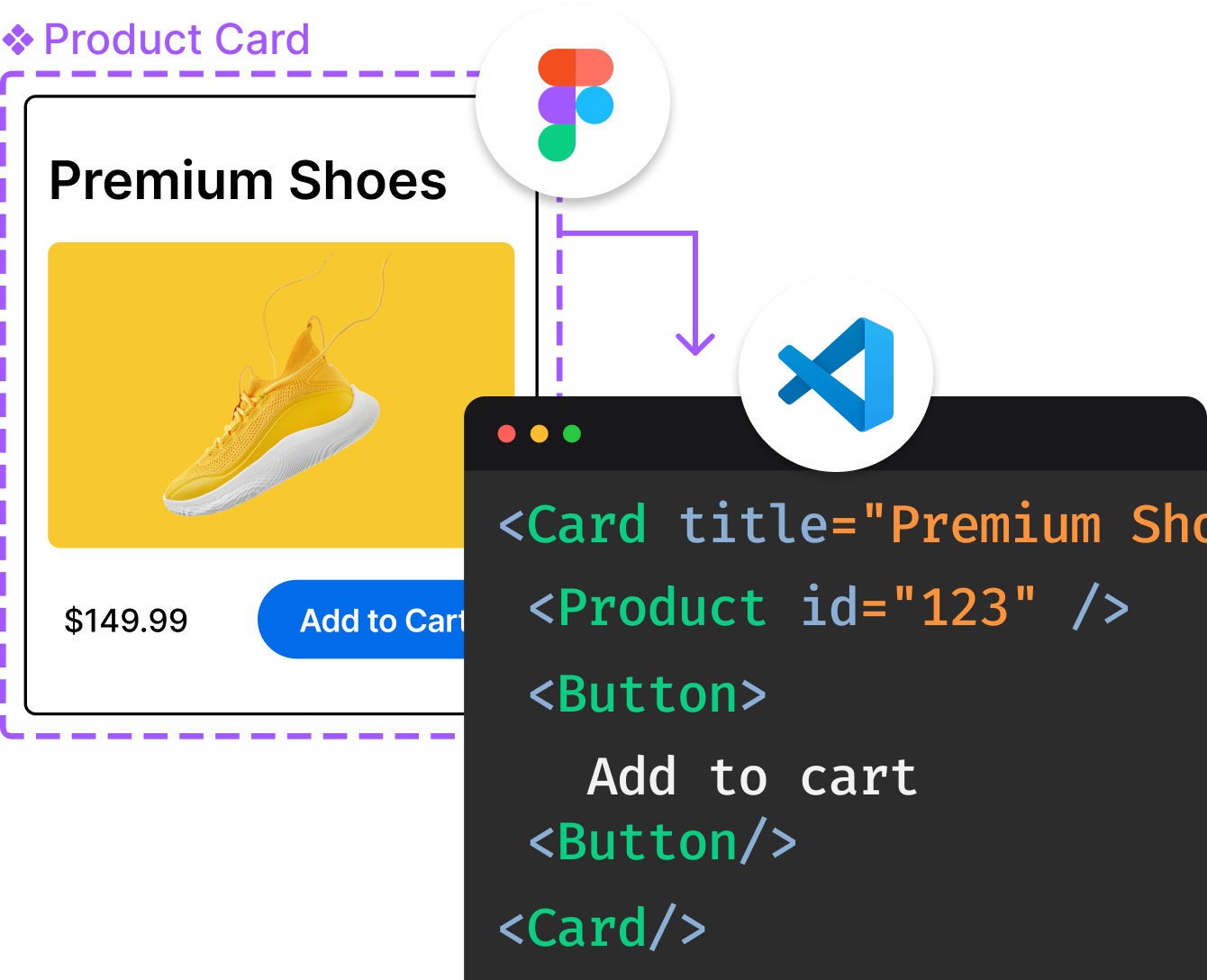
Introducing Visual Copilot: A new AI model to turn Figma designs to high quality code using your components.
Try Visual CopilotREADME





Video tools for the agent era.
Video Creation
- Make videos agentically: Turn your idea into a video using your coding agent.
- Make videos interactively: Edit and animate using drag and drop.
- Make videos programmatically: Connect to data, and manage complexity with code.
React Code is the source of truth. Switch your workflow at any point.
Video Automation
- Design systems: Create a library of animated assets for your organization.
- Batch rendering: Render millions of videos on your own infrastructure.
- Applications: Publish a simple tool or a complex video editor.
Get started
If you already have Node.JS installed, type
npx create-video@latest
to get started. Otherwise, read the installation page in the documentation.
Discover Remotion
Remotion is extensively documented over more than 1000 pages.
- Get Started
- Components
- Rendering
- Making apps
- Community
- Commercial
- Help
Documentation
Documentation: remotion.dev/docs
API Reference: remotion.dev/api
License
Be aware of that Remotion has a special license and requires obtaining a company license in some cases. Read the LICENSE page for more information.
Contributing
Please read CONTRIBUTING.md to learn about contributing to this project.
Top Related Projects
React runtime for Rive
Render After Effects animations natively on Web, Android and iOS, and React Native. http://airbnb.io/lottie/
A modern animation library for React and JavaScript
✌️ A spring physics based React animation library
🇨🇭 A React renderer for Three.js
GSAP (GreenSock Animation Platform), a JavaScript animation library for the modern web
Convert designs to code with AI
Introducing Visual Copilot: A new AI model to turn Figma designs to high quality code using your components.
Try Visual Copilot