
Top Related Projects

💻 macOS dotfiles

A curated list of dotfiles resources.
Quick Overview
Thoughtbot's dotfiles is a collection of configuration files and scripts for setting up and customizing a development environment on macOS or Linux. It includes configurations for various tools and applications commonly used by developers, such as Vim, Zsh, Git, and tmux.
Pros
- Comprehensive set of configurations for a wide range of development tools
- Well-maintained and regularly updated by the Thoughtbot team
- Easily customizable to fit individual preferences
- Includes a convenient installation script for quick setup
Cons
- May require some familiarity with command-line tools and Unix-like systems
- Some configurations might conflict with existing user preferences
- Potential learning curve for users not familiar with Thoughtbot's workflow
- Limited support for Windows operating systems
Getting Started
To get started with Thoughtbot's dotfiles, follow these steps:
-
Clone the repository:
git clone https://github.com/thoughtbot/dotfiles.git ~/.dotfiles -
Navigate to the dotfiles directory:
cd ~/.dotfiles -
Run the installation script:
./install.sh -
Follow the prompts to customize your installation.
-
Restart your terminal or run
source ~/.zshrcto apply the changes.
Note: It's recommended to review the configurations and make any necessary adjustments before installation to ensure they align with your preferences and existing setup.
Competitor Comparisons
💻 macOS dotfiles
Pros of dotfiles (alrra)
- More comprehensive setup scripts for various operating systems (macOS, Ubuntu, etc.)
- Includes a wider range of configurations for different tools and applications
- Offers a modular approach, allowing users to selectively install specific components
Cons of dotfiles (alrra)
- Less frequently updated compared to thoughtbot's repository
- May require more manual configuration and customization for some users
- Documentation is not as extensive as thoughtbot's
Code Comparison
dotfiles (alrra):
#!/bin/bash

declare -r GITHUB_REPOSITORY="alrra/dotfiles"

declare -r DOTFILES_ORIGIN="git@github.com:$GITHUB_REPOSITORY.git"
declare -r DOTFILES_TARBALL_URL="https://github.com/$GITHUB_REPOSITORY/tarball/main"
dotfiles (thoughtbot):
#!/usr/bin/env bash

set -e

DOTFILES_ROOT=$(pwd -P)

color_echo() {
  printf "\n  \033[1;35m%s\033[0m\n" "$1"
}
Both repositories use shell scripts for setup and configuration, but alrra's dotfiles includes more detailed repository information and URL declarations, while thoughtbot's dotfiles focuses on utility functions and directory setup.
A curated list of dotfiles resources.
Pros of awesome-dotfiles
- Comprehensive collection of dotfiles resources and tools
- Regularly updated with community contributions
- Includes categorized lists for easy navigation
Cons of awesome-dotfiles
- Not a ready-to-use dotfiles setup
- Requires more effort to implement and customize
- May be overwhelming for beginners due to the vast amount of information
Code comparison
dotfiles:
#!/bin/sh

set -e

for name in *; do
  target="$HOME/.$name"
  if [ -e "$target" ]; then
    echo "~${target#$HOME} already exists... Skipping."
  else
    echo "Creating $target"
    ln -s "$PWD/$name" "$target"
  fi
done
awesome-dotfiles:
## Tools

- [Dotbot](https://github.com/anishathalye/dotbot) - A tool that bootstraps your dotfiles
- [rcm](https://github.com/thoughtbot/rcm) - rc file (dotfile) management
- [homeshick](https://github.com/andsens/homeshick) - Git dotfile synchronizer written in Bash
Summary
dotfiles provides a ready-to-use configuration setup with a simple installation script, while awesome-dotfiles offers a curated list of resources and tools for managing dotfiles. dotfiles is more suitable for users who want a quick start with a pre-configured environment, whereas awesome-dotfiles is better for those who prefer to explore various options and build their own custom setup.
Convert  designs to code with AI
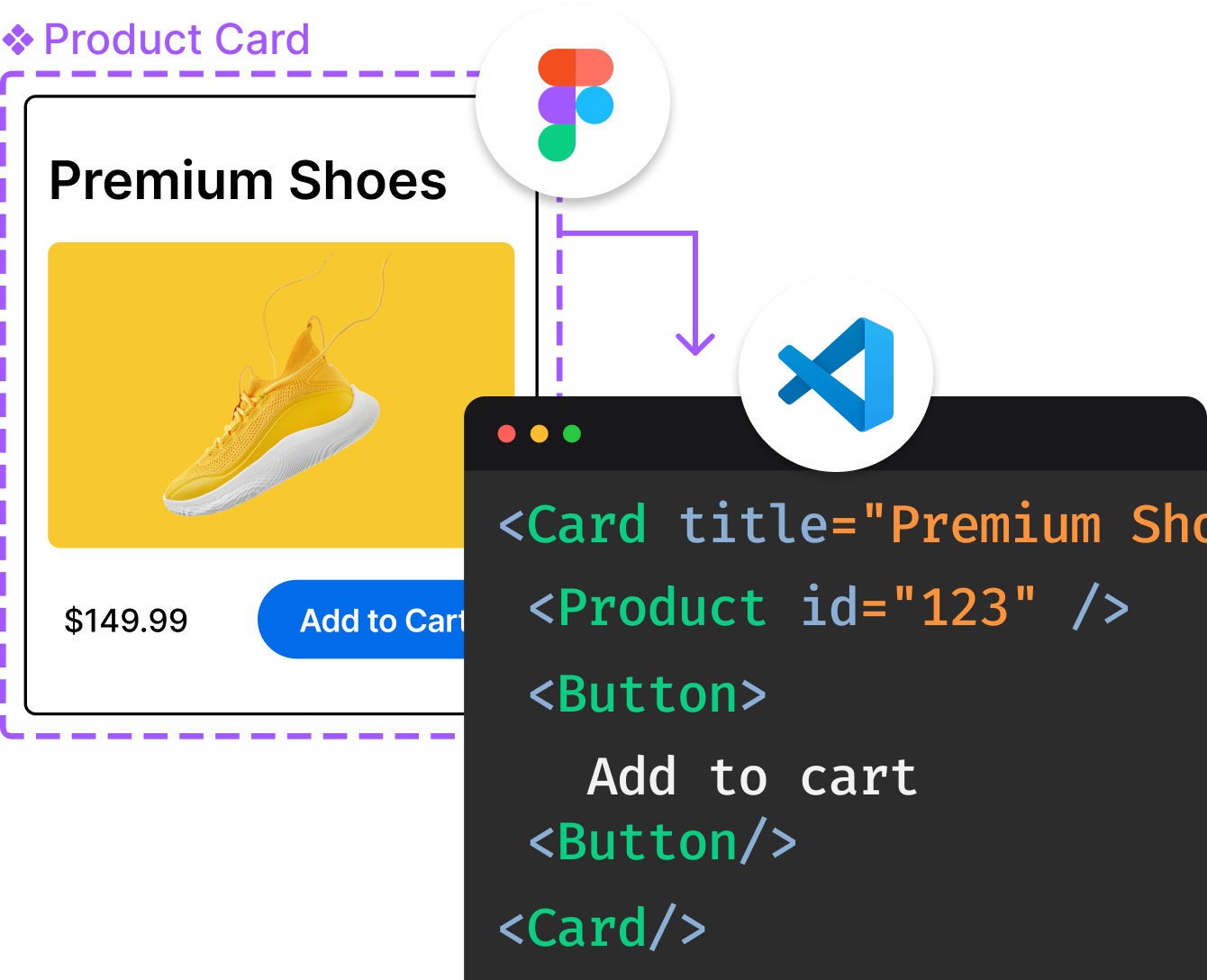
Introducing Visual Copilot: A new AI model to turn Figma designs to high quality code using your components.
Try Visual CopilotREADME
thoughtbot dotfiles

Requirements
Set zsh as your login shell:
chsh -s $(which zsh)
Install
Clone onto your laptop:
git clone git@github.com:thoughtbot/dotfiles.git ~/dotfiles
(Or, fork and keep your fork updated).
Install rcm:
brew install rcm
Install the dotfiles:
env RCRC=$HOME/dotfiles/rcrc rcup
After the initial installation, you can run rcup without the one-time variable
RCRC being set (rcup will symlink the repo's rcrc to ~/.rcrc for future
runs of rcup). See
example.
This command will create symlinks for config files in your home directory.
Setting the RCRC environment variable tells rcup to use standard
configuration options:
- Exclude the
README.md,README-ES.mdandLICENSEfiles, which are part of thedotfilesrepository but do not need to be symlinked in. - Give precedence to personal overrides which by default are placed in
~/dotfiles-local - Please configure the
rcrcfile if you'd like to make personal overrides in a different directory
Update
From time to time you should pull down any updates to these dotfiles, and run
rcup
to link any new files and install new vim plugins. Note You must run
rcup after pulling to ensure that all files in plugins are properly installed,
but you can safely run rcup multiple times so update early and update often!
Make your own customizations
Create a directory for your personal customizations:
mkdir ~/dotfiles-local
Put your customizations in ~/dotfiles-local appended with .local:
~/dotfiles-local/aliases.local~/dotfiles-local/git_template.local/*~/dotfiles-local/gitconfig.local~/dotfiles-local/psqlrc.local(we supply a blank.psqlrc.localto preventpsqlfrom throwing an error, but you should overwrite the file with your own copy)~/dotfiles-local/tmux.conf.local~/dotfiles-local/vimrc.local~/dotfiles-local/vimrc.bundles.local~/dotfiles-local/zshrc.local~/dotfiles-local/zsh/configs/*
For example, your ~/dotfiles-local/aliases.local might look like this:
# Productivity
alias todo='$EDITOR ~/.todo'
Your ~/dotfiles-local/gitconfig.local might look like this:
[alias]
  l = log --pretty=colored
[pretty]
  colored = format:%Cred%h%Creset %s %Cgreen(%cr) %C(bold blue)%an%Creset
[user]
  name = Dan Croak
  email = dan@thoughtbot.com
Your ~/dotfiles-local/vimrc.local might look like this:
" Color scheme
colorscheme github
highlight NonText guibg=#060606
highlight Folded  guibg=#0A0A0A guifg=#9090D0
If you don't wish to install a vim plugin from the default set of vim plugins in
.vimrc.bundles, you can ignore the plugin by calling it out with UnPlug in
your ~/.vimrc.bundles.local.
" Don't install vim-scripts/tComment (notice the username of the plugin is
removed)

UnPlug 'tComment'
UnPlug can be used to install your own fork of a plugin or to install a shared
plugin with different custom options.
" Only load vim-coffee-script if a Coffeescript buffer is created
UnPlug 'vim-coffee-script'
Plug 'kchmck/vim-coffee-script', { 'for': 'coffee' }

" Use a personal fork of vim-run-interactive
UnPlug 'vim-run-interactive'
Plug '$HOME/plugins/vim-run-interactive'
To extend your git hooks, create executable scripts in
~/dotfiles-local/git_template.local/hooks/* files.
Your ~/dotfiles-local/zshrc.local might look like this:
# load pyenv if available
if which pyenv &>/dev/null ; then
  eval "$(pyenv init -)"
fi
Your ~/dotfiles-local/vimrc.bundles.local might look like this:
Plug 'Lokaltog/vim-powerline'
Plug 'stephenmckinney/vim-solarized-powerline'
zsh Configurations
Additional zsh configuration can go under the ~/dotfiles-local/zsh/configs directory. This
has two special subdirectories: pre for files that must be loaded first, and
post for files that must be loaded last.
For example, ~/dotfiles-local/zsh/configs/pre/virtualenv makes use of various shell
features which may be affected by your settings, so load it first:
# Load the virtualenv wrapper
. /usr/local/bin/virtualenvwrapper.sh
Setting a key binding can happen in ~/dotfiles-local/zsh/configs/keys:
# Grep anywhere with ^G
bindkey -s '^G' ' | grep '
Some changes, like chpwd, must happen in ~/dotfiles-local/zsh/configs/post/chpwd:
# Show the entries in a directory whenever you cd in
function chpwd {
  ls
}
This directory is handy for combining dotfiles from multiple teams; one team
can add the virtualenv file, another keys, and a third chpwd.
The ~/dotfiles-local/zshrc.local is loaded after ~/dotfiles-local/zsh/configs.
zsh History Configurations
The zsh history is configured with several useful options:
-
hist_ignore_all_dups: Removes duplicate commands from history -
hist_ignore_space: Commands starting with a space are not saved to history (useful for sensitive commands) -
inc_append_history: Adds commands to history as they're executed, not just when the shell exits -
share_history: Shares history across multiple zsh sessions in real-time
History size is set to 8,192 entries providing ample command history.
vim Configurations
Similarly to the zsh configuration directory as described above, vim
automatically loads all files in the ~/dotfiles-local/vim/plugin directory. This does not
have the same pre or post subdirectory support that our zshrc has.
This is an example ~/dotfiles-local/vim/plugin/c.vim. It is loaded every time vim starts,
regardless of the file name:
# Indent C programs according to BSD style(9)
set cinoptions=:0,t0,+4,(4
autocmd BufNewFile,BufRead *.[ch] setlocal sw=0 ts=8 noet
What's in it?
vim configuration:
- fzf for fuzzy file/buffer/tag finding.
- Rails.vim for enhanced navigation of
Rails file structure via
gfand:A(alternate),:Rextractpartials,:Rinvertmigrations, etc. - Run many kinds of tests from vim
- Set
<leader>to a single space. - Switch between the last two files with space-space.
- Syntax highlighting for Markdown, HTML, JavaScript, Ruby, Go, Elixir, more.
- Use Ag instead of Grep when available.
- Map
<leader>ctto re-index ctags. - Use vim-mkdir for automatically creating non-existing directories before writing the buffer.
- Use vim-plug to manage plugins.
tmux configuration:
- Improve color resolution.
- Remove administrative debris (session name, hostname, time) in status bar.
- Set prefix to
Ctrl+s - Soften status bar color from harsh green to light gray.
git configuration:
- Adds a
co-upstream-pr $PR_NUMBER $LOCAL_BRANCH_NAMEsubcommand to checkout remote upstream branch into a local branch. - Adds a
create-branchalias to create feature branches. - Adds a
delete-branchalias to delete feature branches. - Adds a
merge-branchalias to merge feature branches into master. - Adds an
upalias to fetch and rebaseorigin/masterinto the feature branch. Usegit up -ifor interactive rebases. - Adds
post-{checkout,commit,merge}hooks to re-index your ctags. - Adds
pre-commitandprepare-commit-msgstubs that delegate to your local config. - Adds
trust-binalias to append a project'sbin/directory to$PATH.
Ruby configuration:
- Add trusted binstubs to the
PATH. - Load the ASDF version manager.
- Adds railsrc with the following options to integrate with Suspenders.
--database=postgresql
--skip-test
-m=https://raw.githubusercontent.com/thoughtbot/suspenders/main/lib/install/web.rb
If you want to skip this file altogether, run rails new my_app --no_rc.
Shell aliases and scripts:
...for quicker navigation to the parent's parent directory.bforbundle.gwith no arguments isgit statusand with arguments acts likegit.migrateforbin/rails db:migrate db:rollback && bin/rails db:migrate db:test:prepare.mcdto make a directory and change into it.replace foo bar **/*.rbto find and replace within a given list of files.tatto attach to tmux session named the same as the current directory.vfor$VISUAL.
Thanks
Thank you, contributors! Also, thank you to Corey Haines, Gary Bernhardt, and others for sharing your dotfiles and other shell scripts from which we derived inspiration for items in this project.
License
dotfiles is copyright © 2009 thoughtbot. It is free software, and may be
redistributed under the terms specified in the LICENSE file.
About thoughtbot

This repo is maintained and funded by thoughtbot, inc. The names and logos for thoughtbot are trademarks of thoughtbot, inc.
We love open source software! See our other projects. We are available for hire.
Top Related Projects
💻 macOS dotfiles
A curated list of dotfiles resources.
Convert designs to code with AI
Introducing Visual Copilot: A new AI model to turn Figma designs to high quality code using your components.
Try Visual Copilot