
Quick Overview
Error generating quick overview
Convert  designs to code with AI
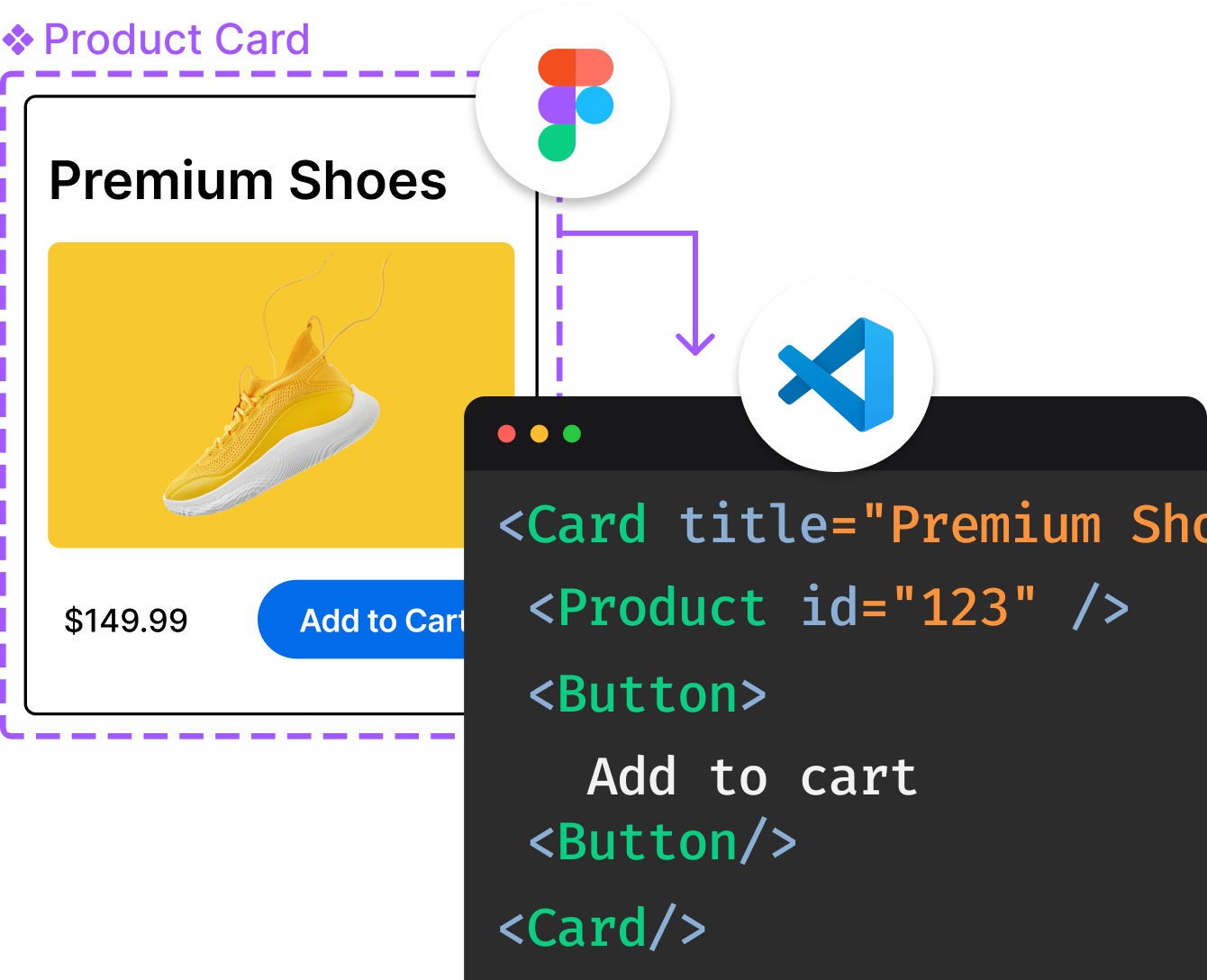
Introducing Visual Copilot: A new AI model to turn Figma designs to high quality code using your components.
Try Visual CopilotREADME

Wait4X
Wait4X is a lightweight, zero-dependency tool to wait for services to be ready. Perfect for CI/CD, containers, and local development.






ð Table of Contents
- Overview
- Features
- Installation
- Quick Start
- Usage Examples
- Advanced Features
- Go Package Usage
- CLI Reference
- Contributing
- License
Overview
Wait4X helps you wait for services (databases, APIs, message queues, etc.) to be ready before your app or script continues. It's ideal for:
- CI/CD pipelines: Ensure dependencies are up before tests run
- Containers & orchestration: Health check services before startup
- Deployments: Verify readiness before rollout
- Local development: Simplify service readiness checks
Features
| Feature | Description |
|---|---|
| Multi-Protocol | TCP, HTTP, DNS, and more |
| Service Integrations | Redis, MySQL, PostgreSQL, MongoDB, Kafka, RabbitMQ, InfluxDB, Temporal |
| Reverse/Parallel Checking | Invert checks or check multiple services at once |
| Exponential Backoff | Smarter retries |
| Cross-Platform | Single binary for Linux, macOS, Windows |
| Go Package | Use as a Go library |
| Command Execution | Run commands after checks |
ð¥ Installation
After installing, jump to Quick Start to try it out!
ð³ With Docker
Wait4X provides automatically updated Docker images within Docker Hub:
# Pull the image
docker pull wait4x/wait4x:latest

# Run the container
docker run --rm wait4x/wait4x:latest --help
ð¦ From Package Managers
macOS:
brew install wait4x
Alpine Linux:
apk add wait4x
Arch Linux (AUR):
yay -S wait4x-bin
NixOS:
nix-env -iA nixpkgs.wait4x
Windows (Scoop):
scoop install wait4x

ð¦ From Binary
Download the appropriate version for your platform from the releases page:
Linux:
curl -LO https://github.com/wait4x/wait4x/releases/latest/download/wait4x-linux-amd64.tar.gz
tar -xf wait4x-linux-amd64.tar.gz -C /tmp
sudo mv /tmp/wait4x-linux-amd64/wait4x /usr/local/bin/
macOS:
curl -LO https://github.com/wait4x/wait4x/releases/latest/download/wait4x-darwin-amd64.tar.gz
tar -xf wait4x-darwin-amd64.tar.gz -C /tmp
sudo mv /tmp/wait4x-darwin-amd64/wait4x /usr/local/bin/
Windows:
curl -LO https://github.com/wait4x/wait4x/releases/latest/download/wait4x-windows-amd64.tar.gz
tar -xf wait4x-windows-amd64.tar.gz
# Move to a directory in your PATH
Verify checksums:
curl -LO https://github.com/wait4x/wait4x/releases/latest/download/wait4x-linux-amd64.tar.gz.sha256sum
sha256sum --check wait4x-linux-amd64.tar.gz.sha256sum
ð¹ Go Install (for Go users)
You can install Wait4X directly from source using Go (requires Go 1.16+):
go install wait4x.dev/v3/cmd/wait4x@latest
This will place the wait4x binary in your $GOPATH/bin or $HOME/go/bin directory.
ð Quick Start
Get started in seconds! After installing, try these common checks:
Wait for a TCP Port
wait4x tcp localhost:3306
HTTP Health Check
wait4x http https://example.com/health --expect-status-code 200
Wait for Multiple Services (Parallel)
wait4x tcp 127.0.0.1:5432 127.0.0.1:6379 127.0.0.1:27017
Database Readiness
wait4x postgresql 'postgres://user:pass@localhost:5432/mydb?sslmode=disable'
For more, see Usage Examples or Detailed Usage.
Usage Examples
Here are some of the most useful Wait4X commands. Click the links for more details!
- TCP: Wait for a port to be available
wait4x tcp localhost:8080 - HTTP: Wait for a web endpoint with status code and body check
wait4x http https://api.example.com/health --expect-status-code 200 --expect-body-regex '"status":"UP"' - DNS: Wait for DNS A record
wait4x dns A example.com - MySQL: Wait for MySQL DB
wait4x mysql 'user:password@tcp(localhost:3306)/mydb' - Redis: Wait for Redis and check for a key
wait4x redis redis://localhost:6379 --expect-key "session:active" - Run a command after check:
wait4x tcp localhost:8080 -- ./start-app.sh - Reverse check (wait for port to be free):
wait4x tcp localhost:8080 --invert-check - Parallel check:
wait4x tcp localhost:3306 localhost:6379 localhost:27017
See Detailed Usage for advanced options and more protocols.
ð Detailed Usage
Jump to:
HTTP Checking
Wait for an HTTP(S) endpoint to be ready, with flexible validation options.
- Status code check:
wait4x http https://api.example.com/health --expect-status-code 200 - Response body regex:
wait4x http https://api.example.com/status --expect-body-regex '"status":\s*"healthy"' - JSON path check:
Uses GJSON Path Syntax.wait4x http https://api.example.com/status --expect-body-json "services.database.status" - XPath check:
wait4x http https://example.com --expect-body-xpath "//div[@id='status']" - Custom request headers:
wait4x http https://api.example.com \ --request-header "Authorization: Bearer token123" \ --request-header "Content-Type: application/json" - Response header check:
wait4x http https://api.example.com --expect-header "Content-Type=application/json" - TLS options:
wait4x http https://www.wait4x.dev --cert-file /path/to/certfile --key-file /path/to/keyfile
wait4x http https://www.wait4x.dev --ca-file /path/to/cafile
DNS Checking
Check for various DNS record types and values.
- A record:
wait4x dns A example.com wait4x dns A example.com --expected-ip 93.184.216.34 wait4x dns A example.com --expected-ip 93.184.216.34 -n 8.8.8.8 - AAAA record (IPv6):
wait4x dns AAAA example.com --expected-ip "2606:2800:220:1:248:1893:25c8:1946" - CNAME record:
wait4x dns CNAME www.example.com --expected-domain example.com - MX record:
wait4x dns MX example.com --expected-domain "mail.example.com" - NS record:
wait4x dns NS example.com --expected-nameserver "ns1.example.com" - TXT record:
wait4x dns TXT example.com --expected-value "v=spf1 include:_spf.example.com ~all"
Database Checking
Check readiness for popular databases.
MySQL
- TCP connection:
wait4x mysql 'user:password@tcp(localhost:3306)/mydb' - Unix socket:
wait4x mysql 'user:password@unix(/var/run/mysqld/mysqld.sock)/mydb' - Check if a table exists:
wait4x mysql 'user:password@tcp(localhost:3306)/mydb' --expect-table my_table
PostgreSQL
- TCP connection:
wait4x postgresql 'postgres://user:password@localhost:5432/mydb?sslmode=disable' - Unix socket:
wait4x postgresql 'postgres://user:password@/mydb?host=/var/run/postgresql' - Check if a table exists:
If you need to specify a schema for the table existence check, you can use thewait4x postgresql 'postgres://user:password@localhost:5432/mydb?sslmode=disable' --expect-table my_tablecurrentSchema=myschemaconnection string parameter, for example:wait4x postgresql 'postgres://user:password@localhost:5432/mydb?sslmode=disable¤tSchema=myschema' --expect-table my_table
MongoDB
wait4x mongodb 'mongodb://user:password@localhost:27017/mydb?maxPoolSize=20'
Redis
- Basic connection:
wait4x redis redis://localhost:6379 - With authentication and DB selection:
wait4x redis redis://user:password@localhost:6379/0 - Check for key existence:
wait4x redis redis://localhost:6379 --expect-key "session:active" - Check for key with value (regex):
wait4x redis redis://localhost:6379 --expect-key "status=^ready$"
InfluxDB
wait4x influxdb http://localhost:8086
Message Queue Checking
RabbitMQ
wait4x rabbitmq 'amqp://guest:guest@localhost:5672/myvhost'
Temporal
- Server check:
wait4x temporal server localhost:7233 - Worker check (namespace & task queue):
wait4x temporal worker localhost:7233 \ --namespace my-namespace \ --task-queue my-queue - Check for specific worker identity:
wait4x temporal worker localhost:7233 \
  --namespace my-namespace \
  --task-queue my-queue \
  --expect-worker-identity-regex "worker-.*"
Kafka
-
Basic Kafka broker readiness check:
wait4x kafka kafka://localhost:9092 -
Check Kafka broker with SCRAM authentication:
wait4x kafka kafka://user:pass@localhost:9092?authMechanism=scram-sha-256 -
Wait for multiple Kafka brokers (cluster) to be ready:
wait4x kafka kafka://broker1:9092 kafka://broker2:9092 kafka://broker3:9092
Notes:
- The connection string format is: kafka://[user:pass@]host:port[?option=value&...]
- Supported options: authMechanism (scram-sha-256, scram-sha-512)
Shell Command
Wait for a shell command to succeed or return a specific exit code.
- Check connection:
wait4x exec 'ping wait4x.dev -c 2' - Check file existence:
wait4x exec 'ls target/debug/main' --exit-code 2
See Advanced Features for timeout, retry, backoff, and parallel/reverse checking options.
âï¸ Advanced Features
Jump to:
Timeout & Retry Control
Control how long Wait4X waits and how often it checks.
-
Set a timeout:
wait4x tcp localhost:8080 --timeout 30sWaits up to 30 seconds before giving up.
-
Set check interval:
wait4x tcp localhost:8080 --interval 2sChecks every 2 seconds (default: 1s).
Exponential Backoff
Retry with increasing delays for more efficient waiting (useful for slow-starting services).
- Enable exponential backoff:
Doubles the wait time between retries, up to 30 seconds.wait4x http https://api.example.com \ --backoff-policy exponential \ --backoff-exponential-coefficient 2.0 \ --backoff-exponential-max-interval 30s
Reverse Checking
Wait for a service to become unavailable (e.g., port to be free, service to stop).
- Wait for a port to become free:
wait4x tcp localhost:8080 --invert-check - Wait for a service to stop:
Use for shutdown/cleanup workflows or to ensure a port is not in use.wait4x http https://service.local/health --expect-status-code 200 --invert-check
Command Execution
Run a command after a successful check (great for CI/CD or startup scripts).
- Run a script after waiting:
wait4x tcp localhost:3306 -- ./deploy.sh - Chain multiple commands:
Automate your workflow after dependencies are ready.wait4x redis redis://localhost:6379 -- echo "Redis is ready" && ./init-redis.sh
Parallel Checking
Wait for multiple services at once (all must be ready to continue).
- Check several services in parallel:
Use for microservices, integration tests, or complex startup dependencies.wait4x tcp localhost:3306 localhost:6379 localhost:27017
See CLI Reference for all available flags and options.
ð¦ Go Package Usage
ð Installing as a Go Package
Add Wait4X to your Go project:
go get wait4x.dev/v3
Import the packages you need:
import (
    "context"
    "time"

    "wait4x.dev/v3/checker/tcp"      // TCP checker
    "wait4x.dev/v3/checker/http"     // HTTP checker
    "wait4x.dev/v3/checker/redis"    // Redis checker
    "wait4x.dev/v3/waiter"           // Waiter functionality
)
ð Example: TCP Checking
// Create a context with timeout
ctx, cancel := context.WithTimeout(context.Background(), 30*time.Second)
defer cancel()

// Create a TCP checker
tcpChecker := tcp.New("localhost:6379", tcp.WithTimeout(5*time.Second))

// Wait for the TCP port to be available
err := waiter.WaitContext(
    ctx,
    tcpChecker,
    waiter.WithTimeout(time.Minute),
    waiter.WithInterval(2*time.Second),
    waiter.WithBackoffPolicy("exponential"),
)
if err != nil {
    log.Fatalf("Failed to connect: %v", err)
}

fmt.Println("Service is ready!")
ð Example: HTTP with Advanced Options
// Create HTTP headers
headers := http.Header{}
headers.Add("Authorization", "Bearer token123")
headers.Add("Content-Type", "application/json")

// Create an HTTP checker with validation
checker := http.New(
    "https://api.example.com/health",
    http.WithTimeout(5*time.Second),
    http.WithExpectStatusCode(200),
    http.WithExpectBodyJSON("status"),
    http.WithExpectBodyRegex(`"healthy":\s*true`),
    http.WithExpectHeader("Content-Type=application/json"),
    http.WithRequestHeaders(headers),
)

// Wait for the API to be ready
err := waiter.WaitContext(ctx, checker, options...)
ð Example: Parallel Service Checking
// Create checkers for multiple services
checkers := []checker.Checker{
    redis.New("redis://localhost:6379"),
    postgresql.New("postgres://user:pass@localhost:5432/db"),
    http.New("http://localhost:8080/health"),
}

// Wait for all services in parallel
err := waiter.WaitParallelContext(
    ctx,
    checkers,
    waiter.WithTimeout(time.Minute),
    waiter.WithBackoffPolicy(waiter.BackoffPolicyExponential),
)
ð Example: Custom Checker Implementation
// Define your custom checker
type FileChecker struct {
    filePath string
    minSize  int64
}

// Implement Checker interface
func (f *FileChecker) Identity() (string, error) {
    return fmt.Sprintf("file(%s)", f.filePath), nil
}

func (f *FileChecker) Check(ctx context.Context) error {
    // Check if context is done
    select {
    case <-ctx.Done():
        return ctx.Err()
    default:
        // Continue checking
    }

    fileInfo, err := os.Stat(f.filePath)
    if err != nil {
        if os.IsNotExist(err) {
            return checker.NewExpectedError(
                "file does not exist",
                err,
                "path", f.filePath,
            )
        }
        return err
    }

    if fileInfo.Size() < f.minSize {
        return checker.NewExpectedError(
            "file is smaller than expected",
            nil,
            "path", f.filePath,
            "actual_size", fileInfo.Size(),
            "expected_min_size", f.minSize,
        )
    }

    return nil
}
For more detailed examples with complete code, see the examples/pkg directory. Each example is in its own directory with a runnable main.go file.
ð CLI Reference
Wait4X provides a flexible CLI with many commands and options. Here is a summary of the main commands and global flags. For the most up-to-date and detailed information, use the built-in help:
wait4x --help
wait4x <command> --help
Main Commands
| Command | Description |
|---|---|
tcp | Wait for a TCP port to become available |
http | Wait for an HTTP(S) endpoint with advanced checks |
dns | Wait for DNS records (A, AAAA, CNAME, MX, etc.) |
kafka | Wait for Kafka server |
mysql | Wait for a MySQL database to be ready |
postgresql | Wait for a PostgreSQL database to be ready |
mongodb | Wait for a MongoDB database to be ready |
redis | Wait for a Redis server or key |
influxdb | Wait for an InfluxDB server |
rabbitmq | Wait for a RabbitMQ server |
temporal | Wait for a Temporal server or worker |
exec | Wait for a shell command to succeed |
Each command supports its own set of flags. See examples above or run wait4x <command> --help for details.
Global Flags
| Flag | Description |
|---|---|
--timeout, -t | Set the maximum wait time (e.g., 30s, 2m) |
--interval, -i | Set the interval between checks (default: 1s) |
--invert-check | Invert the check (wait for NOT ready) |
--backoff-policy | Retry policy: linear or exponential |
--backoff-exponential-coefficient | Exponential backoff multiplier (default: 2.0) |
--backoff-exponential-max-interval | Max interval for exponential backoff |
--quiet | Suppress output except errors |
--no-color | Disable colored output |
Getting Help
For a full list of commands and options, run:
wait4x --help
wait4x <command> --help
ð¤ Contributing
We welcome contributions of all kinds! Whether you want to fix a bug, add a feature, improve documentation, or help others, you're in the right place.
How to contribute:
- Fork the repository
- Create a feature branch:
git checkout -b feature/your-feature-name - Make your changes (add tests if possible)
- Run tests:
make test - Commit:
git commit -am 'Describe your change' - Push:
git push origin feature/your-feature-name - Open a Pull Request
Found a bug or have a feature request?
For more details, see CONTRIBUTING.md (if available).
ð¬ Community & Support
- ð¡ Questions or ideas? Use GitHub Discussions
- ð Bugs or feature requests? Open an issue
- â Star the repo to support the project!
ð License
This project is licensed under the Apache License 2.0 - see the LICENSE file for details.
Copyright 2019-2025 The Wait4X Authors

Licensed under the Apache License, Version 2.0 (the "License");
you may not use this file except in compliance with the License.
You may obtain a copy of the License at

    http://www.apache.org/licenses/LICENSE-2.0

Unless required by applicable law or agreed to in writing, software
distributed under the License is distributed on an "AS IS" BASIS,
WITHOUT WARRANTIES OR CONDITIONS OF ANY KIND, either express or implied.
See the License for the specific language governing permissions and
limitations under the License.
Credits
The project logo is based on the "Waiting Man" character (Zhdun) and is used with attribution to the original creator.
Convert designs to code with AI
Introducing Visual Copilot: A new AI model to turn Figma designs to high quality code using your components.
Try Visual Copilot