
Top Related Projects

Pure Go implementation of the WebRTC API

Janus WebRTC Server

Jitsi Meet - Secure, Simple and Scalable Video Conferences that you use as a standalone app or embed in your web application.

📡 Simple WebRTC video, voice, and data channels

Simple peer-to-peer with WebRTC.
Quick Overview
The webrtc-rs project is a Rust implementation of the WebRTC (Web Real-Time Communication) protocol, which enables real-time communication between web browsers and devices. It provides a high-level API for building WebRTC-based applications in Rust.
Pros
- Cross-platform: The library is designed to be cross-platform, supporting Windows, macOS, and Linux.
- Asynchronous: The library uses Rust's async/await syntax, making it easy to integrate with other asynchronous Rust code.
- Modular: The library is divided into several modules, allowing developers to use only the parts they need.
- Actively Maintained: The project has regular updates and a responsive community.
Cons
- Limited Documentation: The project's documentation could be more comprehensive, especially for beginners.
- Steep Learning Curve: Integrating WebRTC into a Rust application can be challenging, especially for developers new to both Rust and WebRTC.
- Dependency on C/C++ Libraries: The library relies on C/C++ libraries for some low-level functionality, which can make it more difficult to deploy and maintain.
- Lack of Feature Parity: The library may not yet have feature parity with the official WebRTC implementation in C++.
Code Examples
Here are a few code examples demonstrating the usage of the webrtc-rs library:
Establishing a WebRTC Connection
use webrtc::api::APIBuilder;
use webrtc::ice_transport::ice_server::RTCIceServer;
use webrtc::peer_connection::configuration::RTCConfiguration;
use webrtc::peer_connection::peer_connection_state::RTCPeerConnectionState;

#[tokio::main]
async fn main() {
    let api = APIBuilder::new().build();
    let configuration = RTCConfiguration {
        ice_servers: vec![RTCIceServer {
            urls: vec!["stun:stun.l.google.com:19302".to_string()],
            ..Default::default()
        }],
        ..Default::default()
    };

    let peer_connection = api.new_peer_connection(configuration).await.unwrap();

    // Add event listeners and handle signaling
    peer_connection.on_connection_state_change(|state| {
        println!("Connection state changed: {:?}", state);
        if state == RTCPeerConnectionState::Connected {
            println!("Connected!");
        }
    });

    // Perform signaling and exchange ICE candidates
    // ...
}
Sending and Receiving Data Channels
use webrtc::data_channel::data_channel_init::RTCDataChannelInit;
use webrtc::data_channel::RTCDataChannel;
use webrtc::peer_connection::peer_connection_state::RTCPeerConnectionState;

#[tokio::main]
async fn main() {
    // Establish a WebRTC connection (see previous example)
    let data_channel = peer_connection
        .create_data_channel("my-channel", &RTCDataChannelInit::default())
        .await
        .unwrap();

    data_channel.on_message(|message| {
        println!("Received message: {:?}", message);
    });

    data_channel.send("Hello, WebRTC!").await.unwrap();
}
Capturing and Sending Video
use webrtc::media::track::track_local::kind::video::RTCVideoTrackInit;
use webrtc::media::track::track_local::RTCLocalTrack;
use webrtc::peer_connection::peer_connection_state::RTCPeerConnectionState;

#[tokio::main]
async fn main() {
    // Establish a WebRTC connection (see previous example)
    let video_track = RTCLocalTrack::new(
        RTCVideoTrackInit {
            track_identifier: "video_track".to_string(),
            ..Default::default()
        },
        None,
    )
    .await
    .unwrap();

    peer_connection.add_track
Competitor Comparisons
Pure Go implementation of the WebRTC API
Pros of Pion
- Written in Go, which offers better performance and concurrency handling compared to Rust
- More mature project with a larger community and ecosystem
- Extensive documentation and examples available
Cons of Pion
- Less memory-safe than Rust-based WebRTC
- Potentially higher memory usage due to Go's garbage collection
- May have slightly longer compile times compared to Rust
Code Comparison
WebRTC-rs:
use webrtc::peer_connection::RTCPeerConnection;
use webrtc::peer_connection::configuration::RTCConfiguration;

let config = RTCConfiguration::default();
let pc = RTCPeerConnection::new(&config)?;
Pion:
import (
    "github.com/pion/webrtc/v3"
)

peerConnection, err := webrtc.NewPeerConnection(webrtc.Configuration{})
if err != nil {
    panic(err)
}
Both repositories provide WebRTC implementations in their respective languages. WebRTC-rs offers the benefits of Rust's memory safety and performance, while Pion leverages Go's simplicity and extensive standard library. The choice between them often depends on the developer's language preference and specific project requirements.
Janus WebRTC Server
Pros of Janus-gateway
- Mature and widely-used WebRTC server implementation with extensive features
- Supports multiple programming languages through its REST API and WebSocket interface
- Highly scalable and suitable for large-scale deployments
Cons of Janus-gateway
- Written in C, which may be less accessible for developers more familiar with higher-level languages
- Steeper learning curve compared to WebRTC-rs due to its comprehensive feature set
Code Comparison
Janus-gateway (C):
janus_plugin *create(void) {
    janus_plugin *plugin = (janus_plugin *)calloc(1, sizeof(janus_plugin));
    plugin->init = janus_echotest_init;
    plugin->destroy = janus_echotest_destroy;
    plugin->handle_message = janus_echotest_handle_message;
    return plugin;
}
WebRTC-rs (Rust):
pub async fn create_peer_connection(
    config: RTCConfiguration,
) -> Result<RTCPeerConnection> {
    RTCPeerConnection::new(config).await
}
The code snippets demonstrate the different approaches and languages used in each project. Janus-gateway uses C for low-level control, while WebRTC-rs leverages Rust's safety and modern syntax.
Jitsi Meet - Secure, Simple and Scalable Video Conferences that you use as a standalone app or embed in your web application.
Pros of jitsi-meet
- Full-featured video conferencing solution with a complete user interface
- Supports large-scale meetings with multiple participants
- Includes additional features like screen sharing, chat, and recording
Cons of jitsi-meet
- More complex setup and deployment compared to a lightweight library
- Higher resource requirements due to its comprehensive feature set
- Less flexibility for custom implementations or integrations
Code Comparison
jitsi-meet (JavaScript):
import { JitsiMeetJS } from 'lib-jitsi-meet';

const connection = new JitsiMeetJS.JitsiConnection(null, null, options);
connection.addEventListener(JitsiMeetJS.events.connection.CONNECTION_ESTABLISHED, onConnectionSuccess);
connection.connect();
webrtc (Rust):
use webrtc::peer_connection::RTCPeerConnection;

let peer_connection = RTCPeerConnection::new()?;
let data_channel = peer_connection.create_data_channel("data", None)?;
Summary
jitsi-meet is a comprehensive video conferencing solution with a full user interface, while webrtc is a lower-level WebRTC implementation in Rust. jitsi-meet offers a ready-to-use platform but may be less flexible for custom integrations. webrtc provides more control over the WebRTC implementation but requires more development effort to create a complete application.
📡 Simple WebRTC video, voice, and data channels
Pros of simple-peer
- Easier to use and more beginner-friendly
- Provides a higher-level abstraction for WebRTC
- Supports both Node.js and browser environments
Cons of simple-peer
- Less flexible and customizable than webrtc
- May not support all advanced WebRTC features
- Written in JavaScript, which may have performance limitations compared to Rust
Code Comparison
simple-peer (JavaScript):
const peer = new SimplePeer({ initiator: true })
peer.on('signal', data => {
  // send signal data to peer
})
peer.on('connect', () => {
  peer.send('hello')
})
webrtc (Rust):
let pc = RTCPeerConnection::new()?;
let dc = pc.create_data_channel("data")?;
dc.on_open(Box::new(move || {
    dc.send_text("hello").unwrap();
}));
Both libraries provide abstractions for WebRTC functionality, but simple-peer offers a more straightforward API for basic use cases. webrtc, being a Rust implementation, provides lower-level control and potentially better performance, but requires more setup and understanding of WebRTC concepts.
simple-peer is ideal for quick prototyping and simpler applications, while webrtc is better suited for more complex, performance-critical projects that require fine-grained control over WebRTC functionality.
Simple peer-to-peer with WebRTC.
Pros of PeerJS
- Written in JavaScript, making it more accessible for web developers
- Simpler API, abstracting away much of WebRTC's complexity
- Extensive documentation and examples available
Cons of PeerJS
- Less flexible and customizable compared to WebRTC
- Limited to browser environments, unlike WebRTC which can be used in various contexts
- May have higher latency due to additional abstraction layer
Code Comparison
PeerJS:
const peer = new Peer();
peer.on('open', (id) => {
  const conn = peer.connect('remote-peer-id');
  conn.on('open', () => {
    conn.send('Hello!');
  });
});
WebRTC:
let peer_connection = RTCPeerConnection::new()?;
let data_channel = peer_connection.create_data_channel("data")?;
data_channel.on_open(Box::new(move || {
    data_channel.send_text("Hello!").unwrap();
}));
Summary
PeerJS offers a more straightforward approach for web developers, with a focus on ease of use and browser compatibility. WebRTC, on the other hand, provides greater flexibility and can be used in various environments beyond browsers. The choice between the two depends on the specific requirements of the project and the developer's familiarity with the respective languages and ecosystems.
Convert  designs to code with AI
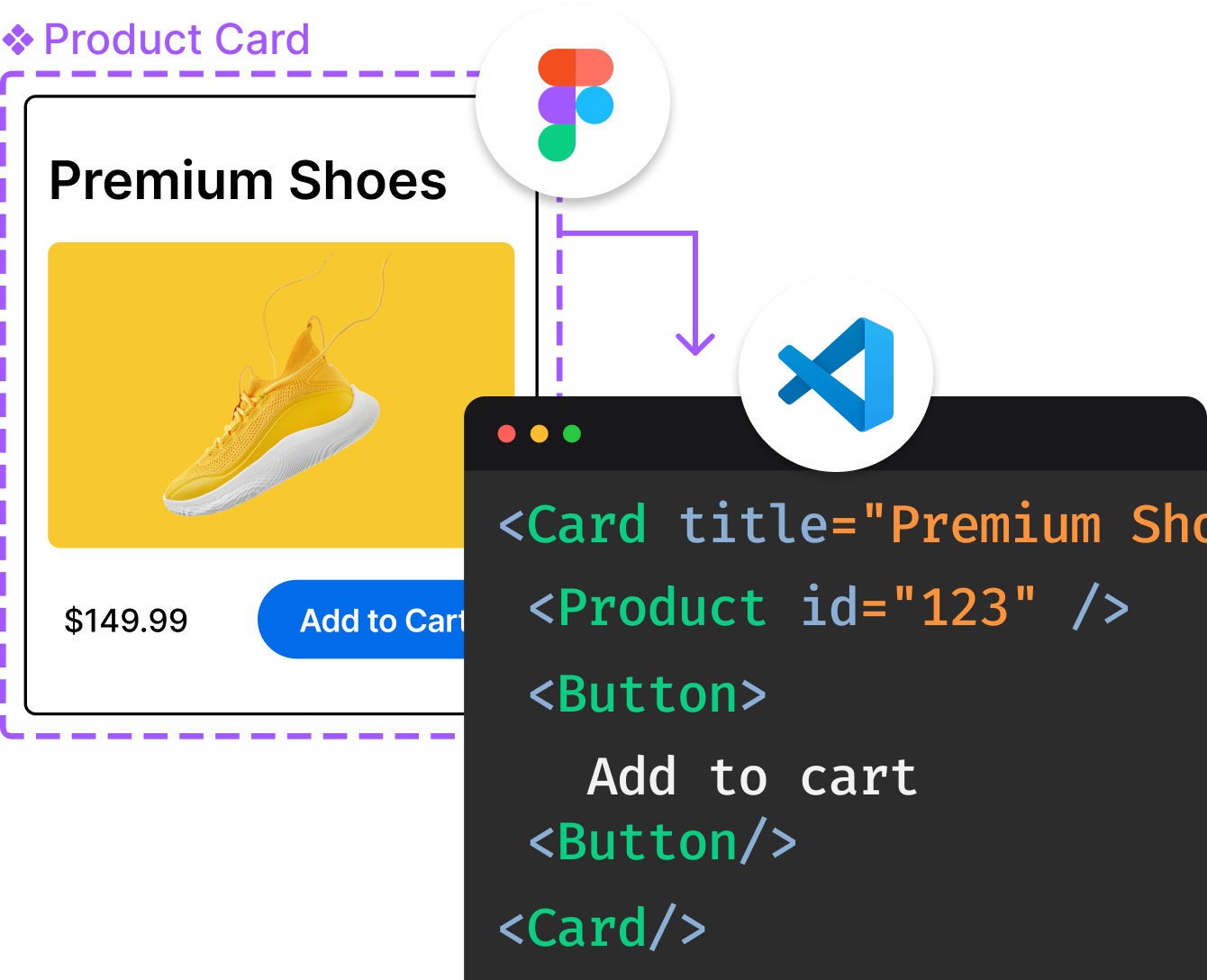
Introducing Visual Copilot: A new AI model to turn Figma designs to high quality code using your components.
Try Visual CopilotREADME








Async-friendly WebRTC implementation in Rust
Sponsored with ð by
Gold Sponsors:
Silver Sponsors:


Bronze Sponsors:
AdrianEddy
Overview
WebRTC.rs is an async-friendly WebRTC implementation in Rust, originally inspired by and largely rewriting the Pion stack. The v0.20.x line is a clean, ergonomic, runtime-agnostic rewrite on top of a Sans-I/O core; as of v0.20.0-rc.1 it ships with Tokio and smol runtime backends, with async-std and embassy on the roadmap.
Architecture:
- rtc: Sans-I/O protocol core with complete WebRTC stack (95%+ W3C API compliance)
- webrtc (this crate): a thin async layer over
rtc:PeerConnectionâ the user-facing async API handle; all operations (create offers/answers, add tracks, create data channels) areasyncPeerConnectionDriverâ an internal background event loop, spawned automatically, that owns the sockets, drives the Sans-I/Ortccore, handles timeouts, and dispatches eventsRuntimeâ a trait abstracting timers, task spawning, and sockets, so the crate is runtime-agnostic
ð Learn more: Read our architecture blog post for design details and roadmap.
ð¨ v0.17.x â v0.20.0: the Sans-I/O rewrite (Release Candidate)
v0.20.0-rc.1 is the first release candidate of the new Sans-I/O, runtime-agnostic architecture. It supersedes the
Tokio-coupled v0.17.x line, which is now in bug-fix-only maintenance.
Current Status
v0.17.x: Receives bug fixes only (no new features). The mature choice for Tokio-based production applications today.v0.20.0-rc.1(master): The new architecture, published as a pre-release. As a release candidate, no further API changes are expected unless critical issues are found (see Semantic Versioning). Recommended for early adopters and new projects that want the runtime-agnostic, Sans-I/O design.
What v0.20.0 delivers
The rewrite resolves the core pain points of v0.17.x â callback hell and Arc explosion, resource leaks in
callbacks, and tight Tokio coupling:
â Runtime independence
- Runtime-agnostic via a Quinn-style
Runtimeabstraction (timers, task spawning, sockets) - Feature flags:
runtime-tokio(default) andruntime-smol; additional runtimes (async-std, embassy) are on the roadmap behind the same abstraction
â Clean event handling
- Trait-based event handlers using native
async fn in trait - No more callback
Arccloning orBox::new(move |...| Box::pin(async move { ... })) - Centralized state management with
&mut self
â Sans-I/O foundation
- Protocol logic completely separate from I/O (via the rtc core)
- Deterministic testing without real network I/O
- A thin async driver (
PeerConnectionhandle + backgroundPeerConnectionDriver) over the core
How to Provide Feedback
We welcome your input while v0.20.0 stabilizes:
- Review the architecture blog post
- Join discussions on GitHub Issues
- Chat with us on Discord
Production today: use the v0.17.x branch.
Early adopters / new projects: try v0.20.0-rc.1 and report issues!
Building and Testing
# Update rtc submodule first
git submodule update --init --recursive

# Build the library
cargo build

# Run tests
cargo test

# Build documentation
cargo doc --open

# Run examples
cargo run --example data-channels
Semantic Versioning
This project follows Semantic Versioning:
- Patch (
0.x.Y): Bug fixes and internal improvements with no public API changes. - Minor (
0.X.0): Backwards-compatible additions or deprecations to the public API. - Major (
X.0.0): Breaking changes to the public API.
While the version is 0.x, the minor version acts as the major â i.e., a minor bump may include breaking changes. Once
1.0.0 is released, full semver stability guarantees apply.
Pre-release versions are published with the following suffixes, in order of increasing stability:
-alpha.N: Early preview. API is unstable and may change significantly.-beta.N: Feature-complete for the release. API may still have minor changes.-rc.N: Release candidate. No further API changes are expected unless critical issues are found.
For example: 1.0.0-alpha.1 â 1.0.0-beta.1 â 1.0.0-rc.1 â 1.0.0.
Open Source License
Dual licensing under both MIT and Apache-2.0 is the currently accepted standard by the Rust language community and has been used for both the compiler and many public libraries since ( see https://doc.rust-lang.org/1.6.0/complement-project-faq.html#why-dual-mitasl2-license). In order to match the community standards, webrtc-rs is using the dual MIT+Apache-2.0 license.
Contributing
Contributors or Pull Requests are Welcome!!!
Top Related Projects
Pure Go implementation of the WebRTC API
Janus WebRTC Server
Jitsi Meet - Secure, Simple and Scalable Video Conferences that you use as a standalone app or embed in your web application.
📡 Simple WebRTC video, voice, and data channels
Simple peer-to-peer with WebRTC.
Convert designs to code with AI
Introducing Visual Copilot: A new AI model to turn Figma designs to high quality code using your components.
Try Visual Copilot