
Top Related Projects

Empowering everyone to build reliable and efficient software.

The Go programming language

Simple, fast, safe, compiled language for developing maintainable software. Compiles itself in <1s with zero library dependencies. Supports automatic C => V translation. https://vlang.io

The Crystal Programming Language

Nim is a statically typed compiled systems programming language. It combines successful concepts from mature languages like Python, Ada and Modula. Its design focuses on efficiency, expressiveness, and elegance (in that order of priority).

The Kotlin Programming Language.
Quick Overview
Zig is a general-purpose programming language and toolchain for maintaining robust, optimal, and reusable software. It aims to be a better C, focusing on simplicity, performance, and safety. Zig provides low-level control with high-level abstractions and compile-time features.
Pros
- Simplicity and readability: Zig has a clean syntax and avoids hidden control flow
- Performance: Zig compiles to efficient machine code and provides fine-grained control over memory
- Cross-compilation: Easily compile for different target architectures and operating systems
- Powerful compile-time features: Supports compile-time code execution and metaprogramming
Cons
- Relatively new language: Ecosystem and community are still growing
- Learning curve: Some concepts may be unfamiliar to developers coming from other languages
- Limited IDE support: Tooling and editor integration are still developing
- Ongoing language evolution: Some features and APIs may change as the language matures
Code Examples
- Hello World:
const std = @import("std");

pub fn main() !void {
    std.debug.print("Hello, World!\n", .{});
}
- Error handling:
const std = @import("std");

fn divideNumbers(a: i32, b: i32) !i32 {
    if (b == 0) return error.DivisionByZero;
    return a / b;
}

pub fn main() !void {
    const result = try divideNumbers(10, 2);
    std.debug.print("Result: {}\n", .{result});
}
- Compile-time reflection:
const std = @import("std");

fn printTypeInfo(comptime T: type) void {
    const info = @typeInfo(T);
    std.debug.print("Type: {s}\n", .{@typeName(T)});
    std.debug.print("Size: {} bytes\n", .{@sizeOf(T)});
    std.debug.print("Alignment: {} bytes\n", .{@alignOf(T)});
}

pub fn main() void {
    printTypeInfo(i32);
}
Getting Started
- Install Zig: Download from https://ziglang.org/download/
- Create a new file
hello.zig:
const std = @import("std");

pub fn main() !void {
    std.debug.print("Hello, Zig!\n", .{});
}
- Compile and run:
zig run hello.zig
For more advanced usage, refer to the official Zig documentation at https://ziglang.org/documentation/master/.
Competitor Comparisons
Empowering everyone to build reliable and efficient software.
Pros of Rust
- More mature ecosystem with a larger community and extensive library support
- Advanced memory safety features without garbage collection
- Powerful type system and trait-based generics
Cons of Rust
- Steeper learning curve due to complex concepts like lifetimes and borrowing
- Longer compile times, especially for large projects
- More verbose syntax compared to Zig's simplicity
Code Comparison
Rust:
fn main() {
    let numbers = vec![1, 2, 3, 4, 5];
    let sum: i32 = numbers.iter().sum();
    println!("Sum: {}", sum);
}
Zig:
const std = @import("std");

pub fn main() !void {
    const numbers = [_]i32{ 1, 2, 3, 4, 5 };
    var sum: i32 = 0;
    for (numbers) |num| {
        sum += num;
    }
    std.debug.print("Sum: {}\n", .{sum});
}
Summary
Both Rust and Zig are systems programming languages aimed at providing safety and performance. Rust offers a more established ecosystem and advanced features, but comes with a steeper learning curve. Zig focuses on simplicity and ease of use, making it potentially more approachable for beginners. The choice between the two depends on project requirements, team expertise, and desired language features.
The Go programming language
Pros of Go
- Mature ecosystem with extensive libraries and tools
- Strong support for concurrency with goroutines and channels
- Faster compilation times for large projects
Cons of Go
- Less control over memory management
- More verbose syntax in some cases
- Limited generics support (though improving)
Code Comparison
Go:
package main

import "fmt"

func main() {
    fmt.Println("Hello, World!")
}
Zig:
const std = @import("std");

pub fn main() void {
    std.debug.print("Hello, World!\n", .{});
}
Summary
Go offers a mature ecosystem and excellent concurrency support, making it well-suited for large-scale projects and web services. Zig, while newer, provides more fine-grained control over memory and a simpler syntax. Go's compilation speed is generally faster for large projects, but Zig aims to improve in this area. Both languages prioritize simplicity and readability, but Zig offers more low-level control. The choice between them depends on project requirements, team expertise, and specific performance needs.
Simple, fast, safe, compiled language for developing maintainable software. Compiles itself in <1s with zero library dependencies. Supports automatic C => V translation. https://vlang.io
Pros of V
- Simpler syntax and faster compilation times
- Built-in package management and module system
- Automatic memory management without garbage collection
Cons of V
- Smaller community and ecosystem compared to Zig
- Less mature and stable, with more frequent breaking changes
- Limited support for low-level system programming
Code Comparison
V:
fn main() {
    println('Hello, World!')
}
Zig:
pub fn main() void {
    std.debug.print("Hello, World!\n", .{});
}
Summary
V aims for simplicity and ease of use, with a focus on rapid development and safety. It offers a more approachable syntax and built-in features like package management. However, it lacks the maturity and low-level control that Zig provides.
Zig, on the other hand, emphasizes low-level control and performance, making it more suitable for systems programming and embedded development. It has a larger community and ecosystem, but comes with a steeper learning curve.
Both languages have their strengths and are designed for different use cases. V is better suited for application development, while Zig excels in systems programming and performance-critical scenarios.
The Crystal Programming Language
Pros of Crystal
- Ruby-like syntax, making it easier for Ruby developers to transition
- Built-in type inference, reducing the need for explicit type annotations
- Macros for metaprogramming, enabling powerful code generation
Cons of Crystal
- Smaller community and ecosystem compared to Zig
- Longer compilation times, especially for large projects
- Less focus on low-level control and systems programming
Code Comparison
Crystal:
def fibonacci(n)
  return n if n <= 1
  fibonacci(n - 1) + fibonacci(n - 2)
end

puts fibonacci(10)
Zig:
fn fibonacci(n: u64) u64 {
    if (n <= 1) return n;
    return fibonacci(n - 1) + fibonacci(n - 2);
}

pub fn main() void {
    std.debug.print("{}\n", .{fibonacci(10)});
}
Key Differences
- Crystal aims for Ruby-like simplicity, while Zig focuses on low-level control
- Crystal uses garbage collection, whereas Zig provides manual memory management
- Zig offers better cross-compilation and supports more platforms
- Crystal has more expressive metaprogramming capabilities
- Zig emphasizes compile-time execution and safety checks
Both languages aim to provide performance and safety, but Zig leans more towards systems programming, while Crystal targets a balance between productivity and performance.
Nim is a statically typed compiled systems programming language. It combines successful concepts from mature languages like Python, Ada and Modula. Its design focuses on efficiency, expressiveness, and elegance (in that order of priority).
Pros of Nim
- More mature and established language with a larger ecosystem
- Supports multiple programming paradigms (imperative, OOP, functional)
- Easier learning curve for developers coming from Python or JavaScript
Cons of Nim
- Slower compilation times compared to Zig
- Less focus on low-level control and systems programming
- Garbage collection by default, which may not be ideal for some use cases
Code Comparison
Nim:
proc fibonacci(n: int): int =
  if n < 2:
    result = n
  else:
    result = fibonacci(n - 1) + fibonacci(n - 2)

echo fibonacci(10)
Zig:
fn fibonacci(n: u64) u64 {
    if (n < 2) return n;
    return fibonacci(n - 1) + fibonacci(n - 2);
}

pub fn main() void {
    std.debug.print("{}\n", .{fibonacci(10)});
}
Both Nim and Zig aim to be modern, efficient programming languages, but they have different focuses. Nim emphasizes productivity and readability, while Zig prioritizes low-level control and performance. Nim's syntax is more familiar to Python developers, whereas Zig's syntax is closer to C. Zig offers better memory safety guarantees without garbage collection, making it more suitable for systems programming. Nim, on the other hand, provides more flexibility in terms of programming paradigms and may be easier to adopt for general-purpose programming tasks.
The Kotlin Programming Language.
Pros of Kotlin
- More mature ecosystem with extensive libraries and frameworks
- Seamless interoperability with Java, allowing gradual adoption
- Concise syntax and powerful features like null safety and coroutines
Cons of Kotlin
- Slower compilation times compared to Zig's fast compilation
- Larger runtime overhead due to JVM dependency
- Less control over low-level system resources
Code Comparison
Kotlin:
fun main() {
    val numbers = listOf(1, 2, 3, 4, 5)
    val doubled = numbers.map { it * 2 }
    println(doubled)
}
Zig:
const std = @import("std");

pub fn main() !void {
    const numbers = [_]i32{ 1, 2, 3, 4, 5 };
    var doubled = try std.ArrayList(i32).initCapacity(std.heap.page_allocator, numbers.len);
    defer doubled.deinit();
    for (numbers) |num| {
        try doubled.append(num * 2);
    }
    std.debug.print("{any}\n", .{doubled.items});
}
The Kotlin example showcases its concise syntax and functional programming features, while the Zig example demonstrates manual memory management and explicit error handling.
Convert  designs to code with AI
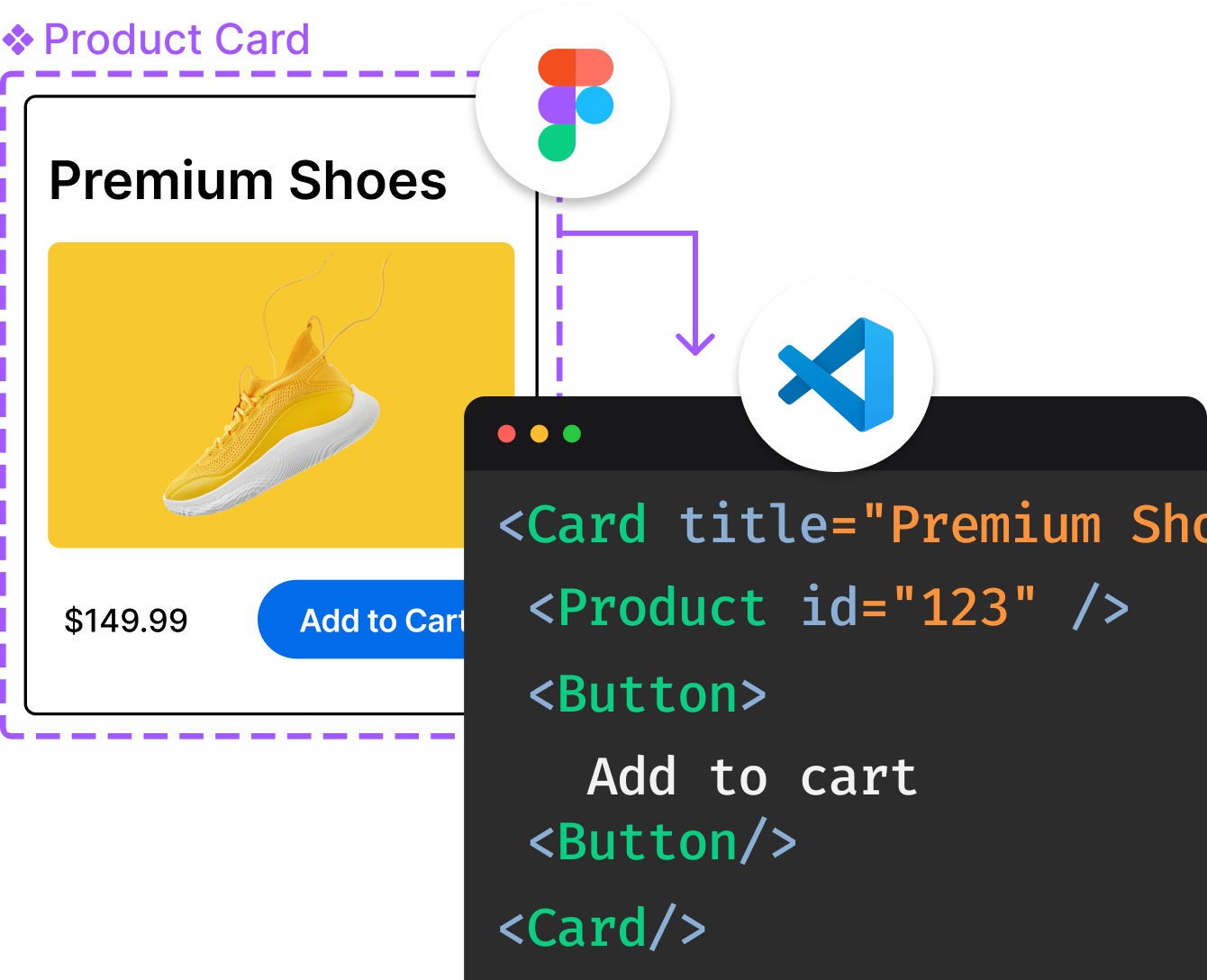
Introducing Visual Copilot: A new AI model to turn Figma designs to high quality code using your components.
Try Visual CopilotREADME
This repository is not mirrored.
Top Related Projects
Empowering everyone to build reliable and efficient software.
The Go programming language
Simple, fast, safe, compiled language for developing maintainable software. Compiles itself in <1s with zero library dependencies. Supports automatic C => V translation. https://vlang.io
The Crystal Programming Language
Nim is a statically typed compiled systems programming language. It combines successful concepts from mature languages like Python, Ada and Modula. Its design focuses on efficiency, expressiveness, and elegance (in that order of priority).
The Kotlin Programming Language.
Convert designs to code with AI
Introducing Visual Copilot: A new AI model to turn Figma designs to high quality code using your components.
Try Visual Copilot