
Top Related Projects

Go implementation of the Ethereum protocol
Ethereum implementation on the efficiency frontier

(deprecated) The fast, light, and robust client for the Ethereum mainnet.

An enterprise-grade Java-based, Apache 2.0 licensed Ethereum client https://github.com/besu-eth/besu/wiki

Go implementation of Ethereum proof of stake

🌟 Ethereum Consensus client for the Zig and TypeScript ecosystem
Quick Overview
Erigon is an implementation of Ethereum (execution client) written in Go. It is designed to be a more efficient and faster alternative to other Ethereum clients, with a focus on optimizing storage and improving synchronization speed.
Pros
- Significantly faster synchronization compared to traditional Ethereum clients
- Reduced storage requirements through optimized data structures
- Improved performance for RPC calls and state access
- Modular architecture allowing for easier customization and extension
Cons
- Relatively newer project compared to more established Ethereum clients
- May have fewer third-party integrations and tools compared to other clients
- Potential for compatibility issues with some Ethereum tools or services
- Steeper learning curve for users familiar with traditional Ethereum clients
Getting Started
To get started with Erigon, follow these steps:
- Install Go (version 1.18 or later)
- Clone the Erigon repository:
git clone https://github.com/ledgerwatch/erigon.git - Build Erigon:
cd erigon make erigon - Run Erigon:
./build/bin/erigon
For more detailed instructions and configuration options, refer to the official Erigon documentation.
Competitor Comparisons
Go implementation of the Ethereum protocol
Pros of go-ethereum
- Widely adopted and battle-tested implementation
- Extensive documentation and community support
- Regular updates and maintenance from the Ethereum Foundation
Cons of go-ethereum
- Higher resource requirements for full node operation
- Slower synchronization speed compared to Erigon
- Less efficient storage utilization
Code Comparison
go-ethereum:
func (bc *BlockChain) insertChain(chain types.Blocks, verifySeals bool) (int, error) {
    n, err := bc.engine.InsertChain(bc, chain)
    if err != nil {
        return n, err
    }
    return n, nil
}
Erigon:
func (bc *BlockChain) InsertChain(chain types.Blocks) (int, error) {
    return bc.insertChain(chain)
}

func (bc *BlockChain) insertChain(chain types.Blocks) (int, error) {
    return bc.engine.InsertChain(bc, chain)
}
The code comparison shows that Erigon's implementation is more streamlined, potentially leading to improved performance. However, both projects aim to achieve similar functionality in terms of block insertion.
Ethereum implementation on the efficiency frontier
Pros of Erigon
- Faster synchronization and lower disk space usage
- Improved performance for JSON-RPC calls
- More efficient state storage and retrieval
Cons of Erigon
- Potentially less stable due to ongoing development
- May have fewer features compared to established clients
- Requires more resources during initial sync
Code Comparison
Erigon:
func (s *StageState) Update(db kv.RwTx, stage SyncStage, blockNum uint64) error {
    k := stagesToKeys[stage]
    return db.Put(kv.SyncStageProgress, k, dbutils.EncodeBlockNumber(blockNum))
}
Erigon>:
func (s *StageState) Update(db kv.RwTx, stage SyncStage, blockNum uint64) error {
    k := stagesToKeys[stage]
    return db.Put(kv.SyncStageProgress, k, dbutils.EncodeBlockNumber(blockNum))
}
In this case, the code appears to be identical between the two repositories. This suggests that Erigon> may be a fork or continuation of the original Erigon project, maintaining similar core functionality while potentially introducing new features or optimizations elsewhere in the codebase.
(deprecated) The fast, light, and robust client for the Ethereum mainnet.
Pros of OpenEthereum
- More established project with longer history in the Ethereum ecosystem
- Supports multiple consensus algorithms (PoW, PoA, AuRa)
- Extensive documentation and community support
Cons of OpenEthereum
- Development has been discontinued, with no active maintenance
- Slower sync times and higher resource requirements compared to Erigon
- Limited pruning capabilities, leading to larger storage needs
Code Comparison
OpenEthereum (Rust):
pub fn execute_block(&mut self, block: &Block) -> Result<(), Error> {
    let parent = self.chain.block_header(block.header.parent_hash())?;
    let block_author = self.engine.machine().author(&block.header)?;
    self.engine.verify_block_family(&block.header, &parent)?;
    self.engine.verify_block_external(&block.header)?;
    // ... (additional execution logic)
}
Erigon (Go):
func (bc *BlockChain) insertChain(chain types.Blocks, verifySeals bool) (int, error) {
    n, events, logs, err := bc.insertChain1(chain, verifySeals)
    bc.PostChainEvents(events, logs)
    return n, err
}
The code snippets showcase different approaches to block execution and chain insertion, reflecting the distinct architectures and design philosophies of the two projects.
An enterprise-grade Java-based, Apache 2.0 licensed Ethereum client https://github.com/besu-eth/besu/wiki
Error generating comparison
Go implementation of Ethereum proof of stake
Pros of Prysm
- Designed specifically for Ethereum 2.0 consensus layer, optimized for proof-of-stake
- Extensive documentation and active community support
- Built-in monitoring and metrics tools for easier node management
Cons of Prysm
- Larger resource requirements compared to Erigon
- Slower initial sync time for new nodes
- Less efficient storage utilization
Code Comparison
Prysm (Go):
func (s *Service) Start() {
    s.running.Store(true)
    s.waitForChainStart()
    s.waitForSync()
    s.runNotifier()
}
Erigon (Go):
func (s *Sync) Start() error {
    s.wg.Add(1)
    go s.loop()
    return nil
}
Both projects use Go, but Prysm's code tends to be more verbose and feature-rich, while Erigon's code is often more concise and focused on performance optimization. Prysm's codebase is tailored for the Ethereum 2.0 consensus layer, whereas Erigon is designed as a high-performance Ethereum execution client with a focus on efficiency and scalability.
🌟 Ethereum Consensus client for the Zig and TypeScript ecosystem
Pros of Lodestar
- Written in TypeScript, offering better type safety and easier integration with web-based applications
- Modular architecture allows for easier customization and extension of functionality
- Actively maintained with frequent updates and improvements
Cons of Lodestar
- Generally slower performance compared to Erigon's optimized implementation
- Less mature and battle-tested in production environments
- Smaller community and ecosystem support
Code Comparison
Lodestar (TypeScript):
export async function initializeBeaconState(
  genesisValidatorRoot: Root,
  genesisTime: UintNum64,
  eth1BlockHash: Bytes32,
  eth1Timestamp: UintNum64,
  deposits: phase0.Deposit[]
): Promise<CachedBeaconStateAllForks> {
  // Implementation details
}
Erigon (Go):
func (s *StageState) UnwindTo(unwindPoint uint64, tx kv.RwTx, cfg StageUnwindCfg) error {
    // Implementation details
}
The code snippets showcase the language differences (TypeScript vs. Go) and highlight the different approaches to implementing Ethereum client functionality. Lodestar's TypeScript code focuses on beacon chain initialization, while Erigon's Go code deals with state management and unwinding.
Convert  designs to code with AI
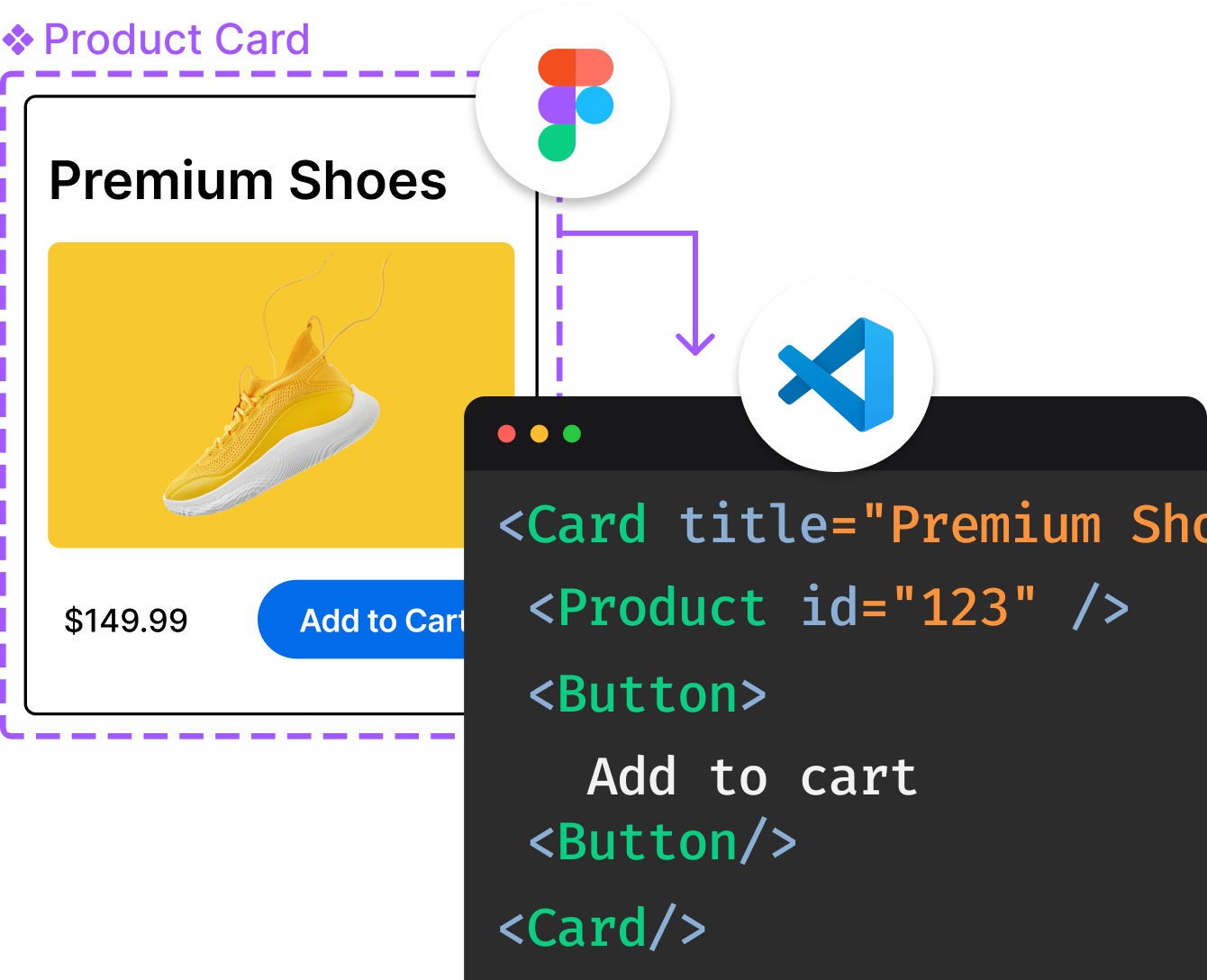
Introducing Visual Copilot: A new AI model to turn Figma designs to high quality code using your components.
Try Visual CopilotREADME
CI Guidelines
Workflow triggers
Each workflow should serve a distinct purpose with a distinct trigger pattern. Avoid duplicating workflows that fire on the same events â merge them instead.
Trigger ladder (fastest feedback to most comprehensive):
| Stage | Trigger | Suitable for |
|---|---|---|
| All commits | push to main/release/**, pull_request on ready_for_review/synchronize | Lint, build, fast unit tests |
| Merge queue | merge_group | Full test suite, race tests, integration tests |
| Scheduled | schedule | Flaky-test discovery, regression detection, QA |
Run tests that developers can reproduce locally as late as possible â ideally only in the merge queue. This avoids burning runner time on every push and concentrates deterministic blocking checks at the point where they matter most.
All workflows should include workflow_dispatch so they can be triggered manually
without code changes. For workflows with inputs (e.g. QA), use dispatch inputs instead
of separate workflow files.
Draft PRs
If a job uses if: ${{ !github.event.pull_request.draft }} to skip on draft PRs, the
workflow must include ready_for_review in its pull_request event types:
on:
  pull_request:
    types:
      - opened
      - reopened
      - synchronize
      - ready_for_review
Without ready_for_review, converting a draft PR to ready-for-review fires an event
the workflow doesn't subscribe to, so the job never runs â the PR appears to have
skipped CI until the next push.
CI gate and workflow_call
All PR and merge-queue checks run through .github/workflows/ci-gate.yml. It calls
each sub-workflow via uses: (reusable workflow call) rather than inlining the job
definitions. This avoids duplicating job definitions that also appear in standalone
push/schedule runs.
Use workflow_call: on a workflow (and call it from ci-gate) when the workflow has
other triggers besides PRs â push to main, schedule, etc. â so there is one
source of truth for the job definition.
Only inline job definitions directly into ci-gate if the workflow is exclusively PR-gated with no other triggers, since there is then no duplication concern.
Workflows called by ci-gate must not have pull_request: triggers â ci-gate owns
PR coverage and a pull_request: trigger would cause every job to run twice.
ci-gate has a workflow-level concurrency: group that cancels the entire previous
run (all sub-workflow jobs) when a new PR push or merge_group event arrives. Sub-
workflows called via workflow_call must not define their own job-level
concurrency: for this purpose â github.workflow and github.job resolve to
the caller's values (or empty) in a workflow_call context, which causes collisions
that cancel sibling jobs within the same run.
Required checks and path filters
Required checks must always report a status or they block the PR indefinitely.
Do not use workflow-level paths/paths-ignore on workflows with required checks.
Instead, use a step-level filter (e.g. dorny/paths-filter) so the job always runs and
can report "skipped" rather than going missing.
Runtime goals
| Run type | Target |
|---|---|
| Cached (source unchanged) | < 5 minutes |
| Cold / no cache | ⤠30 minutes |
If a job regularly exceeds 30 minutes cold, fix the underlying cause â don't just raise the timeout:
- Split large packages into smaller ones so Go's test cache works at finer granularity.
- Break a single large job into parallel jobs.
- Move slow tests to the merge queue so they don't block developer iteration.
PRs that make tests significantly slower should include workflow changes to compensate.
Go test caching
Go's test cache keys each package result by the compiled test binary hash plus the
mtime/size of every file the test opens at runtime. A single file with a wrong mtime
invalidates the cache for the entire package.
Fixture mtimes
Main repo fixtures â run git restore-mtime over testdata paths so each file's
mtime equals the commit that last modified it. This is deterministic and
content-sensitive.
Submodule fixtures â shallow clones (--depth 1) don't have enough history for
git restore-mtime. Instead, set every file's mtime to the submodule's HEAD commit
timestamp. All files in a submodule share the same mtime, which is stable as long as
the pinned commit doesn't change.
Directory mtimes â normalize all directories to a fixed epoch (e.g.
200902132331.30). Git doesn't track directory mtimes, so without this step they
reflect checkout time, which varies between runs.
Keeping packages small
Go caches test results at the package level. A package with hundreds of test cases that reads many fixture files will miss the cache if any fixture changes. Splitting it into sub-packages (one per fixture set) means unrelated fixtures don't cause unnecessary re-runs.
This is also why the execution/tests/ package is broken into focused sub-packages
rather than one monolithic package.
Cache warming and GitHub's cache isolation rules
GitHub Actions caches are scoped by branch. A workflow run can restore caches from:
- Its own branch â caches saved by earlier runs on the same branch.
- The base branch (
main) â caches saved by any workflow run onmain.
It cannot access caches from other PRs or other branches.
The cold-start problem â If a workflow only triggers on pull_request, it never
runs on main and therefore never populates the base-branch cache. Every new PR
opens to a cold cache, even if the codebase hasn't changed at all. Subsequent pushes
to the same PR do find each other's caches, but only until the GitHub-hosted cache
is evicted (repos share a 10 GB limit; busy repos evict older entries within hours).
The fix â add push: {branches: [main, release/**]} as a trigger. After each
merge, a run warms the build and module caches on main. All future PR first-pushes
restore from that warm base-branch cache instead of starting cold.
Cache warming without test validation â For workflows where correctness is already enforced by the merge queue, the push-to-main run exists purely for cache warming. To prevent benchmark or test flakiness from showing as failures on main commits, use compile-only steps on non-PR events:
- name: Run benchmarks
  if: github.event_name == 'pull_request'
  run: make test-bench

- name: Build test binaries (cache warming)
  if: github.event_name != 'pull_request'
  run: go test -run=^$ ./...
go test -run=^$ compiles every test binary (identical GOCACHE entries to a full
run) but executes nothing. The job always succeeds, and the commit on main shows
green. If a benchmark were broken post-merge it would have been caught by the PR or
merge queue run before landing.
Merge queues â merge_group runs use a temporary synthetic branch
(refs/heads/gh-readonly-queue/main/pr-N-SHA). They can read from the base-branch
(main) cache, so they benefit from the warm cache created by the push trigger.
However, caches saved during a merge-group run are stored under that temporary
branch and become inaccessible once the merge group completes â they do not
contribute to the main cache. Only the push-triggered run after the merge creates
a durable base-branch cache.
Implication for workflow design: any workflow that should benefit from caching
across PRs and merge queue runs needs a push trigger on main (or a nightly
schedule on main). Without it, each PR and each merge-queue batch is always a cold
start.
Required checks
Required checks exist to block regressions, not to enforce perfection.
- Don't add a required check for a test that is already flaky. Quarantine flaky tests first (skip them, move them to a scheduled run, or fix them), then make the check required.
- Checks must not be time-sensitive. A test that passed yesterday on the same code should pass today. Non-deterministic failures (timing, network, external state) must not be required.
- Required checks should run on
pull_requestormerge_group, never only onpushtomain. Checking after merge is too late â it creates a brokenmainthat blocks everyone else.
Flaky tests
Flaky tests should be discovered on scheduled runs that repeat the test suite, not tolerated silently in required checks. When a flaky test is identified:
- Skip or quarantine it so it no longer blocks PRs.
- File a bug and fix it separately.
- Re-enable it as a required check once it is stable.
Memory- and disk-intensive tests
Some test packages allocate large databases or hold many files open simultaneously. Running too many of them in parallel can exhaust RAM or IOPS and cause OOM kills or spurious timeouts.
Use -p to limit the number of packages tested in parallel (default: GOMAXPROCS),
and -parallel to limit concurrency within a single package (default: GOMAXPROCS):
# At most 2 packages at a time, at most 4 subtests in parallel within each
go test -p 2 -parallel 4 ./...
These flags can be passed via GO_FLAGS in the Makefile:
make test-all GO_FLAGS="-p 2 -parallel 4"
Consider setting tighter defaults in the workflow matrix for jobs that are known to be memory- or disk-heavy, rather than working around pressure by adjusting unrelated constraints like timeouts or GC tuning.
Checking benchmarks
The purpose of make test-bench in CI is to verify that benchmarks compile and
execute at least one iteration â not to produce meaningful performance numbers.
Why benchmarks are slow by default
Many benchmarks are sized for profiling or comparison work: a single iteration can
take minutes. Go's benchmark runner will execute exactly 1 iteration in that case
(-benchtime=1x), so the ns/op figure is meaningless and the run just wastes
time.
The fix is to keep benchmark iteration work small enough to be loopable, and use
testing.Short() to trim parameter sweeps when all we need is a smoke test:
if testing.Short() {
    totalSteps = 10        // instead of 200+
    keyCount = 10_000      // instead of 1_000_000
}
make test-bench passes -short so these guards are active in CI.
Why you cannot parallelize across packages
go test forces benchmark packages to run serially regardless of the -p flag.
The serialization is enforced at the action-graph level in cmd/go when -bench is
set â each package run is added as a dependency of the previous one. Passing
-p N only affects compilation parallelism, not execution order.
The only way to reduce make test-bench wall time is to reduce the work done per
benchmark iteration, which is why right-sizing benchmarks (via testing.Short()) is
the correct approach rather than parallelizing the runner.
Local reproducibility
Every CI job should have a local equivalent so developers can pre-check before pushing.
If you're changing code in execution/, you should be able to run the corresponding
test group locally (make test-group TEST_GROUP=execution-tests) and get the same
result as CI.
CI workflows should use the same Makefile targets that developers use locally (e.g.
make test-group, make lint) rather than inline shell commands. This keeps CI and
local test runs as similar as possible, reducing "works locally but fails in CI"
surprises.
Tests that can be reproduced locally should preferably only block in the merge queue, not on every PR push â this avoids burning runner time on checks developers can run themselves.
Debugging
Re-run with debug logging:
gh run rerun <run-id> --debug
Or in the UI: "Re-run jobs" â enable "Debug logging".
Raw logs include per-line timestamps useful for profiling slow steps:
gh run view <run-id> --log
Top Related Projects
Go implementation of the Ethereum protocol
Ethereum implementation on the efficiency frontier
(deprecated) The fast, light, and robust client for the Ethereum mainnet.
An enterprise-grade Java-based, Apache 2.0 licensed Ethereum client https://github.com/besu-eth/besu/wiki
Go implementation of Ethereum proof of stake
🌟 Ethereum Consensus client for the Zig and TypeScript ecosystem
Convert designs to code with AI
Introducing Visual Copilot: A new AI model to turn Figma designs to high quality code using your components.
Try Visual Copilot