 czkawka
Multi functional app to find duplicates, empty folders, similar images etc.
Top Related Projects

ripgrep recursively searches directories for a regex pattern while respecting your gitignore

A simple, fast and user-friendly alternative to 'find'
Disk Usage/Free Utility - a better 'df' alternative

A more intuitive version of du in rust

The next gen ls command

Fast disk usage analyzer with console interface written in Go
Quick Overview
Czkawka is an open-source, multi-functional app designed to find and remove unnecessary files from your computer. It offers various tools to detect duplicate files, empty directories, similar images, and more, helping users clean up their storage and organize their data efficiently.
Pros
- Comprehensive set of tools for file management and cleanup
- Cross-platform support (Windows, macOS, Linux)
- User-friendly GUI and CLI options
- Actively maintained and regularly updated
Cons
- May require some technical knowledge for advanced features
- Performance can be slower on very large file systems
- Limited integration with cloud storage services
- Some features may be overwhelming for casual users
Getting Started
To get started with Czkawka:
- Download the latest release from the GitHub releases page.
- Extract the downloaded archive.
- Run the executable file:
- On Windows: Double-click the
.exefile. - On macOS: Open the
.appfile. - On Linux: Run the binary file from the terminal or create a desktop shortcut.
- On Windows: Double-click the
For CLI usage, open a terminal and navigate to the extracted directory, then run:
./czkawka_cli --help
This will display available commands and options for the CLI version.
To use the GUI version, simply run the executable without any arguments:
./czkawka_gui
For more detailed instructions and advanced usage, refer to the official documentation.
Competitor Comparisons
ripgrep recursively searches directories for a regex pattern while respecting your gitignore
Pros of ripgrep
- Faster search performance, especially for large codebases
- More advanced regex support and search options
- Better integration with command-line tools and workflows
Cons of ripgrep
- Limited to text-based file searching
- Lacks GUI, which may be less user-friendly for some users
- Doesn't offer file deduplication or other disk space management features
Code comparison
ripgrep:
pub fn search<R: io::Read>(mut rdr: R) -> io::Result<()> {
    let mut buf = [0; 8 * (1<<10)];
    loop {
        let n = rdr.read(&mut buf)?;
        if n == 0 { break; }
        // Process buffer contents
    }
    Ok(())
}
Czkawka:
pub fn find_duplicates(
    directories: &[String],
    recursive: bool,
    excluded_directories: &[String],
    minimal_file_size: u64,
) -> Vec<Vec<FileEntry>> {
    // Implementation for finding duplicate files
}
While both projects are written in Rust, they serve different purposes. ripgrep focuses on efficient text searching, while Czkawka offers a broader set of file management tools, including duplicate file detection and disk space analysis. ripgrep excels in performance and command-line integration, whereas Czkawka provides a more user-friendly GUI and diverse file management features.
A simple, fast and user-friendly alternative to 'find'
Pros of fd
- Written in Rust, offering high performance and memory safety
- Simpler syntax and more user-friendly than traditional
findcommand - Supports colored output and parallel command execution
Cons of fd
- Limited to file and directory search functionality
- Lacks advanced features like duplicate file detection or disk space analysis
- May not be as comprehensive for system-wide file management tasks
Code Comparison
fd:
let walker = WalkBuilder::new(root)
    .hidden(false)
    .ignore(false)
    .git_ignore(use_gitignore)
    .build();
Czkawka:
let mut directories: Vec<PathBuf> = Vec::new();
for dir in &directories_included {
    directories.push(PathBuf::from(dir));
}
Key Differences
- fd focuses on fast and user-friendly file searching
- Czkawka offers a wider range of file management tools, including duplicate detection and disk space analysis
- fd is primarily a command-line tool, while Czkawka provides both CLI and GUI interfaces
- Czkawka has more extensive configuration options for various file management tasks
- fd is more lightweight and specialized, while Czkawka is a more comprehensive file management suite
Both projects are open-source and written in Rust, leveraging the language's performance benefits. While fd excels at quick file searches, Czkawka provides a broader set of file management utilities for users needing more advanced features.
Disk Usage/Free Utility - a better 'df' alternative
Pros of duf
- Focused on disk usage visualization, providing a clean and intuitive interface
- Supports colorized output for better readability
- Lightweight and fast, with minimal system resource usage
Cons of duf
- Limited functionality compared to Czkawka's broader feature set
- Lacks file management capabilities like duplicate detection and removal
- Only available as a command-line tool, without a graphical user interface
Code Comparison
duf (Go):
func (m *Mount) Usage() (*UsageStat, error) {
    stat := syscall.Statfs_t{}
    err := syscall.Statfs(m.Mountpoint, &stat)
    if err != nil {
        return nil, err
    }
    // ... (calculation logic)
}
Czkawka (Rust):
pub fn get_disk_usage(path: &Path) -> Result<DiskUsage, String> {
    match fs2::available_space(path) {
        Ok(available) => {
            let total = fs2::total_space(path)?;
            Ok(DiskUsage { available, total })
        }
        Err(e) => Err(e.to_string()),
    }
}
While both projects deal with disk-related operations, duf focuses specifically on disk usage visualization, whereas Czkawka offers a broader range of file management features. duf provides a more specialized tool for disk usage analysis, while Czkawka aims to be a comprehensive file management utility.
A more intuitive version of du in rust
Pros of dust
- Written in Rust, offering high performance and memory safety
- Provides a simple and intuitive command-line interface
- Lightweight and focused solely on disk usage analysis
Cons of dust
- Limited functionality compared to Czkawka's broader feature set
- Less customization options for sorting and filtering results
- No graphical user interface, which may be less accessible for some users
Code comparison
dust:
pub fn get_dir_size(path: &Path) -> Result<u64, Error> {
    let mut size = 0;
    for entry in WalkDir::new(path).min_depth(1).into_iter().filter_map(|e| e.ok()) {
        size += entry.metadata()?.len();
    }
    Ok(size)
}
Czkawka:
pub fn get_dir_size(dir: &Path) -> u64 {
    WalkDir::new(dir)
        .into_iter()
        .filter_map(|e| e.ok())
        .filter(|e| e.file_type().is_file())
        .map(|e| e.metadata().map(|m| m.len()).unwrap_or(0))
        .sum()
}
Both projects use similar approaches for calculating directory sizes, utilizing the walkdir crate to traverse directories efficiently. Czkawka's implementation is more concise, using functional programming constructs like filter_map and sum. dust's version is more explicit, using a mutable size variable and a for loop.
The next gen ls command
Pros of lsd
- Focused on enhancing the
lscommand with color coding and icons - Lightweight and fast for directory listing operations
- Cross-platform support (Linux, macOS, Windows)
Cons of lsd
- Limited functionality compared to Czkawka's file management features
- Doesn't provide file deduplication or cleanup capabilities
- Less suitable for large-scale file organization tasks
Code Comparison
lsd (main.rs):
fn main() -> io::Result<()> {
    let flags = Flags::parse();
    let mut stdout = StandardStream::stdout(ColorChoice::Auto);
    let config = Config::from_flags(&flags)?;
    let output = Core::new(config).run()?;
    display::print(&mut stdout, &output, &flags)
}
Czkawka (main.rs):
fn main() {
    let gui_running = Arc::new(AtomicBool::new(false));
    let arguments = Arguments::parse();
    match arguments.command {
        Some(Commands::Gui) => start_gui(gui_running),
        Some(Commands::Cli { command }) => start_cli(command),
        None => println!("No command specified. Use --help for more information."),
    }
}
The code comparison shows that lsd focuses on directory listing and output formatting, while Czkawka offers a more complex structure with GUI and CLI options for file management tasks.
Fast disk usage analyzer with console interface written in Go
Pros of gdu
- Written in Go, potentially offering better performance for disk usage analysis
- Provides a terminal user interface (TUI) for easier navigation and visualization
- Supports multiple platforms including Linux, macOS, and Windows
Cons of gdu
- Focused solely on disk usage analysis, lacking additional file management features
- May require more system resources compared to lightweight command-line tools
Code Comparison
gdu (Go):
func (a *App) analyzeDir(dir string, parent *File) (*File, error) {
    f, err := os.Open(dir)
    if err != nil {
        return nil, err
    }
    defer f.Close()
    // ... (additional code)
}
Czkawka (Rust):
pub fn find_duplicates(
    directories: &[PathBuf],
    recursive_search: bool,
    excluded_directories: &[PathBuf],
    minimal_file_size: u64,
    maximal_file_size: u64,
    ignore_hard_links: bool,
) -> Vec<Vec<FileEntry>> {
    // ... (implementation details)
}
Summary
While gdu focuses on disk usage analysis with a user-friendly TUI, Czkawka offers a broader range of file management features. gdu may provide better performance for its specific task, but Czkawka's versatility makes it suitable for various file-related operations. The choice between the two depends on the user's specific needs and preferences.
Convert  designs to code with AI
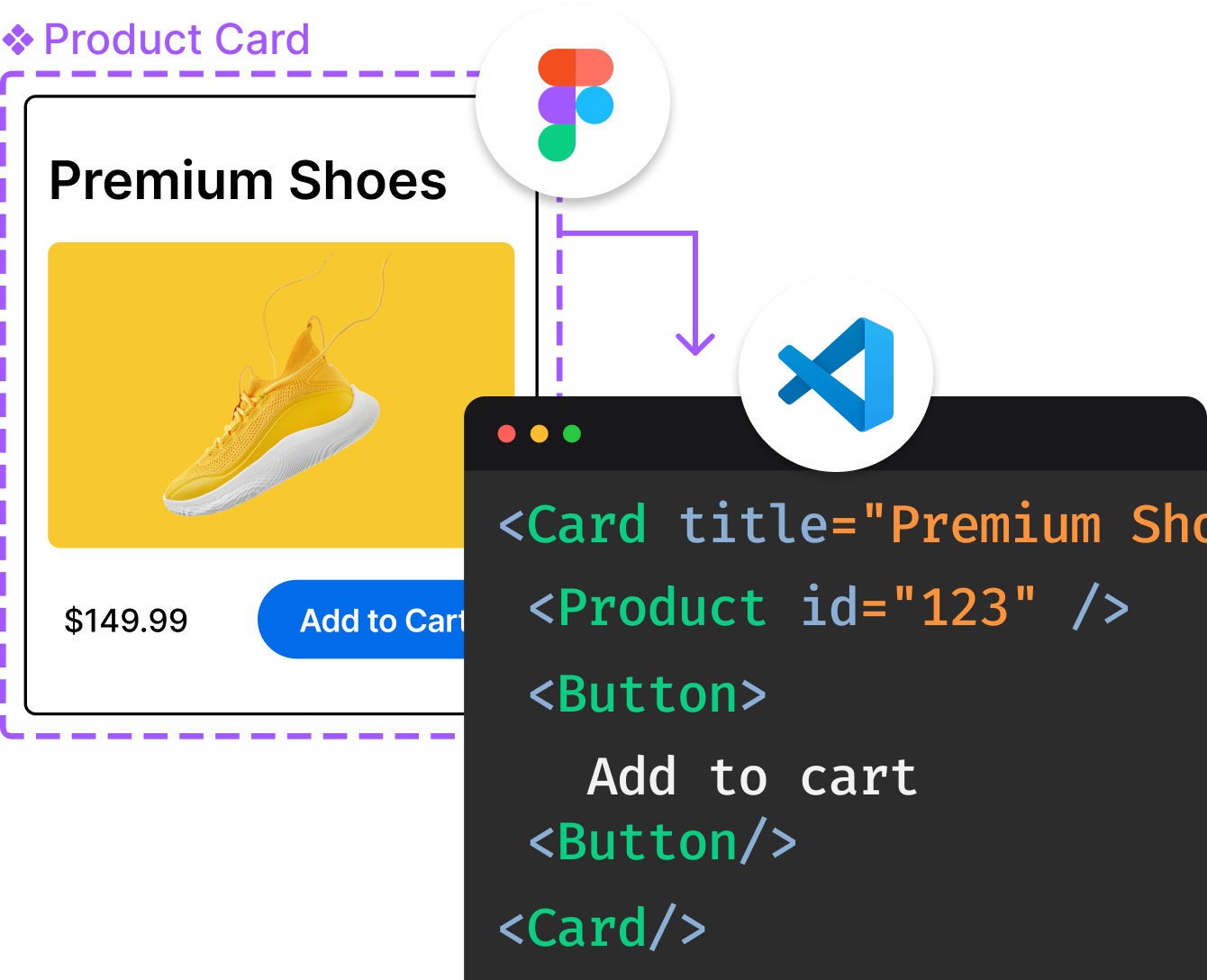
Introducing Visual Copilot: A new AI model to turn Figma designs to high quality code using your components.
Try Visual CopilotREADME
Krokiet ((IPA: [ËkrÉcÉt]), "croquette" in Polish) new generation GUI frontend, simple, multiplatform, fast and free app to remove unnecessary files from your computer.

Czkawka (tchâ¢kavâ¢ka (IPA: [ËʧÌkafka]), "hiccup" in Polish) older gtk4 GUI frontend, superseded by Krokiet. Version 12.0 is the last released version - no new binaries will be provided. New users and existing users are encouraged to switch to Krokiet.
Cedinia - Android touch friendly GUI frontend for Czkawka Core, built with Slint.
Features
- Written in memory-safe Rust - almost 100% unsafe code free
- Amazingly fast - due multithreading and efficient algorithms
- Free, Open Source without any ads
- Multiplatform - runs on Linux, Windows, macOS, FreeBSD, x86, ARM, RISC-V and even Android
- Cache support - second and further scans should be much faster than the first one
- Easy to run, easy to compile - minimal runtime and build dependencies, portable version available
- CLI frontend - for easy automation
- GUI frontend - uses Slint or GTK 4 frameworks
- Core library - allows to reuse functionality in other apps
- Android app - touch-friendly frontend for Android devices
- No spying - Czkawka does not have access to the Internet, nor does it collect any user information or statistics
- Multilingual - support multiple languages like Polish, English or Italian
- Multiple tools to use:
- Duplicates - Finds duplicates based on file name, size or hash
- Empty Folders - Finds empty folders with the help of an advanced algorithm
- Big Files - Finds the provided number of the biggest files in given location
- Empty Files - Looks for empty files across the drive
- Temporary Files - Finds temporary files
- Similar Images - Finds images which are not exactly the same (different resolution, watermarks)
- Similar Videos - Looks for visually similar videos
- Same Music - Searches for similar music by tags or by reading content and comparing it
- Invalid Symbolic Links - Shows symbolic links which point to non-existent files/directories
- Broken Files - Finds files that are invalid or corrupted
- Bad Extensions - Lists files whose content not match with their extension
- Exif Remover - Removes Exif metadata from various file types
- Video Optimizer - Crops from static parts and converts videos to more efficient formats
- Bad Names - Finds files with names that may be not wanted (e.g., containing special characters)
Changelog about each version can be found in CHANGELOG.md.
New releases can be found in Github releases and nightly builds also in Nightly releases
You can read more about the 12.0 release, its new features, and the issues that were fixed in the following articles:
- English article - https://medium.com/@qarmin/krokiet-czkawka-12-0-6fa09c43c3b9
- Polish article - https://medium.com/@qarmin/krokiet-czkawka-12-0-c5dad2116793
Usage, installation, compilation, requirements, license
Each tool uses different technologies, so you can find instructions for each of them in the appropriate file:
Comparison to other tools
In this comparison remember, that even if app have same features they may work different(e.g. one app may have more options to choose than other).
| Krokiet | Czkawka | Cedinia | FSlint | DupeGuru | Bleachbit | |
|---|---|---|---|---|---|---|
| Language | Rust | Rust | Rust | Python | Python/Obj-C | Python |
| Framework base language | Rust | C | Rust | C | C/C++/Obj-C/Swift | C |
| Framework | Slint | GTK 4 | Slint | PyGTK2 | Qt 5 (PyQt)/Cocoa | PyGTK3 |
| OS | Lin,Mac,Win | Lin,Mac,Win | Android | Lin | Lin,Mac,Win | Lin,Mac,Win |
| Duplicate finder | â | â | â | â | â | |
| Empty files | â | â | â | â | ||
| Empty folders | â | â | â | â | ||
| Temporary files | â | â | â | â | â | |
| Big files | â | â | â | |||
| Similar images | â | â | â | â | ||
| Similar videos(audio) | â | â | â | |||
| Similar videos(frames) | â | â | ||||
| Music duplicates(tags) | â | â | â | â | ||
| Music duplicates(content) | â | â | â | |||
| Invalid symlinks | â | â | â | |||
| Broken files | â | â | â | |||
| Invalid names/extensions | â | â | â | â | ||
| Exif cleaner | â | â | ||||
| Video optimizer | â | |||||
| Bad Names | â | â | ||||
| Names conflict | â | |||||
| Installed packages | â | |||||
| Bad ID | â | |||||
| Non stripped binaries | â | |||||
| Redundant whitespace | â | |||||
| Overwriting files | â | â | ||||
| Portable version | â | â | â | |||
| Multiple languages | â | â | â | â | â | â |
| Cache support | â | â | â | â | ||
| In active development | Yes | No** | Yes*** | No | No* | Yes |
* Few small commits added recently and last version released in 2023
** Czkawka GTK 12.0 was the last released version - no new binaries will be provided
*** Cedinia is an android app, video tools are not available due missing ffmpeg in Android
Other apps
There are many similar applications to Czkawka on the Internet, which do some things better and some things worse:
GUI
- DupeGuru - Many options to customize
- FSlint - A little outdated, but still have some tools not available in Czkawka
- AntiDupl.NET - Shows a lot of metadata of compared images
- Video Duplicate Finder - Finds similar videos(surprising, isn't it)
CLI
Due to limited time, the biggest emphasis is on the GUI version so if you are looking for really good and feature-packed console apps, then take a look at these:
- Fclones - One of the fastest tools to find duplicates; it is written also in Rust
- Rmlint - Nice console interface and also is feature packed
- RdFind - Fast, but written in C++ ¯\_(ã)_/¯
Projects using Czkawka
Czkawka exposes its common functionality through a crate called czkawka_core, which can be reused by other projects.
It is written in Rust and is used by all Czkawka frontends (czkawka_gui, czkawka_cli, krokiet, cedinia).
It is also used by external projects, such as:
- Czkawka Tauri - https://github.com/shixinhuang99/czkawka-tauri - A Tauri-based GUI frontend for Czkawka.
- page-dewarp - https://github.com/lmmx/page-dewarp - A library for dewarping document images using a cubic sheet model.
Bindings are also available for:
- Python - https://pypi.org/project/czkawka/
Some projects work as wrappers around czkawka_cli. Without directly depending on czkawka_core, they allow simple scanning and retrieving results in JSON format:
- Schluckauf - https://github.com/fadykuzman/schluckauf
Thanks
Big thanks to Pádraig Brady, creator of fantastic FSlint, because without his work I wouldn't create this tool.
Thanks also to all the people who contributed to the project in every possible way
Also, I really appreciate work of people that create crates on which Czkawka is based and for that I try to report bugs to make it even better.
How to help?
- Creating issues - Mainly related to bugs, oddly behaving functionality, etc. As you can see from the issue tracker, there are plenty of ideas for new features, but most of them are either difficult to implement or not aligned with the vision of the project, which evolves slightly over time.
- Creating pull requests - Bug fixes are of course very welcome. Regarding new features, it is best to consult with me before implementing them to confirm they align with the project vision. A POC implemented in Rust as external script/project would be useful, especially for more complex features, to ensure there are no technical limitations.
- Updating translations - The project uses the Crowdin platform, where translations can be created and updated. In the case of a new release and missing translations, I use machine translation, which is often inaccurate, so updating translations is highly appreciated.
- Creating packages for various platforms - Due to the difficulties related to adding and maintaining support for each new platform, such as learning package formats like deb or rpm, creating installers and packages, I decided to mainly focus on providing prebuilt binaries. However, having the project available in distribution repositories or in projects such as Chocolatey, Homebrew or Winget would be beneficial for users who prefer centralized repositories.
- Creating articles, videos, tutorials, etc. - Any material that helps people better understand this program and its capabilities is welcome.
- Recommending it to friends, family, coworkers, etc. - This is probably the simplest way to help the project become even more popular, which gives me motivation to continue developing the program. Here are a few example ways to naturally mention this program in a regular conversation:
S - Someone
Y - You
Situation 1:
- S - Hey Anon, I have a lot of junk on my disk, what should I do?
- Y - Download Krokiet/Czkawka. They are completely free and works on almost every system.
- S - Thanks man!
Situation 2:
- S - I am so thirsty...
- Y - Have you heard about Krokiet/Czkawka?
- S - Wait, what?
- Y - Krokiet and Czkawka, in case you did not know, let you clean unnecessary files from your disk. They are completely free...
- S - That is nice, but I am thirsty...
- Y - ...they work on Windows, Linux and macOS, and some people even port them to FreeBSD and Android...
AI Policy
The vast majority of the code in this project was written by me (qarmin) without using AI. However, as AI tools have improved and can significantly simplify development and reduce boilerplate, I see no reason to forbid their use. I have also added a AGENTS.md file to the repo to make it easier to provide AI tools with context about the projectâs style and code structure.
That said, every pull request, whether created with AI or not, must meet proper quality standards. The author must be able to clearly explain what the code does, without relying on AI for that explanation. I manually review every PR and test each change, so the risk of incorrect code slipping through is low. Still, to avoid wasting time, please refrain from submitting AI Slop PRs.
Officially Supported Projects
Only this repository, prebuild-binaries, projects on crates.io and flathub are directly maintained by me.
Czkawka does not have an official website, so do not trust any sites that claim to be the official one.
If you use packages from unofficial sources, make sure they are safe.
License
The entire code in this repository is licensed under the MIT license.
All images and audio files are licensed under the CC BY 4.0 license.
The Czkawka GTK GUI and CLI applications are licensed under the MIT license, while the Krokiet and Cedinia(due Slint license requirements) are licensed under the GPL-3.0-only license.
Donations
If you are using the app, I would appreciate a donation for its further development, which can be done here.
Top Related Projects
ripgrep recursively searches directories for a regex pattern while respecting your gitignore
A simple, fast and user-friendly alternative to 'find'
Disk Usage/Free Utility - a better 'df' alternative
A more intuitive version of du in rust
The next gen ls command
Fast disk usage analyzer with console interface written in Go
Convert designs to code with AI
Introducing Visual Copilot: A new AI model to turn Figma designs to high quality code using your components.
Try Visual Copilot