
Top Related Projects

:mag: Quick file search & app launcher for Windows with community-made plugins

A cross-platform launcher that simply works

Cross-Platform Keystroke Launcher
Quick Overview
EverythingToolbar is a Windows taskbar toolbar that integrates with the Everything search engine. It provides instant file and folder search capabilities directly from the Windows taskbar, offering a seamless and efficient way to find files on your computer.
Pros
- Fast and efficient file search directly from the taskbar
- Customizable appearance and search options
- Integrates well with the Windows interface
- Lightweight and resource-friendly
Cons
- Requires Everything search engine to be installed separately
- Limited to Windows operating system
- May require some initial setup and configuration
- Occasional compatibility issues with certain Windows updates
Getting Started
- Install Everything search engine from https://www.voidtools.com/
- Download the latest EverythingToolbar release from https://github.com/srwi/EverythingToolbar/releases
- Run the installer and follow the on-screen instructions
- Right-click on the taskbar, go to "Toolbars," and select "EverythingToolbar"
- Customize the toolbar settings by right-clicking on it and selecting "Settings"
Note: Ensure that you have the necessary permissions to install software on your system. Some antivirus software may flag the installer, but it is safe to use.
Competitor Comparisons
:mag: Quick file search & app launcher for Windows with community-made plugins
Pros of Flow.Launcher
- More versatile and feature-rich, offering a wide range of plugins and functionalities
- Customizable user interface with themes and appearance settings
- Supports multiple languages and has a larger community
Cons of Flow.Launcher
- Slower startup time and potentially higher resource usage
- May have a steeper learning curve due to its extensive features
- Less focused on file search compared to EverythingToolbar
Code Comparison
EverythingToolbar (C#):
public static string GetEverythingPath()
{
    return Path.Combine(Environment.GetFolderPath(Environment.SpecialFolder.ProgramFiles), "Everything", "Everything.exe");
}
Flow.Launcher (C#):
public static string GetDataDirectory()
{
    return Path.Combine(Environment.GetFolderPath(Environment.SpecialFolder.ApplicationData), "FlowLauncher");
}
Both projects use C# and have similar approaches to handling file paths. However, Flow.Launcher's codebase is more extensive and modular due to its plugin system and broader feature set.
A cross-platform launcher that simply works
Pros of Wox
- More versatile with a wide range of plugins for various functionalities
- Cross-platform support (Windows, macOS, Linux)
- Customizable appearance with themes
Cons of Wox
- Slower search performance compared to EverythingToolbar
- Requires more system resources
- Less seamless integration with Windows taskbar
Code Comparison
EverythingToolbar (C#):
public static class SearchManager
{
    public static void Search(string query)
    {
        Everything.Search(query);
    }
}
Wox (C#):
public class Main : IPlugin
{
    public List<Result> Query(Query query)
    {
        // Custom search logic here
    }
}
EverythingToolbar focuses on integrating with the Everything search engine, providing fast file searches directly from the Windows taskbar. It's lightweight and efficient but limited in scope.
Wox is a more comprehensive launcher with plugin support, offering a wider range of functionalities beyond file search. It's more customizable but may be slower for file searches compared to EverythingToolbar.
The code snippets show that EverythingToolbar directly uses the Everything search engine, while Wox allows for custom search implementations through its plugin system.
Cross-Platform Keystroke Launcher
Pros of ueli
- Cross-platform support (Windows, macOS, Linux)
- More extensive plugin system with user-created plugins
- Customizable UI themes and appearance
Cons of ueli
- Slower search performance for large file systems
- Higher resource usage due to Electron framework
- Less seamless integration with Windows Explorer
Code Comparison
EverythingToolbar (C#):
public static class Everything
{
    [DllImport("Everything64.dll", CharSet = CharSet.Unicode)]
    public static extern int Everything_SetSearch(string lpSearchString);
    // ...
}
ueli (TypeScript):
export class SearchEngine {
    public search(term: string): Promise<SearchResultItem[]> {
        // Implementation
    }
    // ...
}
EverythingToolbar leverages the Everything SDK for fast file searching, while ueli implements its own search engine in TypeScript. This difference contributes to the performance gap between the two projects when dealing with large file systems.
Both projects offer launcher-style functionality, but EverythingToolbar focuses on seamless Windows integration, while ueli prioritizes cross-platform compatibility and extensibility through plugins.
Convert  designs to code with AI

Introducing Visual Copilot: A new AI model to turn Figma designs to high quality code using your components.
Try Visual CopilotREADME
Read in other languages: English, ä¸æ
 EverythingToolbar




Instant file search integration for the Windows taskbar powered by Everything.
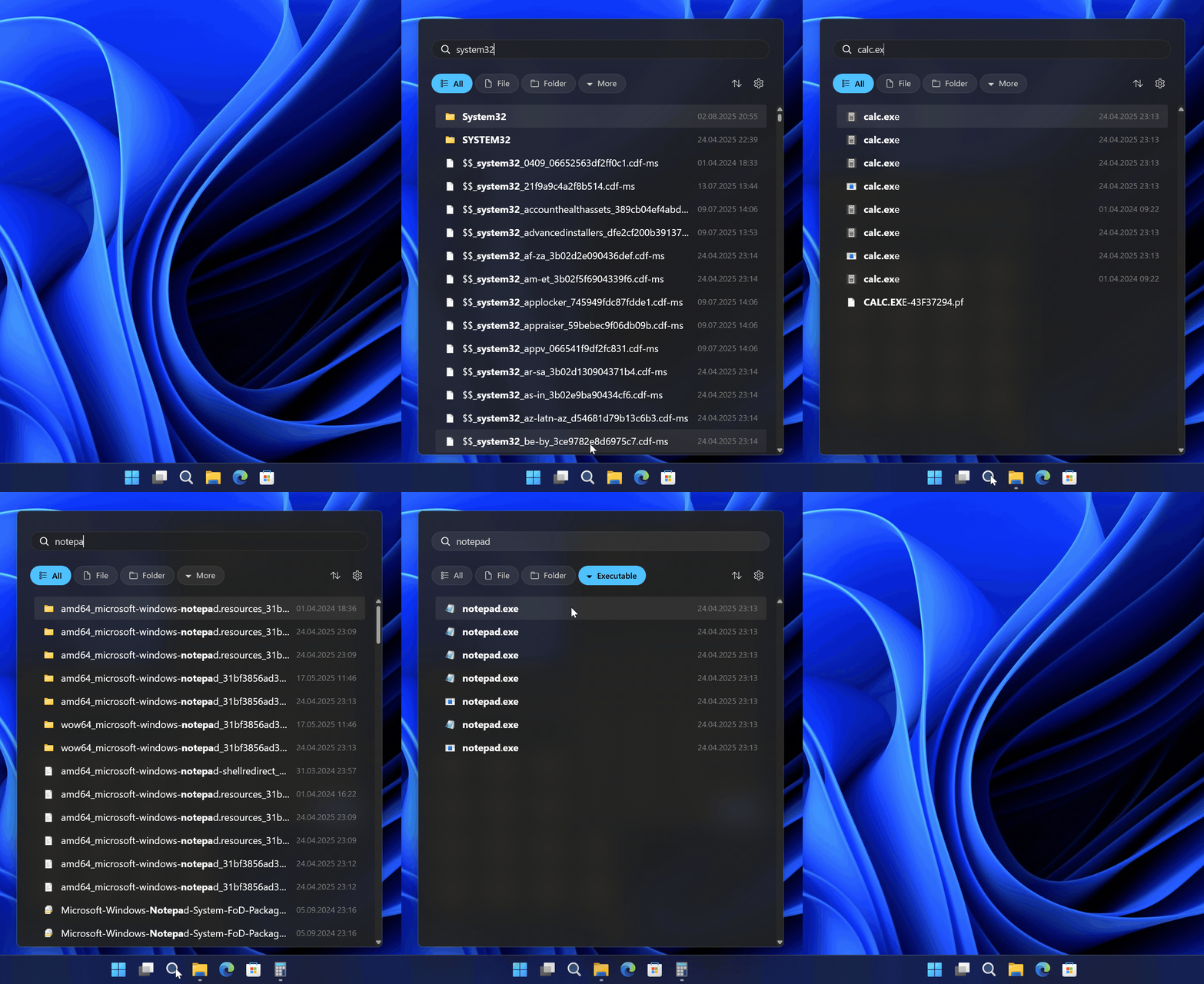
ð Features
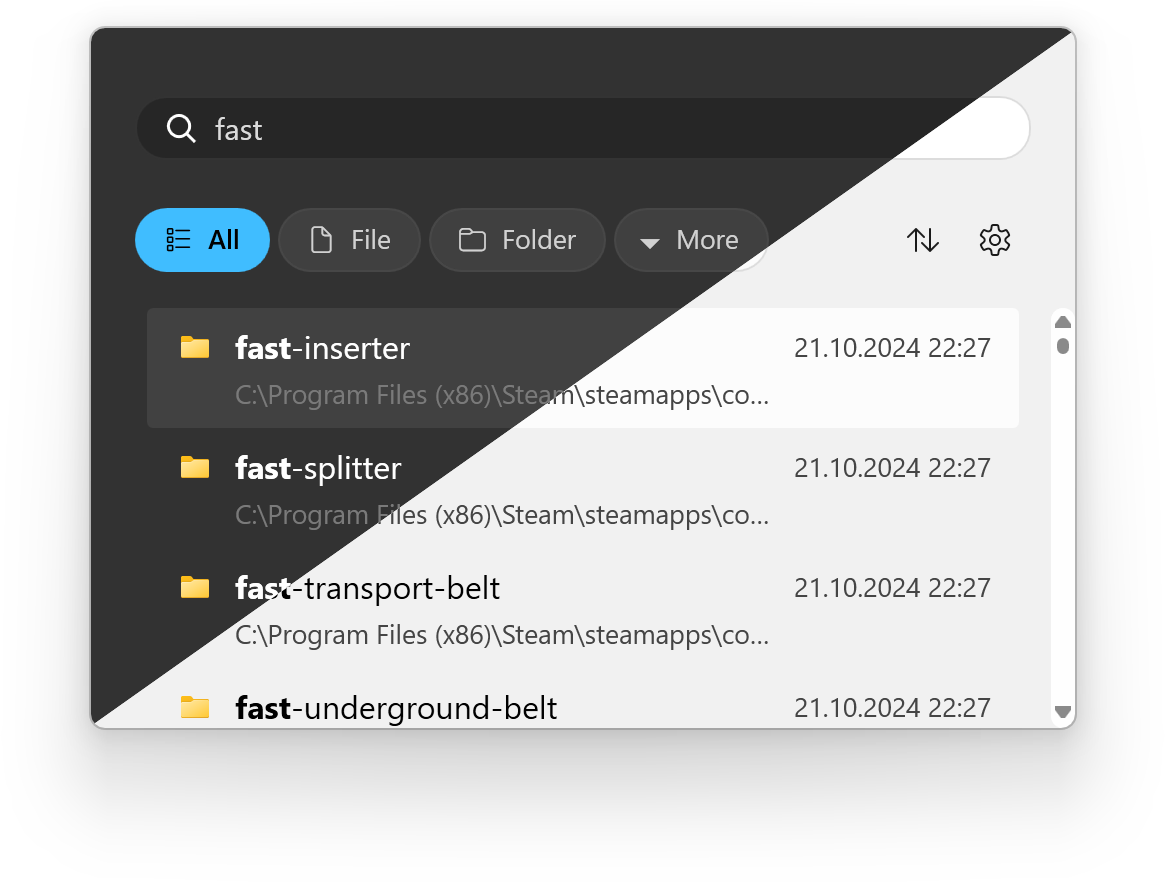
Light & Dark Themes
EverythingToolbar seamlessly blends into Windows 10 and 11, automatically adjusting to your system theme.
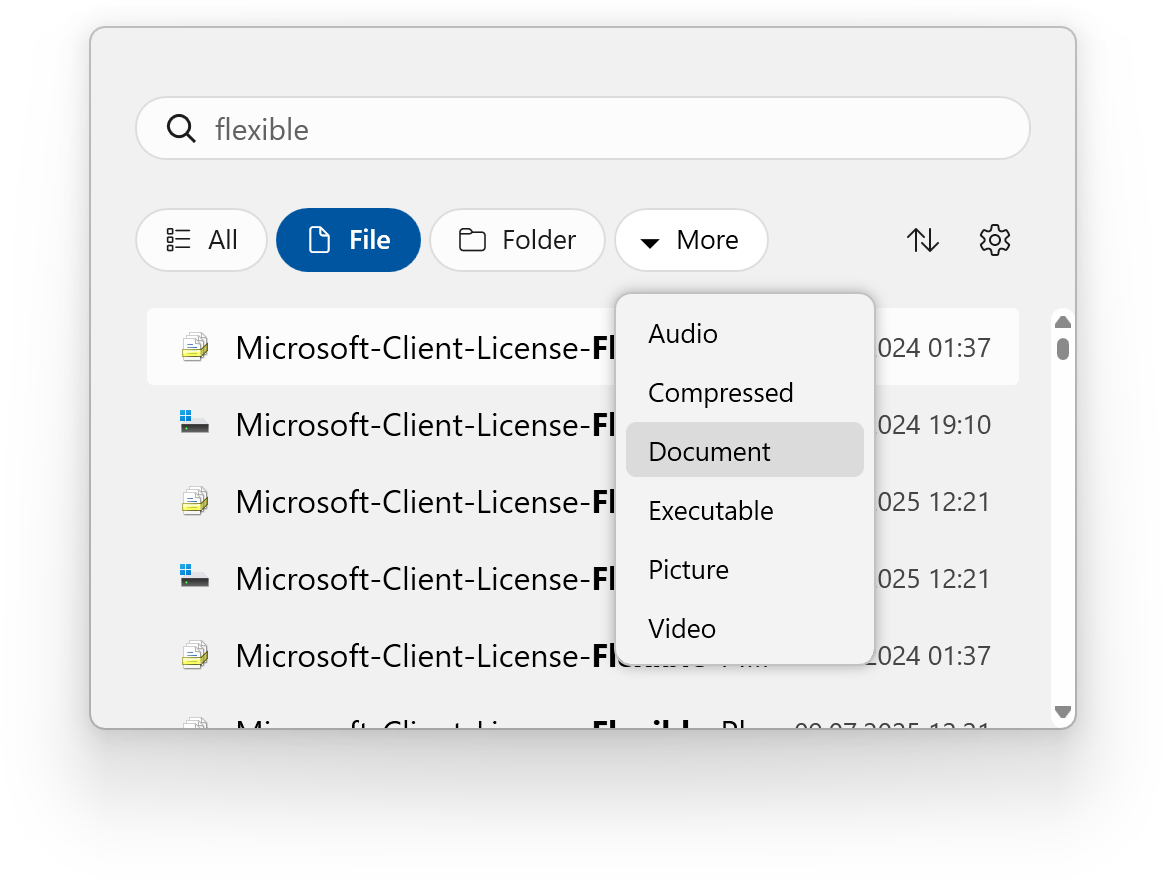
Custom Search Filters
EverythingToolbar includes common search filters out of the box. For advanced users, it can synchronize with Everything's custom filters, giving you complete control over your search experience. Enable this feature by checking Use Everything filters in the EverythingToolbar's Filters settings.
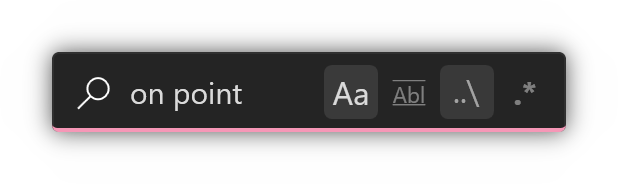
Quick Search Options
Easily toggle search flags (match case, whole word, match path, and regex) to find your files with precision.
RegEx-Powered File Actions
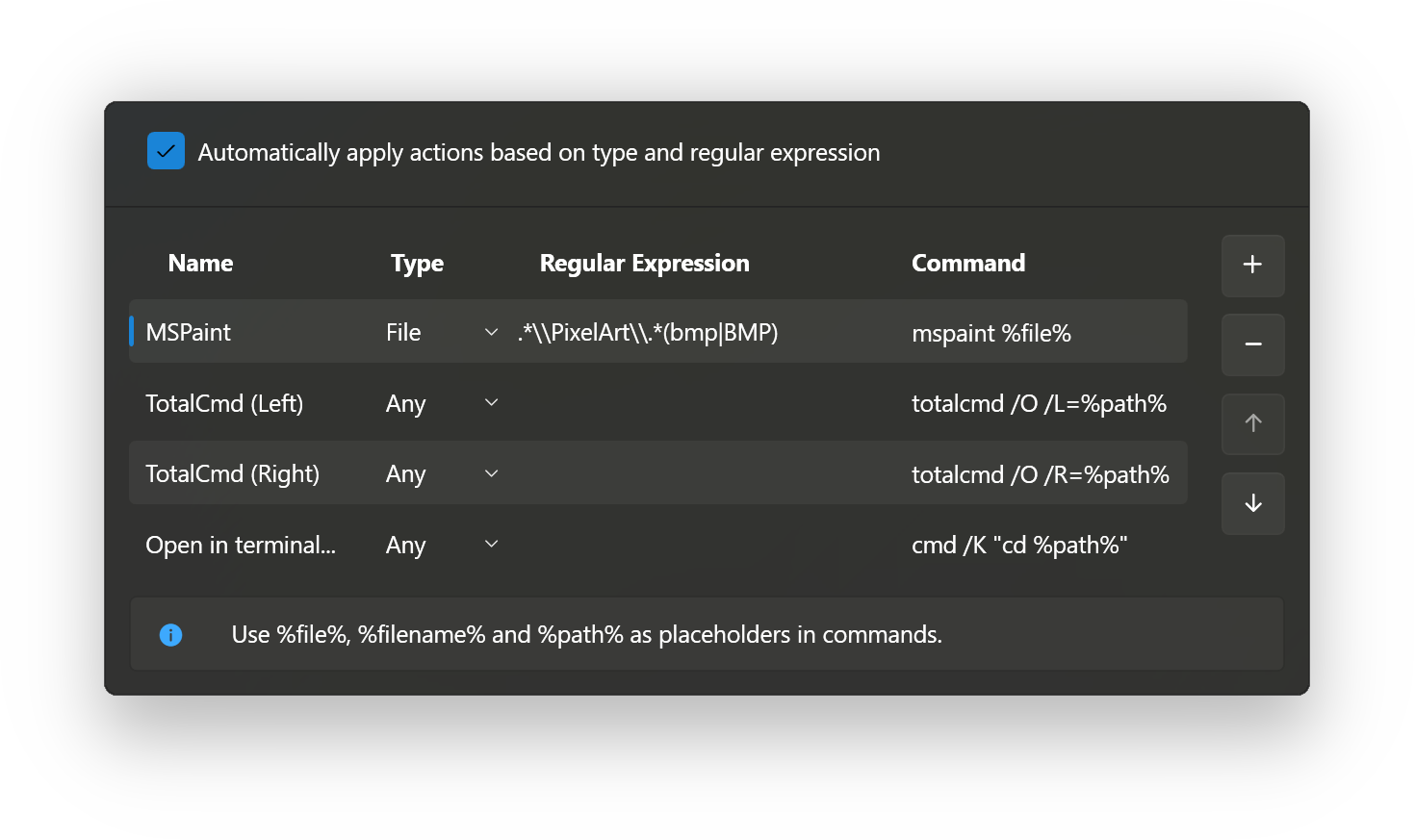
Create custom Open with actions by navigating to Settings â Custom actions. Enable Automatically apply rules based on condition to execute commands automatically based on file type and regular expressions. Leave the regex field empty to display the action only in the context menu.
Compatibility
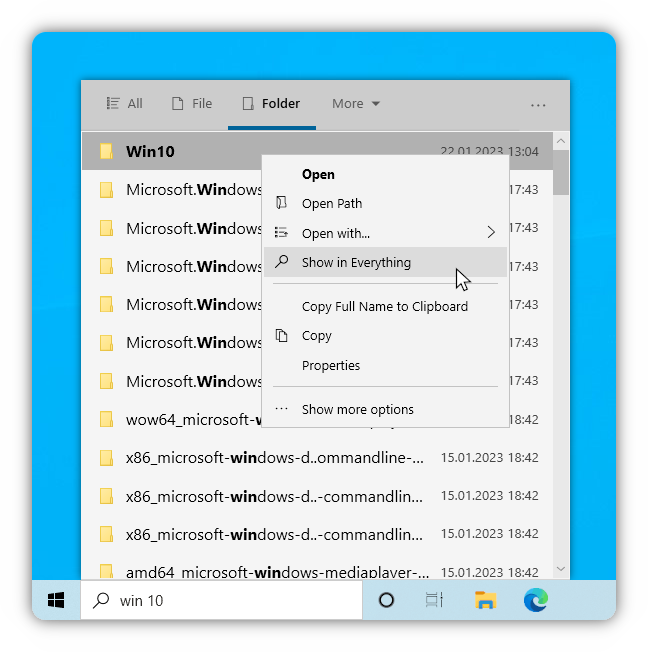
EverythingToolbar works seamlessly on Windows 10 and Windows 11, and integrates perfectly with tools like ExplorerPatcher and StartAllBack for full deskband support on Windows 11.
Additional Features
- Access EverythingToolbar instantly via customizable global shortcut
- Drag and drop files directly from search results
- Preview files with QuickLook or Seer integration
- Support for custom Everything instance names
Keyboard Shortcuts
| Shortcut | Function |
|---|---|
| â / â | Navigate search results |
| Ctrl + â / â | Navigate search history (if enabled) |
| Enter / Click | Open file or folder |
| Ctrl + Enter / Click | Open containing folder |
| Shift + Enter / Click | Open in Everything |
| Ctrl + Shift + C | Copy full path to clipboard |
| Alt + Enter / Click | Show file properties |
| Ctrl + Shift + Enter / Click | Run as administrator |
| Shift + Right Click | Open system context menu |
| (Shift +) Tab | Cycle through filters |
| Ctrl + 0-9 | Select filter by number |
| Space | Preview file in QuickLook |
| Win + Alt + S | Focus search box (customizable) |
ð¦ Installation
Prerequisites
- Windows 10 or Windows 11
- Everything ⥠1.4.1 installed and running
Note: The Lite version of Everything is not supported
Install EverythingToolbar
Choose one of the following installation methods:
- Installer: Download from GitHub Releases
- winget:
winget install srwi.everythingtoolbar.launcherorwinget install srwi.everythingtoolbar.deskband
âï¸ Setup
Launcher (Taskbar Icon)
Recommended for unmodified Windows 11 installations
After installation on Windows 11, the setup assistant will guide you through the configuration process.
If the setup assistant doesn't start automatically, search for EverythingToolbar in the Windows Start menu.
For Windows 10 users who prefer the search icon (not recommended), search for EverythingToolbar.Launcher.exe, start it manually and follow the setup process.
Deskband
Recommended for Windows 10 or when using ExplorerPatcher / StartAllBack
After installation on Windows 10:
- Right-click the taskbar and select EverythingToolbar from the Toolbars context menu
You may need to open the context menu twice for EverythingToolbar to appear
- Unlock the taskbar to adjust size and position (demonstration video)
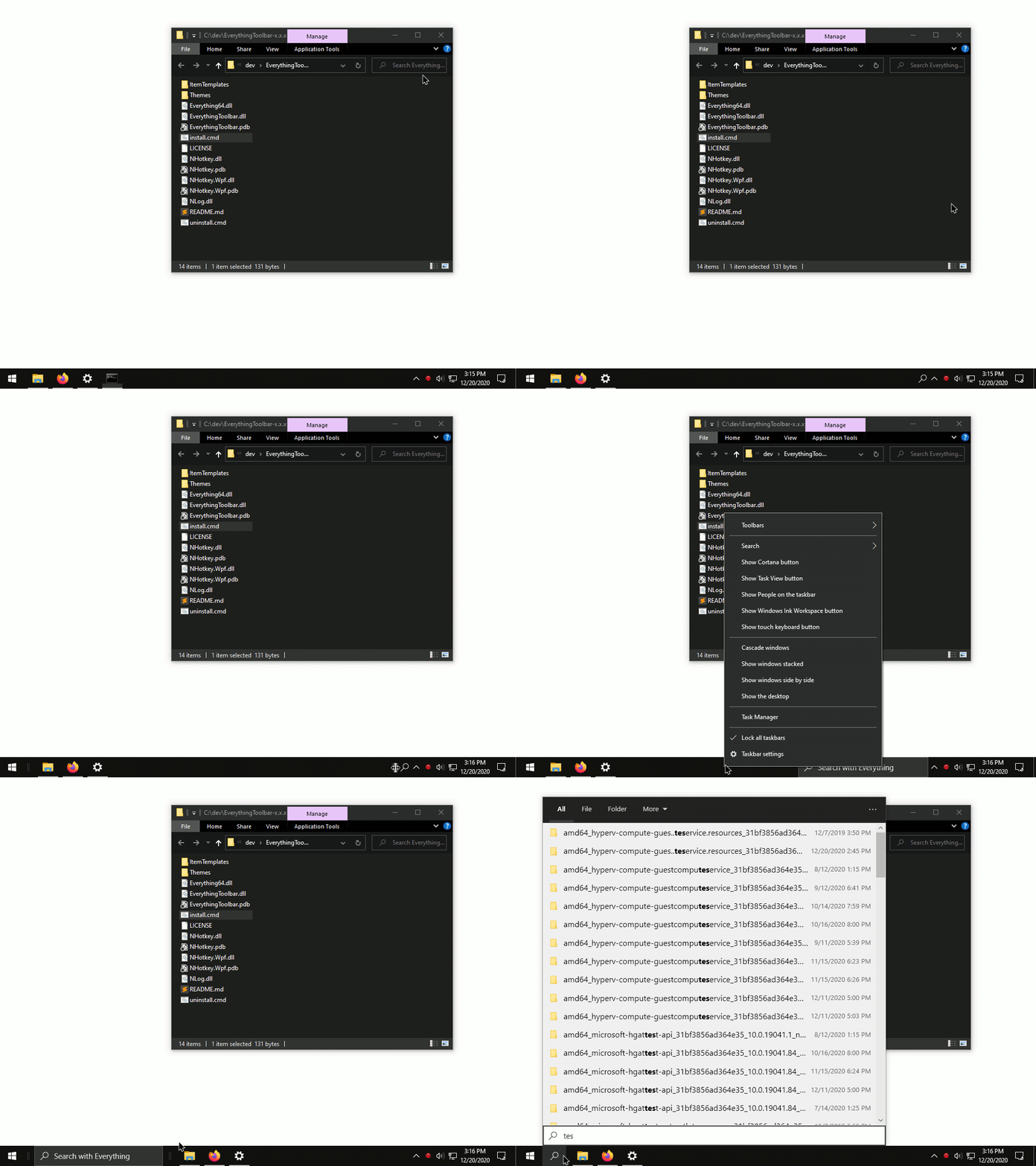
Windows 11 users: The search icon setup assistant starts automatically after installation. To use the deskband instead (only recommended with ExplorerPatcher/StartAllBack), close the assistant and end EverythingToolbar's background process via the system tray.
For troubleshooting and additional setup help, see the FAQ.
ð ï¸ Development
Building from Source
- Open the solution in Visual Studio with .NET 8.0 support
- Disable code signing in project properties
- Choose your build target:
- Deskband: Build
EverythingToolbar.Deskbandproject, then run/tools/install_deskband.cmdas administrator - Search icon: Set
EverythingToolbar.Launcheras startup project and start debugging
- Deskband: Build
ð¤ Contributing
All types of contributions are welcome! Whether you're reporting bugs, requesting features, or submitting pull requests, your help is appreciated.
How to Contribute
- Check existing issues before creating new ones
- Help with open issues and discussions
- Translate EverythingToolbar into your language
ð Support
If you're enjoying EverythingToolbar, I'd be truly grateful for your support! You can show your appreciation by giving a star on GitHub or making a donation:
â FAQ
For frequently asked questions, troubleshooting guides, and detailed configuration instructions, visit the FAQ.
Top Related Projects
:mag: Quick file search & app launcher for Windows with community-made plugins
A cross-platform launcher that simply works
Cross-Platform Keystroke Launcher
Convert designs to code with AI
Introducing Visual Copilot: A new AI model to turn Figma designs to high quality code using your components.
Try Visual Copilot